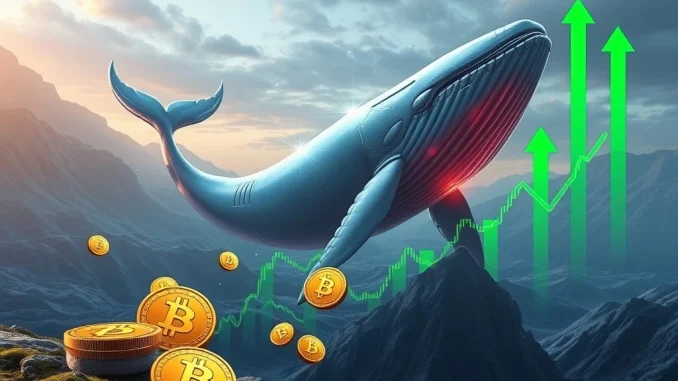
The cryptocurrency market is abuzz with speculation: is a significant Bitcoin rally on the horizon, or are recent whale movements signaling a different path? Investors are on edge, watching every major transaction for clues about the next big market move. The actions of large holders, often dubbed ‘whales,’ can send ripples through the entire digital asset ecosystem, influencing everything from Bitcoin’s price to the smallest altcoin.
Understanding the Current Crypto Landscape: A Deep Dive into Crypto Market Analysis
The cryptocurrency market is a dynamic beast, constantly evolving with new technologies, regulatory shifts, and investor sentiment. A thorough crypto market analysis goes beyond simple price charts; it involves dissecting on-chain data, global economic indicators, and technological advancements. Currently, the market exhibits a mix of cautious optimism and underlying uncertainty. While institutional adoption continues to grow, evidenced by the proliferation of Bitcoin ETFs, retail interest can fluctuate rapidly. Understanding these layers is crucial for anticipating the next big move.
Key aspects of the current landscape include:
- Market Volatility: Cryptocurrencies remain highly volatile, presenting both significant opportunities and risks. Price swings of 10-20% in a single day are not uncommon.
- Macroeconomic Influences: Global interest rates, inflation data, and geopolitical events increasingly impact crypto prices, aligning them more with traditional finance.
- Technological Developments: Continuous innovation in blockchain technology, DeFi, NFTs, and Layer 2 solutions drives long-term value and attracts new users.
Decoding the Mystery: What Does Whale Selling Truly Imply?
In the world of crypto, ‘whales’ are individual or entities holding vast amounts of a particular cryptocurrency, enough to significantly influence market prices with their transactions. When we observe whale selling, it often sparks fear and speculation among smaller investors. However, interpreting these large movements isn’t always straightforward. It doesn’t automatically signal an impending crash.
There are several reasons why whales might sell their holdings:
- Profit-Taking: After a substantial price increase, whales might sell to realize gains, especially if they believe the asset is overvalued in the short term.
- Portfolio Rebalancing: Large investors frequently adjust their portfolios to manage risk or shift allocations to other assets they believe have better prospects.
- Strategic Accumulation: Sometimes, large sells are followed by re-buying at lower prices, a tactic to accumulate more coins and ‘shake out’ weaker hands.
- Liquidity Needs: Whales, like any other investor, might need to liquidate assets for personal or business reasons outside the crypto market.
Therefore, while significant whale selling warrants attention, it requires deeper analysis to determine its true implications for the market’s direction.
Are XRP Whales Signaling a Broader Trend?
The activity of XRP whales has been particularly scrutinized due to the ongoing legal saga involving Ripple and the SEC. XRP’s price movements are often influenced by news related to the lawsuit, as well as broader market trends. When XRP whales move large sums, it can create significant price fluctuations, impacting market sentiment for not just XRP, but potentially other altcoins as well.
Understanding XRP whale behavior:
- Legal Case Influence: Positive or negative developments in the SEC lawsuit can trigger large buy or sell orders from whales anticipating price shifts.
- Liquidity Provision: Some XRP whales are exchanges or institutional market makers, whose movements are part of regular operations rather than speculative bets.
- Correlation with Bitcoin: While XRP has its unique drivers, its price often correlates with Bitcoin’s performance, meaning whale activity in XRP can sometimes reflect broader market sentiment initiated by BTC.
Monitoring these large XRP transactions can offer clues, but it’s essential to consider the unique factors influencing XRP’s market dynamics.
The Million-Dollar Question: Will a Bitcoin Rally Ignite the Market?
Despite instances of whale selling, the potential for a strong Bitcoin rally remains a constant topic of discussion. Bitcoin, as the market leader, often sets the tone for the entire cryptocurrency space. A significant upward movement in Bitcoin’s price typically pulls altcoins along, leading to a broader market surge.
Factors that could ignite a Bitcoin rally include:
- Institutional Inflows: Continued investment from large financial institutions via spot Bitcoin ETFs or direct purchases can provide substantial buying pressure.
- Halving Aftermath: While the Bitcoin halving reduces the supply of new BTC, its full price impact often unfolds months after the event, potentially driving a rally.
- Macroeconomic Tailwinds: A shift towards more accommodative monetary policies globally, such as interest rate cuts, could make risk assets like Bitcoin more attractive.
- Increased Retail Participation: Renewed interest from individual investors, often spurred by positive news or significant price gains, can fuel a rally.
While whale selling might suggest caution, it could also be a strategic move by large holders to accumulate more Bitcoin at lower prices before an anticipated rally.
The Ripple Effect: Is an Altcoin Rally Close Behind?
Historically, a strong Bitcoin performance often precedes or accompanies an Altcoin rally. Once Bitcoin establishes a clear upward trend, investor confidence grows, and capital tends to flow into alternative cryptocurrencies, leading to an ‘altcoin season.’
What drives an altcoin rally?
- Bitcoin Dominance Shift: As Bitcoin’s price stabilizes or surges, its market dominance often decreases as investors seek higher returns in smaller, more volatile altcoins.
- Project-Specific Developments: Major upgrades, partnerships, or significant adoption news for individual altcoin projects can trigger their rallies.
- Narrative-Driven Cycles: Specific sectors like DeFi, NFTs, GameFi, or AI-related tokens can experience concentrated rallies as new narratives gain traction.
For investors, identifying promising altcoins during a potential rally requires diligent research into their utility, team, community, and tokenomics. Not all altcoins will rally equally, and some may not recover at all.
Actionable Insights for Investors
Navigating the crypto market amidst whale activity and rally speculation requires a disciplined approach. Here are some actionable insights:
- Do Your Own Research (DYOR): Don’t blindly follow whale movements or social media hype. Understand the fundamentals of the assets you invest in.
- Diversify Your Portfolio: Spread your investments across different cryptocurrencies and asset classes to mitigate risk.
- Consider Dollar-Cost Averaging (DCA): Instead of trying to time the market, invest a fixed amount regularly, regardless of price fluctuations. This can reduce the impact of volatility.
- Monitor On-Chain Data: Tools that track whale movements, exchange flows, and network activity can provide valuable insights, but interpret them cautiously.
- Manage Risk: Only invest what you can afford to lose. Set clear entry and exit strategies, and consider using stop-loss orders.
- Stay Informed: Keep up-to-date with market news, regulatory changes, and technological advancements.
Conclusion
The cryptocurrency market is a complex interplay of forces, where the actions of large players like Bitcoin and XRP whales can indeed influence sentiment and price. While significant whale selling might raise eyebrows, it’s crucial to understand that these movements are often part of larger, strategic plays that don’t always preclude a future Bitcoin rally or subsequent Altcoin rally. A comprehensive crypto market analysis reveals that numerous factors contribute to market direction, and relying solely on whale activity for investment decisions is unwise. By staying informed, conducting thorough research, and adopting a disciplined investment strategy, you can better navigate the market’s ebbs and flows, positioning yourself for potential opportunities ahead.
Frequently Asked Questions (FAQs)
Q1: What exactly is a ‘crypto whale’?
A crypto whale is an individual or entity that holds a very large amount of a particular cryptocurrency. Their holdings are so significant that their buy or sell orders can noticeably impact the market price of that asset.
Q2: Does whale selling always mean the price will drop?
Not necessarily. While whale selling can cause short-term price drops due to increased supply, it doesn’t always signal a long-term downtrend. Whales might be taking profits, rebalancing portfolios, or even strategically selling to buy back at lower prices before an anticipated rally.
Q3: What are the main factors that could trigger a Bitcoin rally?
A Bitcoin rally can be triggered by several factors, including increased institutional adoption (like spot ETF inflows), the long-term effects of Bitcoin halvings, positive macroeconomic conditions (e.g., lower interest rates), and a surge in retail investor interest.
Q4: How does Bitcoin’s price performance affect altcoins?
Bitcoin typically acts as the market leader. When Bitcoin’s price rises significantly, it often creates a positive sentiment that flows into altcoins, leading to an ‘altcoin rally.’ Conversely, a sharp drop in Bitcoin’s price usually pulls altcoins down with it.
Q5: What is the significance of XRP whale activity?
XRP whale activity is particularly significant due to the ongoing legal case between Ripple and the SEC. Large movements by XRP whales can reflect their anticipation of legal outcomes, market sentiment unique to XRP, or general market trends, impacting XRP’s price and potentially influencing broader altcoin sentiment.