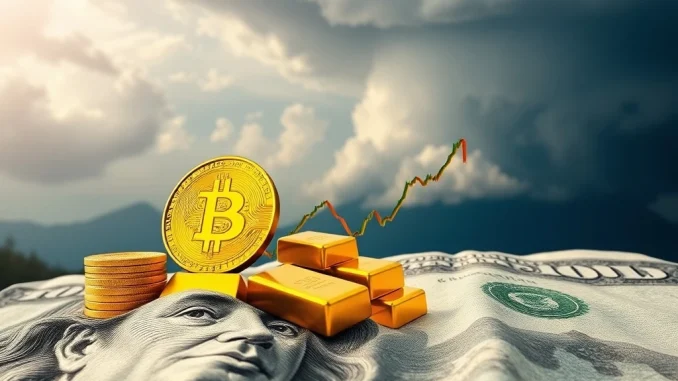
A peculiar phenomenon is gripping global financial markets. Bitcoin, gold, and even stocks are soaring together. This simultaneous ascent challenges conventional wisdom. Typically, risk assets and safe havens move in opposite directions. However, a recent analysis by BeInCrypto suggests this unusual trend is not a sign of robust economic health. Instead, it points to an escalating currency panic, specifically concerning the U.S. dollar.
Understanding the Simultaneous Bitcoin Rally and Market Paradox
The recent surge across diverse asset classes presents a compelling paradox. Bitcoin, a volatile digital asset, traditionally considered risky, is rallying. Concurrently, gold and silver, classic safe-haven assets, are also seeing significant gains. Adding to the intrigue, major stock indices continue their upward trajectory. This pattern defies traditional financial logic. Usually, investors flock to safe havens during times of economic instability. Conversely, they embrace riskier assets during periods of growth and confidence. The current scenario suggests a deeper underlying concern. It hints at a widespread loss of confidence in fiat currencies, particularly the U.S. dollar.
BeInCrypto’s report highlights this anomaly. It argues that this collective climb indicates something more profound than a simple market boom. Investors are not necessarily celebrating economic prosperity. Instead, they might be seeking refuge from a perceived devaluation of traditional currencies. This flight to various assets underscores a growing apprehension about future economic stability. The implications for global finance are significant. Market participants are preparing for substantial shifts rather than enjoying a straightforward bull run.
The Alarming Trend: Signs of a Currency Panic
The term currency panic might sound extreme, but the data supports this alarming interpretation. A currency panic describes a situation where confidence in a national currency rapidly erodes. People then rush to convert their holdings into other assets. These assets can include precious metals, stable foreign currencies, or even cryptocurrencies like Bitcoin. The BeInCrypto analysis points directly to the U.S. dollar as the central concern. The dollar is currently on track for its worst annual performance since 1973. This historical comparison is crucial. It underscores the severity of the present situation. Such a decline has not been witnessed in over half a century.
Furthermore, the purchasing power of the U.S. dollar has diminished significantly. Since 2020, it has reportedly declined by approximately 40%. This erosion directly impacts savings and investments denominated in dollars. For individuals and institutions, this loss of purchasing power is a tangible threat. It drives the search for alternative stores of value. This search explains why diverse assets are suddenly attractive. Investors are diversifying to protect their wealth from further dollar depreciation. They are actively seeking hedges against inflation and monetary instability.
Why is the US Dollar Decline So Significant?
The U.S. dollar holds a unique position in the global financial system. It serves as the world’s primary reserve currency. It is also the dominant currency for international trade and finance. A significant US dollar decline therefore has far-reaching consequences. Its weakening affects global commodity prices, international debt, and geopolitical stability. For instance, many commodities, like oil, are priced in dollars. A weaker dollar makes these commodities more expensive for countries holding other currencies. This can fuel inflation globally.
Several factors contribute to the dollar’s current vulnerability:
- Massive Fiscal Stimulus: Unprecedented government spending and monetary easing measures during and after the pandemic injected vast amounts of liquidity into the economy.
- Inflationary Pressures: High inflation rates erode the dollar’s purchasing power, making it less attractive as a store of value.
- Rising National Debt: The escalating U.S. national debt raises concerns about the country’s long-term financial health.
- Geopolitical Shifts: Global shifts towards de-dollarization, with countries exploring alternative trade settlement currencies, also play a role.
These combined pressures create a fertile ground for a currency panic. Investors are keenly aware of these underlying dynamics. They are adjusting their portfolios accordingly, seeking protection wherever they can find it.
Safe Haven Assets and New Alternatives in Economic Uncertainty
In times of heightened economic uncertainty, investors traditionally turn to safe haven assets. Gold has historically been the quintessential safe haven. Its intrinsic value and limited supply make it a reliable store of wealth. Silver also often follows gold’s trajectory, serving a similar protective role. The current rally in both precious metals is consistent with a flight from currency risk. However, what makes this period unique is the inclusion of Bitcoin in this protective basket. Bitcoin, often dubbed ‘digital gold,’ shares some characteristics with traditional safe havens. It has a limited supply and operates outside the control of central banks.
The simultaneous rise of Bitcoin alongside gold suggests a broadening definition of ‘safe haven.’ Investors are increasingly viewing cryptocurrencies as a viable alternative to traditional assets. This shift reflects a growing distrust in centralized financial systems. It also shows an increasing acceptance of digital assets. While stocks are typically considered risk assets, their current rally might also be interpreted through an inflation-hedging lens. Companies with strong balance sheets and pricing power can often weather inflationary environments better. Investors might be buying stocks as a way to preserve capital against depreciating fiat currency, rather than purely for growth.
Navigating Future Market Changes
The market is clearly signaling preparation for significant changes. This preparation involves a re-evaluation of investment strategies. Investors are looking beyond traditional asset allocation models. They are considering how to best position themselves for a potentially volatile future. This could mean a continued emphasis on diversification across different asset classes. It also implies a greater focus on assets with perceived intrinsic value or scarcity. The BeInCrypto analysis suggests that the current environment is not a cause for celebration. Instead, it is a call for caution and strategic planning.
The ongoing trends suggest a potential paradigm shift in global finance. The role of the U.S. dollar as the unchallenged reserve currency may be undergoing a fundamental re-evaluation. This could lead to a more multi-polar financial world. In such a world, various currencies and asset classes might hold greater sway. For investors, understanding these shifts is paramount. Adapting portfolios to these evolving dynamics will be crucial for preserving and growing wealth. The narrative is shifting from economic growth to wealth preservation in the face of currency instability.
Conclusion: A Critical Juncture for Global Finance
The concurrent surge in Bitcoin, gold, silver, and stocks presents a complex picture. It signals a potential currency panic rather than a robust economic boom. BeInCrypto’s analysis underscores weakening confidence in the U.S. dollar. The dollar’s historic decline in purchasing power since 2020 further fuels these concerns. Investors are therefore seeking alternative stores of value. This period marks a critical juncture for global finance. It highlights the evolving roles of traditional and digital assets. Navigating this landscape requires vigilance and informed decision-making. The market is not just rallying; it is preparing for a significant transformation.
Frequently Asked Questions (FAQs)
Q1: What does a ‘currency panic’ mean?
A currency panic occurs when there’s a rapid loss of confidence in a national currency. People then quickly convert their holdings into other assets like gold, Bitcoin, or foreign currencies to protect their wealth from devaluation.
Q2: Why is the U.S. dollar’s performance a concern?
The U.S. dollar is on track for its worst annual performance since 1973, and its purchasing power has declined by about 40% since 2020. This weakening erodes savings and investments, prompting a search for alternative stores of value and signaling potential global economic instability.
Q3: Why are Bitcoin, gold, and stocks all rallying simultaneously?
This unusual simultaneous rally suggests investors are diversifying to hedge against the weakening U.S. dollar and rising inflation. Bitcoin and gold act as alternative stores of value, while stocks might be seen as a way to preserve capital in an inflationary environment, rather than purely for growth.
Q4: Are traditional safe haven assets still relevant in this environment?
Yes, traditional safe haven assets like gold and silver remain highly relevant. Their rally alongside Bitcoin indicates that investors are seeking both established and new forms of protection against currency devaluation and economic uncertainty.
Q5: What are the implications for investors facing economic uncertainty?
Investors should consider diversifying their portfolios across various asset classes, including traditional safe havens and digital assets like Bitcoin. Understanding the underlying drivers of market movements, such as currency devaluation, is crucial for making informed decisions and preserving wealth.