The cryptocurrency world is currently experiencing a notable shift. Specifically, the **Bitcoin price** has registered a significant **BTC drop**, falling below the critical $108,000 threshold. This movement immediately captured the attention of investors and analysts worldwide. Understanding the dynamics behind such a decline is crucial for anyone involved in the digital asset space. Therefore, we delve into the details of this recent event and its broader implications.
Unpacking the Recent BTC Drop Below $108,000
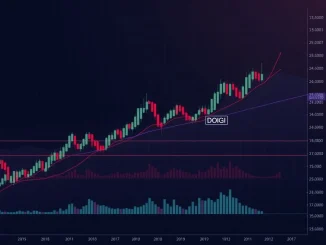
According to Coin Pulse market monitoring, **Bitcoin price** recently dipped below the $108,000 mark. This particular **BTC drop** registered the leading cryptocurrency trading at $107,960.01 on the Binance USDT market. Such a price point represents a significant psychological and technical level for many traders. Consequently, the breach of this level often triggers further analysis and speculation. Investors closely watch these movements, as they can indicate broader trends within the digital asset ecosystem. Moreover, these specific price actions highlight the inherent **market volatility** that characterizes cryptocurrency trading.
The immediate reaction to this **BTC drop** often involves a scramble for explanations. Many factors can contribute to such a rapid price movement. For instance, large sell orders from institutional investors or ‘whales’ can exert downward pressure. Furthermore, macroeconomic news, regulatory announcements, or even shifts in global sentiment can play a role. Therefore, analyzing these concurrent events helps provide a comprehensive picture. The $108,000 level previously served as a point of interest for both support and resistance. Its breach signals a potential re-evaluation of short-term market sentiment.
Understanding Market Volatility and Its Impact
Cryptocurrency markets are renowned for their **market volatility**. This characteristic means prices can change rapidly and unpredictably. The recent **Bitcoin price** movement exemplifies this inherent trait. While some investors find this volatility daunting, others view it as an opportunity. However, understanding the underlying causes of these fluctuations is paramount. External factors, such as geopolitical events or changes in traditional financial markets, frequently influence crypto assets. For example, a sudden rise in interest rates globally can make riskier assets like Bitcoin less attractive. Consequently, this leads to selling pressure.
Internal market dynamics also contribute significantly to **market volatility**. These include liquidity levels, trading volumes, and the overall sentiment of market participants. Low liquidity, for instance, can amplify price swings with relatively small trades. Conversely, high trading volumes often indicate strong market interest, but they do not necessarily guarantee stability. Therefore, a comprehensive view requires considering both external and internal forces. The **crypto market** reacts to a complex interplay of these elements, making accurate short-term predictions challenging. Nevertheless, observing these patterns provides valuable insights into market behavior.
Factors Influencing Bitcoin Price Movements
Several key factors consistently influence the **Bitcoin price**. Macroeconomic conditions stand out as a primary driver. For example, inflation concerns often push investors towards Bitcoin as a potential hedge. Conversely, a strong dollar or rising bond yields can divert capital away from cryptocurrencies. Regulatory developments also play a crucial role. Positive regulatory clarity can boost investor confidence, while restrictive measures can induce fear. Consequently, market participants closely monitor governmental stances on digital assets across the globe.
Furthermore, technical indicators and on-chain data provide valuable insights. Chart patterns, moving averages, and support/resistance levels guide many traders’ decisions. On-chain metrics, such as network activity, transaction volumes, and whale movements, offer a deeper look into the health and sentiment of the Bitcoin network. For instance, a sudden increase in Bitcoin moving to exchanges might signal an impending sell-off. Therefore, a multi-faceted approach is necessary to understand the forces shaping the **Bitcoin price**. These factors combine to create the complex market environment we observe daily.
Global Economic Headwinds and the Crypto Market
The broader global economic landscape profoundly impacts the **crypto market**. Periods of economic uncertainty, such as recessions or geopolitical conflicts, can lead to increased risk aversion among investors. Consequently, capital often flows out of speculative assets like cryptocurrencies and into perceived safe havens. High inflation rates, while sometimes seen as a bullish signal for Bitcoin, can also prompt central banks to tighten monetary policy. This tightening typically reduces overall liquidity in financial markets, affecting all asset classes, including digital ones.
Interest rate hikes by central banks, for example, increase the cost of borrowing. This can slow economic growth and reduce the appetite for high-risk investments. Therefore, the **crypto market** often correlates with traditional financial markets, especially during times of significant economic stress. Understanding these macro trends is essential for contextualizing local price movements, such as the recent **BTC drop**. Investors must consider the global economic narrative when evaluating their digital asset portfolios. This integrated perspective offers a more complete view of market dynamics.
Investor Reactions and the Latest Bitcoin News
The **latest Bitcoin news** often highlights immediate investor reactions to price movements. A significant **BTC drop**, like the one observed, can trigger various responses. Some investors might panic, leading to further selling pressure. This phenomenon is often driven by fear, uncertainty, and doubt (FUD). Conversely, long-term holders, or ‘HODLers,’ might view such dips as buying opportunities. They often believe in Bitcoin’s long-term value proposition and accumulate more at lower prices. Therefore, market sentiment frequently diverges during periods of high **market volatility**.
Social media and news outlets play a considerable role in shaping these reactions. Rapid dissemination of information, both accurate and speculative, can influence trading decisions. Consequently, monitoring these channels provides insights into prevailing market psychology. Furthermore, derivatives markets, such as futures and options, can amplify price movements. Liquidations of leveraged positions can accelerate a downturn. Understanding these intertwined dynamics is crucial for interpreting the **latest Bitcoin news** and its impact on the **crypto market**.
Navigating Uncertainty in the Crypto Market
Navigating the current **crypto market** environment requires a strategic approach. Given the persistent **market volatility**, investors often consider several key principles. Firstly, conducting thorough research is paramount. Understanding the technology, use cases, and market position of any digital asset helps in making informed decisions. Secondly, implementing risk management strategies is crucial. This includes setting stop-loss orders, diversifying portfolios, and investing only what one can afford to lose. Therefore, a disciplined approach often yields better long-term outcomes.
Many experienced traders also advocate for dollar-cost averaging. This strategy involves investing a fixed amount of money at regular intervals, regardless of the asset’s price. This approach helps mitigate the impact of **market volatility** and reduces the risk of buying at a single peak. Moreover, staying informed through reliable **Bitcoin news** sources is essential. Market conditions can change rapidly, and timely information helps investors adapt their strategies. Ultimately, patience and a long-term perspective often prove beneficial in the volatile world of cryptocurrency.
The Road Ahead for Bitcoin Price Stability
The path to greater **Bitcoin price** stability remains a topic of ongoing discussion. As the **crypto market** matures, some analysts anticipate a reduction in extreme **market volatility**. Increased institutional adoption, clearer regulatory frameworks, and technological advancements could contribute to this trend. However, Bitcoin’s decentralized nature and finite supply will likely always contribute to some degree of price fluctuation. Therefore, investors should expect continued price movements, both upwards and downwards.
Monitoring global economic indicators will remain vital. The interplay between traditional finance and the **crypto market** grows stronger with each passing year. Consequently, understanding how macroeconomic forces impact digital assets is more important than ever. The **latest Bitcoin news** will continue to reflect these broader trends. Ultimately, the resilience and continued innovation within the Bitcoin ecosystem will largely determine its long-term trajectory. Therefore, a vigilant and informed approach is the best strategy for navigating the future.
The recent **BTC drop** below $108,000 serves as a powerful reminder of the dynamic nature of the cryptocurrency landscape. While such movements can be unsettling, they are a characteristic feature of this evolving market. Investors should prioritize staying informed through reliable **Bitcoin news**, understanding the factors driving **market volatility**, and employing sound risk management strategies. The **Bitcoin price** will undoubtedly continue its journey, presenting both challenges and opportunities for those prepared to navigate its unpredictable currents.
Frequently Asked Questions (FAQs)
What caused the recent BTC drop below $108,000?
The recent **BTC drop** can be attributed to a combination of factors. These often include broader macroeconomic concerns, such as inflation or interest rate hikes, large sell orders from institutional investors, and shifts in overall market sentiment. Technical analysis suggests that breaching certain support levels can also trigger further selling pressure. It is typically a complex interplay of these elements.
How does market volatility affect the crypto market?
**Market volatility** in the **crypto market** means prices can fluctuate significantly and rapidly. This can lead to substantial gains or losses for investors. While some traders thrive on volatility for short-term profits, it also introduces higher risk. Volatility often impacts investor confidence and can lead to increased fear or greed in the market.
Where can I find reliable Bitcoin news and market updates?
Reliable **Bitcoin news** and market updates can be found from reputable financial news outlets specializing in cryptocurrency, dedicated crypto market analysis platforms, and official reports from blockchain analytics firms. Always cross-reference information from multiple sources to ensure accuracy and avoid misinformation.
Is a Bitcoin price drop always a negative sign?
Not necessarily. While a **Bitcoin price** drop can be concerning for short-term investors, long-term holders often view dips as opportunities to buy more Bitcoin at a lower price. Many analysts consider market corrections a natural and healthy part of any asset’s growth cycle, helping to consolidate gains and shake out weaker hands.
What strategies can help manage risk during high market volatility?
During periods of high **market volatility**, several strategies can help manage risk. These include setting stop-loss orders to limit potential losses, diversifying your portfolio across different assets, and only investing capital you can afford to lose. Dollar-cost averaging, which involves investing fixed amounts regularly, can also mitigate the impact of price swings over time.
Will Bitcoin’s price recover from this dip?
Predicting future **Bitcoin price** movements with certainty is impossible due to inherent **market volatility**. Historically, Bitcoin has shown resilience, recovering from numerous significant dips to reach new all-time highs. However, recovery depends on various factors, including global economic conditions, regulatory developments, and sustained investor demand. It is crucial for investors to conduct their own research and consider their risk tolerance.