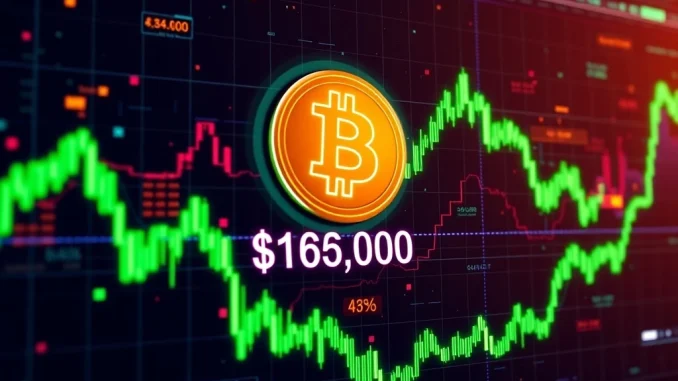
Bitcoin’s value has dramatically surged, exceeding the significant $106,000 mark. This impressive Bitcoin price movement has captured global attention. According to Coin Pulse market monitoring, BTC reached $106,027.37 on the Binance USDT market. This notable ascent signifies a robust period for the premier cryptocurrency. Investors and analysts alike are closely watching this development. Furthermore, this milestone underscores Bitcoin’s enduring strength and growing appeal in the financial landscape.
Bitcoin Price Soars Past $106,000: A New Chapter
The recent surge in Bitcoin price above $106,000 marks a pivotal moment. This level represents more than just a numerical threshold. It underscores increasing investor confidence and broader market adoption. Historically, such price milestones often precede further interest. The cryptocurrency market has responded positively to this breakthrough. Many observers now anticipate continued momentum. Consequently, market capitalization has seen a significant boost. This upward trend reflects a dynamic shift in investor sentiment.
Reaching this valuation places Bitcoin in a stronger position. It reinforces its status as a major global asset. Trading volume also shows robust activity. For instance, the Binance USDT market reported the specific trading figure. This high volume indicates strong buying pressure. Moreover, it suggests sustained interest from both retail and institutional players. This consistent demand fuels the current rally.
Understanding the Current BTC Rally Dynamics
Several factors likely contribute to the current BTC rally. Institutional investment continues to grow. Large financial entities are increasingly allocating capital to digital assets. Additionally, global macroeconomic conditions often push investors towards alternative assets. Concerns about inflation and currency devaluation make Bitcoin attractive. Its scarcity, capped at 21 million coins, also fuels its appeal. Demand is steadily increasing. These elements collectively create upward pressure on its valuation. Therefore, the rally reflects fundamental market shifts.
Technological advancements within the Bitcoin network also play a role. Ongoing development enhances its security and scalability. Increased mainstream acceptance further legitimizes Bitcoin. Companies and payment processors are integrating crypto options. This widespread adoption builds trust among new investors. Ultimately, these combined forces propel Bitcoin’s ascent. The market anticipates further innovation. This positive outlook contributes significantly to the current rally.
Key Factors Driving the Broader Cryptocurrency Market
Beyond immediate price action, several foundational elements underpin the wider cryptocurrency market. Growing regulatory clarity in various jurisdictions offers greater security for investors. Governments and financial bodies are establishing frameworks. These frameworks reduce uncertainty. Technological advancements within the blockchain ecosystem also enhance utility. For example, improved transaction speeds and lower fees attract more users. Furthermore, increased retail adoption, driven by easier access through various platforms, plays a crucial role. Bitcoin’s performance often sets the tone for altcoins. Its movements frequently influence the entire digital asset space.
The development of new decentralized finance (DeFi) applications expands crypto’s utility. These platforms offer innovative financial services. Non-fungible tokens (NFTs) have also brought new participants into the ecosystem. They highlight the diverse applications of blockchain technology. Consequently, the overall market gains strength and diversity. These innovations contribute to sustained growth. Therefore, the market’s expansion extends beyond just Bitcoin’s performance.
Expert Bitcoin Analysis on Future Trajectories
Market experts are providing varied Bitcoin analysis regarding its future. Some foresee continued upward momentum, citing strong fundamentals. They point to increasing institutional inflows and limited supply. Others suggest potential consolidation phases before the next leg up. This would allow the market to digest recent gains. Technical indicators, such as moving averages and trading volumes, are being closely monitored. These metrics offer insights into market sentiment and potential price movements. Understanding these analyses helps investors make informed decisions. Analysts often look at historical patterns for guidance.
Key indicators include the Relative Strength Index (RSI) and Bollinger Bands. These tools help identify overbought or oversold conditions. On-chain data also provides valuable insights. It reveals actual network activity and investor behavior. Such data includes transaction counts and active addresses. Ultimately, a blend of technical, fundamental, and on-chain analysis shapes expert opinions. This comprehensive approach guides market forecasts. Consequently, investors receive a more complete picture of potential outcomes.
Bitcoin’s Role as Digital Gold in a Shifting Economy
In times of economic uncertainty, Bitcoin increasingly functions as digital gold. Its decentralized nature and limited supply make it an attractive hedge against inflation. Central banks worldwide have expanded monetary supplies. This action often devalues traditional currencies. Traditional safe-haven assets, like physical gold, face new competition. Investors seek assets outside conventional financial systems. Bitcoin offers a compelling alternative. This narrative strengthens its long-term investment case. Therefore, its appeal grows during periods of economic instability.
Many investors view Bitcoin as a store of value. It offers protection against geopolitical risks. Unlike traditional currencies, no single government controls Bitcoin. This independence provides a unique advantage. Furthermore, its global accessibility means anyone can hold it. This ease of access differentiates it from physical commodities. The perception of Bitcoin as a robust asset continues to evolve. This evolving role solidifies its position in diversified portfolios.
Bitcoin’s climb above $106,000 is a testament to its enduring strength and growing acceptance. This significant milestone reflects a dynamic and evolving cryptocurrency market. As the digital asset landscape matures, Bitcoin remains a key indicator of broader trends. Its journey continues to reshape global finance. Future developments will undoubtedly keep investors engaged. This current rally provides a strong foundation for future growth. The market looks forward to what comes next.
Frequently Asked Questions (FAQs)
1. What caused the recent Bitcoin price surge above $106,000?
The recent surge in Bitcoin’s price is attributed to a combination of factors. These include increasing institutional investment, growing global macroeconomic uncertainties, Bitcoin’s inherent scarcity, and expanding mainstream adoption. These elements collectively drive demand and upward price pressure.
2. Is $106,000 a new all-time high for Bitcoin?
While $106,000 represents a significant milestone, it is not an all-time high for Bitcoin. Bitcoin has previously traded at higher valuations. However, this level indicates strong market momentum and renewed investor confidence, making it a notable achievement.
3. How does Bitcoin compare to traditional assets like gold?
Bitcoin is often referred to as ‘digital gold’ due to its limited supply and decentralized nature, making it a potential hedge against inflation and economic instability. Unlike physical gold, Bitcoin offers easier portability and global accessibility, though it also carries higher volatility.
4. What role does institutional investment play in the Bitcoin price?
Institutional investment plays a crucial role. Large financial institutions, corporations, and even some governments allocating capital to Bitcoin can significantly boost its price and market legitimacy. Their participation adds substantial capital and credibility to the cryptocurrency market.
5. What factors influence the broader cryptocurrency market?
The broader cryptocurrency market is influenced by several factors. These include regulatory developments, technological advancements in blockchain, the growth of decentralized finance (DeFi) and NFTs, retail adoption rates, and overall macroeconomic conditions. Bitcoin’s performance also often sets the trend for other digital assets.
6. Should I invest in Bitcoin now?
Investing in Bitcoin, like any financial asset, carries risks. It is important to conduct thorough research, understand your risk tolerance, and consider consulting a financial advisor. The cryptocurrency market is known for its volatility, and prices can fluctuate significantly.