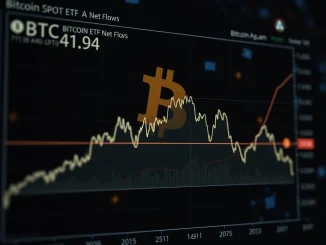
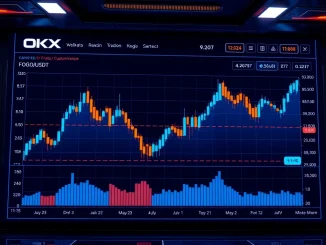
The cryptocurrency market witnessed a significant shift today. An **Urgent Bitcoin Price Drop** saw the leading digital asset fall below the critical $114,000 mark. This movement has drawn considerable attention from traders and investors globally. According to Coin Pulse market monitoring, BTC now trades at $113,294.6 on the Binance USDT market. This latest development underscores the inherent volatility of the crypto space. Therefore, understanding these dynamics is crucial for market participants.
Understanding the Recent Bitcoin Price Drop
Bitcoin, the world’s largest cryptocurrency by market capitalization, experienced a notable decline. Its value dipped below $114,000, a level many analysts watched closely. This specific **Bitcoin price drop** occurred rapidly. The immediate impact was felt across various trading platforms. For instance, on the **Binance USDT market**, BTC was recorded at $113,294.6. Such fluctuations are not uncommon in the digital asset sector. However, significant drops often trigger broader market reactions. Therefore, understanding the context of this decline is crucial.
BTC Market Analysis: Key Factors at Play
Several factors can influence the price movements of Bitcoin. A comprehensive **BTC market analysis** reveals a complex interplay of forces. These forces often dictate short-term and long-term trends. Consequently, monitoring them provides a clearer picture.
- Macroeconomic Trends: Global economic indicators frequently impact investor sentiment. Rising interest rates or inflation concerns can push investors away from riskier assets like cryptocurrencies.
- Regulatory News: Announcements regarding crypto regulations from major economies can significantly sway market prices. Uncertainty often leads to sell-offs.
- Whale Movements: Large holders, known as “whales,” can influence prices through substantial buy or sell orders. Their actions can create significant market shifts.
- Technical Indicators: Chart patterns and technical analysis levels also play a role. Breaking key support levels, such as $114,000, can trigger further selling pressure.
In addition, broader market sentiment and geopolitical events can contribute to price volatility. Therefore, a holistic view is necessary for accurate assessment.
Navigating Cryptocurrency Fluctuations
The recent **cryptocurrency fluctuations** highlight the dynamic nature of digital assets. Price volatility is a defining characteristic of the crypto market. While Bitcoin leads the market, its movements often affect altcoins. When BTC experiences a downturn, many other cryptocurrencies tend to follow suit. Conversely, a Bitcoin rally can uplift the entire market. Investors must remain vigilant. Market sentiment can shift quickly, driven by news or sudden trading volumes. Therefore, robust risk management strategies are essential for participants. This ongoing volatility underscores the need for continuous market observation.
Insights from the Binance USDT Market
The **Binance USDT market** serves as a primary hub for global cryptocurrency trading. The reported price of $113,294.6 for BTC on this platform provides a real-time snapshot. USDT, a stablecoin pegged to the US dollar, is widely used for trading pairs. This makes the BTC/USDT pair a benchmark for Bitcoin’s value. High liquidity on Binance means that price movements reflect broad market sentiment. Therefore, the specific trading data from Binance offers valuable insights. It helps gauge the immediate market reaction to price changes. Moreover, the trading volume on this platform often indicates the strength of price movements.
What This Bitcoin Trading Update Means for Investors
This latest **Bitcoin trading update** prompts investors to reassess their positions. For short-term traders, volatility presents both opportunities and risks. They might seek to capitalize on price swings. Long-term investors, however, often view such dips differently. They may see it as a chance to accumulate more assets. It is crucial to remember that past performance does not guarantee future results. Investors should conduct their own research. They should also consider their individual financial goals and risk tolerance. Ultimately, informed decisions are paramount in the crypto market. Furthermore, staying updated on global economic news is vital.
Conclusion:
The recent **Bitcoin price drop** below $114,000 underscores the persistent volatility in the cryptocurrency market. While the immediate cause may be multifaceted, the event highlights the importance of vigilance. Traders and investors continue to monitor market conditions closely. The digital asset landscape remains dynamic, demanding informed approaches from all participants. This situation further emphasizes the need for robust market analysis. Consequently, understanding market signals is more important than ever.
Frequently Asked Questions (FAQs)
Q1: What does it mean when BTC falls below a certain price point?
A1: When a **Bitcoin price drop** occurs below a specific psychological or technical level, it often signals increased selling pressure. It can also indicate a shift in market sentiment. Traders frequently use these levels as support or resistance points.
Q2: What factors contribute to cryptocurrency fluctuations?
A2: **Cryptocurrency fluctuations** are influenced by numerous factors. These include global macroeconomic trends, regulatory news, major investor (whale) movements, technological developments, and overall market sentiment. Supply and demand dynamics also play a significant role.
Q3: Why is the Binance USDT market often cited for Bitcoin prices?
A3: The **Binance USDT market** is one of the largest and most liquid cryptocurrency exchanges globally. Its BTC/USDT trading pair serves as a key benchmark for Bitcoin’s price. The high trading volume on Binance provides a representative snapshot of the broader market’s value.
Q4: How should investors react to a significant Bitcoin trading update?
A4: Following a **Bitcoin trading update** that shows a price drop, investors should avoid impulsive decisions. It is advisable to review one’s investment strategy, conduct thorough research, and consider long-term goals. Risk management and diversification remain crucial.
Q5: Is a Bitcoin price drop always a negative sign?
A5: Not necessarily. While a **Bitcoin price drop** can indicate short-term bearish sentiment, some long-term investors view dips as opportunities. They might accumulate more Bitcoin at a lower price, believing in its future appreciation. Market cycles are common in crypto.
Q6: Where can I find reliable data for BTC market analysis?
A6: For reliable **BTC market analysis**, consider sources like Coin Pulse, CoinMarketCap, CoinGecko, and reputable financial news outlets. These platforms offer real-time data, historical charts, and expert commentary. Always cross-reference information from multiple sources.