The cryptocurrency world often buzzes with speculation, but some patterns capture particular attention. For many, the idea of a ‘Santa Claus rally’ in traditional markets, where stocks often climb in the final trading days of December, is a familiar concept. Now, this optimistic sentiment extends to the digital asset space. Indeed, Bitcoin price could experience a significant uptrend this December. An analysis by CoinDesk suggests several compelling factors might converge to drive a notable rally for the leading cryptocurrency. Investors are watching closely as the year-end approaches, hoping for a festive boost.
Understanding the Potential for a Santa Claus Rally
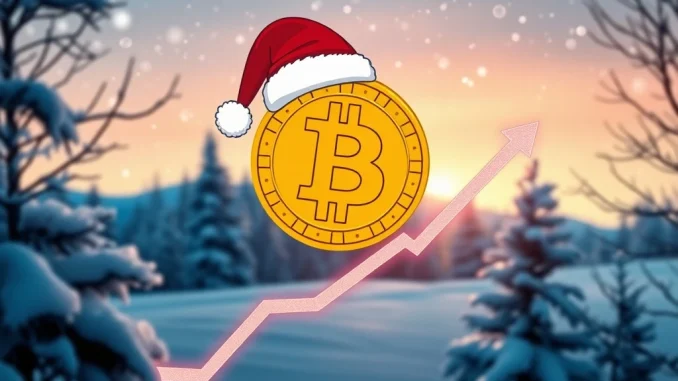
A Santa Claus rally refers to a sustained increase in stock prices occurring in the last five trading days of December and the first two trading days of January. Historically, this period often sees positive returns. This phenomenon, however, is not exclusive to traditional finance. In the crypto market, December has, at times, shown similar bullish tendencies. Therefore, many analysts now consider the possibility of a crypto-specific Santa Claus rally. CoinDesk’s recent analysis highlights this potential for Bitcoin. They point to a confluence of macroeconomic factors and market dynamics that could fuel such a movement. These factors collectively create a fertile ground for upward price action, exciting many investors.
Several key drivers underpin this optimistic outlook. These include inherent seasonal bullish trends, which historically favor Bitcoin during year-end. Furthermore, the broader economic landscape plays a crucial role. Specifically, the potential for shifts in monetary policy from central banks holds significant weight. Finally, unique market structures, such as increasing leverage and specific investor behaviors, also contribute to the forecast. Understanding each of these elements is vital for comprehending the full scope of Bitcoin’s potential December performance.
Seasonal Trends and Historical BTC December Performance
History often provides valuable clues for future market movements. When examining BTC December performance, seasonal trends emerge. Bitcoin has historically demonstrated periods of strength towards the end of the year. This pattern might be attributed to various factors, including holiday spending, year-end bonuses, and general market optimism. For instance, some years have seen substantial gains for Bitcoin during the final month. This recurring tendency offers a compelling argument for a potential Santa Claus rally.
While past performance does not guarantee future results, these seasonal tendencies provide a foundation for current predictions. Analysts frequently look at historical data to identify potential recurring patterns. The end of the year often brings renewed investor interest and increased trading activity. This heightened engagement can contribute to upward price pressure. Moreover, the broader sentiment around the holidays tends to be more positive, which can spill over into financial markets, including cryptocurrencies. Therefore, the historical precedent for Bitcoin’s December performance remains a significant factor in current analyses.
CoinDesk’s report specifically underscores these seasonal bullish trends. They represent a foundational element of their optimistic forecast. Many market participants anticipate a continuation of these patterns. This expectation alone can influence trading behavior, creating a self-fulfilling prophecy to some extent. Investors often position themselves based on historical data. This collective action can further amplify any nascent upward movements. Consequently, seasonal trends are not just statistical observations; they are active drivers of market sentiment and behavior.
The Impact of a Potential Fed Rate Cut
Macroeconomic policy decisions significantly influence risk assets like Bitcoin. One of the most critical factors highlighted by CoinDesk is the possibility of an interest rate cut by the U.S. Federal Reserve. Central banks typically raise interest rates to combat inflation. Conversely, they lower rates to stimulate economic growth. A Fed rate cut would generally be bullish for cryptocurrencies. Lower interest rates make traditional savings less attractive, pushing investors towards higher-yield or riskier assets.
When interest rates decline, borrowing becomes cheaper. This can encourage businesses to invest and consumers to spend, injecting liquidity into the economy. A more liquid environment often benefits assets like Bitcoin, which thrive on capital flows. Furthermore, lower rates can weaken the U.S. dollar. A weaker dollar makes dollar-denominated assets, including Bitcoin, more appealing to international investors. This dynamic can attract fresh capital into the crypto market, boosting demand and price.
The anticipation of such a policy shift alone can move markets. Investors often price in future expectations. If the market increasingly believes a Fed rate cut is imminent, it could preemptively drive up Bitcoin’s value. This forward-looking behavior is common in financial markets. Therefore, even the *possibility* of a rate cut acts as a powerful catalyst. It signals a potential easing of monetary conditions, which historically supports asset appreciation. The Federal Reserve’s stance on interest rates remains a critical watch point for Bitcoin investors.
Economic Stimulus and Market Liquidity
Beyond interest rates, broader economic stimulus measures can also inject significant liquidity into financial systems. CoinDesk’s analysis specifically cited the potential for economic stimulus measures, referencing possible actions by U.S. President Donald Trump. While the political landscape constantly evolves, the general principle holds true: government spending or tax cuts can boost economic activity. Such measures typically increase the money supply within an economy. This added liquidity often finds its way into various investment vehicles, including cryptocurrencies.
Fiscal stimulus aims to jumpstart economic growth. When consumers and businesses have more money, they tend to spend and invest more. A portion of this increased capital frequently flows into risk assets. Bitcoin, known for its volatility and potential for high returns, often attracts this capital. Therefore, any substantial government initiative designed to stimulate the economy could indirectly benefit the crypto market analysis.
Increased liquidity is a fundamental driver for asset prices. When there is more money circulating and seeking investment opportunities, asset valuations tend to rise. This principle applies across different market sectors. For Bitcoin, which has a relatively smaller market capitalization compared to traditional asset classes, even a fraction of this new liquidity can have a magnified impact. Consequently, the prospect of future economic stimulus remains a potent factor for Bitcoin’s potential December rally.
Rising Leverage and Institutional Interest
Market dynamics, including leverage and institutional participation, also play a crucial role in Bitcoin’s price movements. CoinDesk’s analysis pointed to increased volatility stemming from rising leverage. Leverage allows traders to control larger positions with a smaller amount of capital. While it can amplify gains, it also significantly magnifies losses. When markets move rapidly, high leverage can lead to cascading liquidations, further accelerating price swings in either direction. This increased volatility can be a double-edged sword, but in a bullish environment, it can propel prices higher faster.
Furthermore, the analysis highlighted growing institutional liquidity. Institutional investors, such as hedge funds, asset managers, and corporations, have steadily increased their exposure to Bitcoin. Their participation brings substantial capital and enhances market depth. Unlike retail investors, institutions often trade in larger volumes, and their strategic entries can significantly impact market prices. The growing presence of these large players signals increasing mainstream acceptance and confidence in Bitcoin as an asset class.
The combination of rising leverage and institutional liquidity creates a powerful dynamic. Institutional capital provides a more stable and substantial foundation for price growth. Simultaneously, increased leverage in the derivatives market can amplify initial price movements. If a positive catalyst emerges, this setup can lead to rapid price appreciation. Therefore, monitoring these internal market structures is essential for a comprehensive crypto market analysis. Their combined effect could provide significant momentum for Bitcoin.
Strong Accumulation by Smaller Investors
Investor behavior provides another critical indicator for future price movements. CoinDesk’s report noted strong accumulation by investors holding fewer than 1,000 BTC. These smaller holders, often referred to as retail investors or ‘shrimp’ and ‘crabs’ in crypto parlance, collectively represent a significant force. When these investors actively accumulate Bitcoin, it suggests a strong underlying belief in its long-term value. This steady buying pressure can absorb available supply, leading to upward price pressure.
The consistent accumulation by smaller entities is a bullish signal for several reasons. Firstly, it indicates broad-based confidence in Bitcoin. It’s not just a few large players driving the market; rather, a wide array of participants are adding to their holdings. Secondly, this accumulation often represents ‘sticky’ demand. These investors are typically less prone to panic selling during minor dips, contributing to market stability. Their conviction strengthens the overall market structure. This robust demand forms a solid base for any potential rally.
Monitoring the distribution of Bitcoin holdings offers valuable insights into market sentiment. When smaller wallets are consistently growing, it suggests a healthy distribution of wealth and increasing adoption. This trend can precede significant price movements, as a shrinking available supply combined with persistent demand creates a favorable environment for price appreciation. Thus, the strong accumulation by investors holding under 1,000 BTC is a crucial factor supporting the possibility of a Bitcoin price surge this December.
Navigating the December Market: What to Expect
As December unfolds, market participants will closely watch these five key drivers. The interplay of seasonal trends, potential monetary policy shifts, and specific market dynamics creates a complex but potentially rewarding landscape for Bitcoin. While a Santa Claus rally is not guaranteed, the analytical framework provided by CoinDesk offers a compelling case. Investors should remain informed about Federal Reserve announcements and broader economic indicators. These external factors can significantly influence Bitcoin’s trajectory.
Furthermore, observing on-chain metrics, such as accumulation trends among different investor cohorts, can provide real-time insights. The growing institutional interest and the dynamics of leverage in derivatives markets will also be critical to monitor. Each of these elements contributes to the overall market sentiment and potential for volatility. Staying abreast of these developments will allow investors to better understand the unfolding market narrative.
In conclusion, the prospect of a Santa Claus rally for Bitcoin this December appears increasingly plausible. The convergence of historical patterns, potential economic tailwinds, and evolving market structures paints an optimistic picture. While volatility is inherent in the crypto market, the identified drivers suggest a period of potential growth. This makes December a particularly interesting month for anyone invested in or observing the digital asset space.
Frequently Asked Questions (FAQs)
What is a Santa Claus rally in the context of Bitcoin?
A Santa Claus rally refers to a period of sustained price increases, typically observed in the last trading days of December and early January. For Bitcoin, it suggests a potential year-end surge driven by various factors like seasonal optimism, macroeconomic shifts, and specific market dynamics.
What are the main drivers for a potential Bitcoin Santa Claus rally this December?
Key drivers include seasonal bullish trends, the possibility of a U.S. Federal Reserve interest rate cut, potential economic stimulus measures, increased volatility from rising leverage and institutional liquidity, and strong accumulation by investors holding fewer than 1,000 BTC.
How would a Fed rate cut impact Bitcoin’s price?
A Fed rate cut generally signals an easing of monetary policy. This can make traditional savings less attractive, encouraging investors to seek higher returns in riskier assets like Bitcoin. Lower rates also inject liquidity into the economy, potentially boosting demand for cryptocurrencies.
Is a December rally guaranteed for Bitcoin?
No, a December rally for Bitcoin is not guaranteed. While historical data and current analysis suggest a strong possibility, the cryptocurrency market is highly volatile and subject to rapid changes. Investors should always conduct their own research and consider market risks.
Why is accumulation by smaller investors important for Bitcoin’s price?
Strong accumulation by investors holding fewer than 1,000 BTC (often retail investors) indicates broad-based confidence and consistent buying pressure. This steady demand can absorb available supply, creating a favorable environment for price appreciation and contributing to market stability.