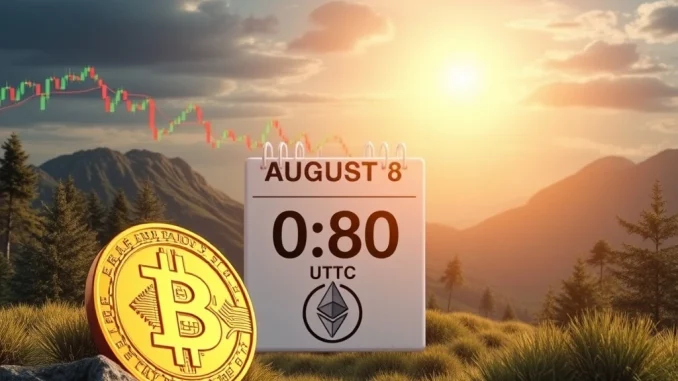
The cryptocurrency market is bracing for a significant event: the imminent expiry of a massive volume of Bitcoin (BTC) options. This event, scheduled for August 8, involves billions of dollars in derivatives contracts. Investors and traders are closely monitoring the situation, as such large expiries often introduce volatility. Understanding the mechanics behind these expiries is crucial for anticipating potential market shifts.
Understanding the Crypto Options Market Dynamics
The **crypto options market** is a sophisticated segment of the digital asset landscape. It allows participants to speculate on future price movements without owning the underlying asset directly. An options contract grants the holder the right, but not the obligation, to buy or sell an asset at a predetermined price (strike price) on or before a specific date (expiry date). Therefore, the upcoming August 8 expiry date holds considerable weight for many market participants.
There are two primary types of options: call options and put options. A call option gives the holder the right to buy, while a put option grants the right to sell. These derivatives are vital tools for hedging existing positions or speculating on market direction. As a result, large expiries can reflect prevailing market sentiment and future expectations. Notably, data from Deribit, a leading crypto options exchange, highlights the scale of this upcoming event.
Bitcoin Options Expiry: A Closer Look at $4.11 Billion
On August 8, at 08:00 UTC, a staggering $4.11 billion worth of **Bitcoin options expiry** contracts will mature. This significant sum represents a substantial portion of the open interest in BTC derivatives. Such a large expiry can lead to increased trading activity as market participants adjust their positions. Furthermore, the sheer volume of these contracts means their settlement could influence Bitcoin’s price trajectory.
Key metrics provide deeper insights into this expiry:
- Total Value: Approximately $4.11 billion USD.
- Expiry Time: 08:00 UTC on August 8.
- Put/Call Ratio: Stands at 1.45.
- Max Pain Price: Calculated at $116,000.
The put/call ratio offers a glimpse into market sentiment. A ratio above 1 indicates a higher volume of put options compared to call options. This suggests that more traders are betting on or hedging against a price decline. Conversely, a ratio below 1 implies a more bullish sentiment. At 1.45, the current ratio for Bitcoin options suggests a slightly bearish or cautious outlook among derivatives traders.
Ethereum Options Expiry: $864 Million Also Matures
In parallel with Bitcoin, a substantial volume of **Ethereum options expiry** contracts will also mature on the same day. Around $864.16 million worth of Ethereum (ETH) options are set to expire at 08:00 UTC on August 8. While smaller than Bitcoin’s expiry, this figure is still significant for the Ethereum ecosystem. It reflects considerable open interest in ETH derivatives and warrants close attention from investors.
The details for Ethereum’s expiry are equally important:
- Total Value: Approximately $864.16 million USD.
- Expiry Time: 08:00 UTC on August 8.
- Put/Call Ratio: Stands at 1.14.
- Max Pain Price: Calculated at $3,650.
Ethereum’s put/call ratio of 1.14 also indicates a slight prevalence of put options. This suggests a similarly cautious, if less pronounced, sentiment compared to Bitcoin. Both expiries occurring concurrently could amplify any market movements, making August 8 a pivotal day for the broader crypto market.
Deciphering Max Pain Price and Its Implications
The **max pain price** is a critical concept in options trading. It represents the strike price at which the largest number of open options contracts (both puts and calls) will expire worthless. In other words, it is the price point that causes the maximum financial loss for options holders. Conversely, it typically results in the maximum profit for options writers (those who sold the contracts).
For Bitcoin, the max pain price is $116,000. For Ethereum, it is $3,650. These figures are theoretical points of equilibrium where the market makers, who often write these options, stand to gain the most. Traders often watch the max pain price because the underlying asset’s spot price tends to gravitate towards this level as expiry approaches. This phenomenon occurs as market makers might hedge their positions, subtly influencing the spot price towards their most profitable outcome.
However, it is important to note that the max pain price is not a guaranteed target. It is merely a statistical observation based on open interest. Other market factors, such as macroeconomic news, regulatory developments, or significant buying/selling pressure, can override this tendency. Nevertheless, it remains a valuable metric for understanding the potential dynamics around a large options expiry.
Potential Market Impact and Trader Strategies
The sheer scale of these upcoming expiries could lead to notable **market impact**. When options contracts expire, market participants must decide whether to exercise their options, let them expire worthless, or roll over their positions into new contracts. These decisions can trigger buying or selling pressure on the underlying assets. For instance, if many in-the-money call options are exercised, it could lead to increased buying of BTC or ETH on the spot market.
Conversely, if a large number of in-the-money put options are exercised, it might result in selling pressure. However, many institutional options contracts are cash-settled, meaning no physical BTC or ETH changes hands. Even with cash settlement, the hedging activities of options writers and large traders can still create significant volatility in the spot market. Therefore, traders often prepare for increased price swings around these dates.
Seasoned traders often employ various strategies leading up to and during options expiry:
- Hedging: Using options to protect existing spot positions from adverse price movements.
- Speculation: Taking directional bets on price based on their analysis of the options chain and market sentiment.
- Arbitrage: Exploiting price discrepancies between options contracts and the underlying spot asset.
- Rolling Positions: Closing out expiring contracts and opening new ones with later expiry dates to maintain exposure.
It is advisable for individual investors to exercise caution. Large options expiries are often associated with increased market noise and potential for ‘fakeouts’ or sudden price movements that quickly reverse. Understanding the implications helps in making informed decisions.
Historical Precedents and Future Outlook
Large options expiries are regular occurrences in the crypto market. Historically, some expiries have coincided with periods of heightened volatility, while others have passed with minimal impact. The outcome often depends on the prevailing market conditions, overall liquidity, and broader macroeconomic factors. For example, if the market is already in a strong trend, an expiry might simply accelerate or briefly pause that trend.
Conversely, in a low-liquidity or uncertain market, a large expiry can trigger more pronounced movements. The simultaneous expiry of both Bitcoin and Ethereum options adds another layer of complexity. Given their significant correlation, movements in one asset could influence the other. Therefore, monitoring both assets simultaneously will be key for market participants on August 8.
Looking ahead, the growing sophistication of the crypto derivatives market indicates its increasing maturity. As more institutional players enter the space, the volume of options trading is likely to continue expanding. This trend suggests that large expiries will become even more common and influential. Thus, staying informed about these events is paramount for anyone involved in the digital asset space.
In conclusion, the upcoming $4.11 billion Bitcoin options expiry, coupled with the $864.16 million Ethereum options maturity on August 8, presents a notable event for the cryptocurrency market. While the **max pain price** offers a theoretical anchor, the actual **market impact** will depend on a confluence of factors. Traders and investors should remain vigilant, observing price action and broader market sentiment as these significant contracts reach their settlement date.
Frequently Asked Questions (FAQs)
What is a crypto options expiry?
A crypto options expiry is the date and time when an options contract becomes void. On this date, the holder of the option must decide whether to exercise their right to buy or sell the underlying cryptocurrency, or let the contract expire worthless.
What is the significance of the put/call ratio?
The put/call ratio is a sentiment indicator. A ratio above 1, like Bitcoin’s 1.45 or Ethereum’s 1.14 for this expiry, indicates that more put options (bets on price decline) are open than call options (bets on price increase), suggesting a cautious or bearish sentiment among options traders.
How does the max pain price affect the market?
The max pain price is the strike price at which the largest number of options contracts expire worthless, causing maximum loss for options holders and maximum profit for options writers. The underlying asset’s price sometimes tends to gravitate towards this level as expiry approaches, influenced by market makers’ hedging activities.
Will these expiries definitely cause market volatility?
While large options expiries often correlate with increased volatility due to position adjustments and hedging, it is not guaranteed. The actual market impact depends on overall market liquidity, prevailing trends, and other external factors. Some expiries pass with minimal price movements.
Where can I find data on crypto options expiries?
Data on crypto options expiries is typically available from major crypto derivatives exchanges like Deribit, CME, and others that offer options trading. Many crypto analytics platforms also aggregate and display this information for public access.