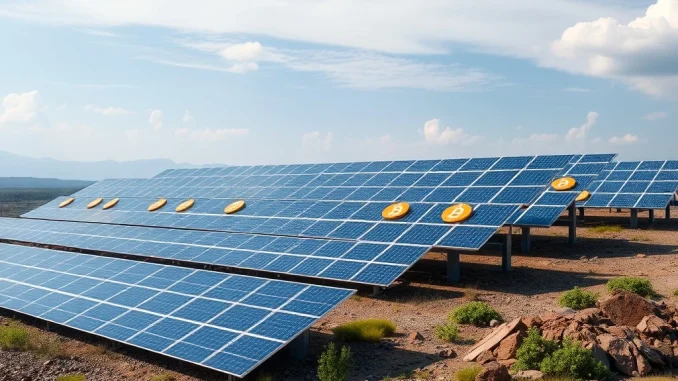
In a groundbreaking move, PowerBank Corporation has activated its 3.79 MW Geddes Solar Project in New York, merging renewable energy with Bitcoin investments. This innovative strategy not only powers 450 homes annually but also funds a digital asset treasury, positioning PowerBank at the forefront of sustainability and financial innovation.
How Does the Geddes Solar Project Support Bitcoin Strategy?
The Geddes Solar Project, built on a repurposed landfill, is PowerBank’s largest U.S. asset. It generates clean energy while channeling excess cash flows into Bitcoin purchases. Key aspects of this dual-track strategy include:
- Scalable model for environmental and economic value creation
- Bitcoin as a non-correlated asset with asymmetric upside potential
- Flexibility to adapt to market conditions and regulatory factors
Why Is PowerBank Betting on Bitcoin?
PowerBank’s CEO, Dr. Richard Lu, describes this as a “future-focused monetary reserve model.” The company aims to:
- Diversify revenue streams beyond traditional markets
- Hedge against macroeconomic risks
- Capitalize on Bitcoin’s long-term appreciation potential
What Are the Challenges of This Renewable Energy-Bitcoin Hybrid?
While innovative, PowerBank’s strategy faces several hurdles:
- Bitcoin’s inherent volatility
- Regulatory uncertainty surrounding digital assets
- Operational challenges in scaling renewable projects
How Does This Reflect Broader Industry Trends?
PowerBank’s initiative mirrors two significant trends:
- Repurposing underutilized land for renewable energy generation
- Growing adoption of Bitcoin by energy firms as a treasury asset
What’s Next for PowerBank’s Bitcoin Strategy?
The company is evaluating expansion across its 1 GW development portfolio. Future steps include:
- Developing custody frameworks for Bitcoin acquisitions
- Monitoring regulatory clarity
- Scaling the model to other renewable assets
PowerBank’s Geddes Solar Project represents a bold convergence of renewable energy and digital assets. By transforming a landfill into a productive solar facility that funds Bitcoin investments, the company pioneers a sustainable financial model for the future. While risks remain, this innovative approach could redefine how corporations leverage clean energy for digital asset growth.
Frequently Asked Questions
1. How much Bitcoin has PowerBank acquired so far?
As of the project activation, PowerBank hasn’t acquired any Bitcoin. Purchases will be made based on market conditions and excess cash flows.
2. What makes Bitcoin an attractive asset for renewable energy companies?
Bitcoin offers non-correlation with traditional markets, potential for asymmetric returns, and serves as a hedge against inflation – appealing traits for energy firms.
3. How does the Geddes project benefit the local community?
The solar facility provides clean energy for 450 homes annually while repurposing a previously unusable landfill site.
4. What are the main risks of PowerBank’s strategy?
Key risks include Bitcoin’s volatility, regulatory uncertainty, and operational challenges in scaling renewable projects.
5. Could this model be replicated by other energy companies?
Yes, the model is scalable, particularly for companies with renewable assets that generate consistent cash flows.