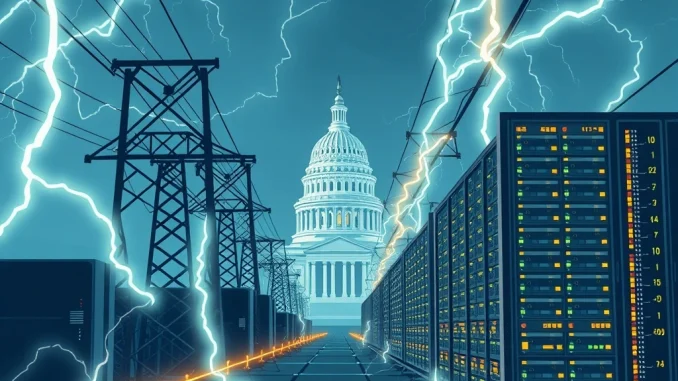
The landscape of energy consumption is evolving rapidly. A significant development recently emerged concerning **Bitcoin mining energy** and **AI data center power**. The U.S. Secretary of Energy has notably advocated for these operations to gain direct access to the nation’s **US energy grid access**. This move signals a crucial shift in how federal regulators view energy-intensive industries. Such direct access could reshape economic and technological growth.
Understanding the Demand for Direct US Energy Grid Access
Currently, many large industrial consumers connect to the grid indirectly. They often rely on local utilities for their power needs. However, the Secretary argues that **Bitcoin mining energy** and **AI data center power** require a different approach. These operations consume vast amounts of electricity. Direct access would bypass intermediaries. It would allow them to negotiate directly with power producers. This change could lead to more stable and potentially lower energy costs. It also ensures a more reliable power supply for their continuous operations. The request emphasizes the growing importance of these sectors. It also highlights their unique energy demands within the national infrastructure.
The Role of FERC Regulation in Energy Infrastructure
The Federal Energy Regulatory Commission, or FERC, holds significant authority. It regulates the interstate transmission of electricity. This independent agency ensures fair competition and reliable energy markets. The Secretary’s letter specifically targets FERC. It urges the commission to facilitate this direct access. **FERC regulation** plays a vital role in shaping national energy policy. Its decisions impact power generation, transmission, and distribution. Granting this request would set a precedent. It would formally recognize Bitcoin mining and AI data centers as major industrial loads. FERC’s response by April 30, 2026, will be highly anticipated. This decision will undoubtedly influence future energy strategies.
Benefits of Industrial Power Grid Connections
Connecting directly to the **industrial power grid** offers several advantages. Firstly, it provides enhanced reliability. Large-scale operations need uninterrupted power. Direct connections minimize outages and voltage fluctuations. Secondly, it can lead to cost efficiencies. Miners and data centers could purchase electricity in bulk. They might also access wholesale markets. This reduces their operational expenses significantly. Furthermore, direct access enables better demand response management. These facilities can adjust their consumption based on grid conditions. This flexibility supports overall grid stability. Finally, it allows for strategic siting. Companies can choose locations with abundant renewable energy. This supports sustainability goals. These benefits underscore the Secretary’s push.
Impact on Bitcoin Mining Energy and AI Data Centers
The potential impact on both industries is substantial. For **Bitcoin mining energy**, direct grid access could solidify its presence in the U.S. It offers a clear pathway for expansion. Miners often seek locations with cheap and abundant power. This policy would streamline their operations. Similarly, **AI data center power** needs are growing exponentially. Advanced AI models require immense computational power. This translates to massive energy demands. Direct connections would help these centers scale more efficiently. It supports their rapid development. Moreover, it could attract more investment into the U.S. energy sector. This fosters innovation in both digital and technological fields. The move could also alleviate some environmental concerns. These industries could source power directly from renewable projects.
Addressing Energy Consumption and Sustainability
The energy consumption of Bitcoin mining and AI data centers remains a point of discussion. Critics often highlight their carbon footprint. However, proponents argue that direct grid access offers solutions. These facilities could partner directly with renewable energy producers. This integration helps stabilize intermittent renewable sources. For instance, they can consume excess solar or wind power. This would otherwise go unused. This approach supports grid modernization. It also promotes the transition to cleaner energy. The Secretary’s proposal implicitly acknowledges this potential. It suggests a path towards more sustainable energy practices. This policy could transform energy-intensive industries into grid assets. They would no longer just be consumers.
Looking Ahead: The April 2026 Deadline and Future Implications for FERC Regulation
The April 30, 2026, deadline is significant. It provides FERC with ample time to deliberate. The commission must consider various factors. These include grid stability, market fairness, and environmental impacts. The outcome will shape the future of energy policy. It will define how new, large-scale consumers integrate into the national grid. A favorable decision could accelerate growth in both sectors. It might also encourage more innovation in energy management. Conversely, a rejection would force these industries to find alternative solutions. This could involve distributed energy resources or smaller-scale grid connections. Ultimately, FERC’s decision will have long-lasting consequences. It will influence the U.S.’s position in global technology and cryptocurrency landscapes. The stakes are undeniably high for **FERC regulation**.
The U.S. Energy Secretary’s call marks a pivotal moment. Granting direct **US energy grid access** to **Bitcoin mining energy** and **AI data center power** could redefine industrial energy consumption. This proposal underscores the evolving needs of modern industries. It also highlights the challenges and opportunities within our energy infrastructure. The forthcoming decision from FERC will determine a crucial path forward. It holds the potential to significantly impact the nation’s technological and economic future. Stakeholders eagerly await FERC’s comprehensive response.
Frequently Asked Questions (FAQs)
1. What is the main proposal by the U.S. Energy Secretary?
The Secretary proposes that Bitcoin mining operations and AI data centers receive direct access to the nation’s power grid, specifically the infrastructure designated for large industrial facilities.
2. Why is direct grid access important for Bitcoin mining and AI data centers?
Direct access can offer enhanced reliability, stable power supply, and potentially lower energy costs. It allows these operations to negotiate directly with power producers and access wholesale markets.
3. What is FERC’s role in this decision?
FERC (Federal Energy Regulatory Commission) is the nation’s grid regulator. It holds the authority to approve or deny the request for direct grid access, as it regulates interstate electricity transmission and energy markets.
4. When is FERC expected to respond to this request?
The U.S. Energy Secretary has requested a response from FERC by April 30, 2026.
5. How could this policy impact energy consumption and sustainability?
Proponents suggest that direct access could allow these industries to partner with renewable energy producers. This enables consumption of excess clean energy and potentially aids grid modernization and the transition to more sustainable practices.
6. What are the potential benefits for the US economy?
Granting direct access could solidify the U.S. as a hub for Bitcoin mining and AI development. It could attract further investment in technology and energy sectors, fostering innovation in energy management.