The volatile world of cryptocurrency trading often presents dramatic shifts. Recently, the market witnessed significant activity in **crypto liquidations**, particularly impacting Bitcoin (BTC) and Solana (SOL) futures. Traders holding **short positions** faced considerable pressure. This development offers crucial insights into current market sentiment and leverage levels.
Understanding Recent Bitcoin Liquidations
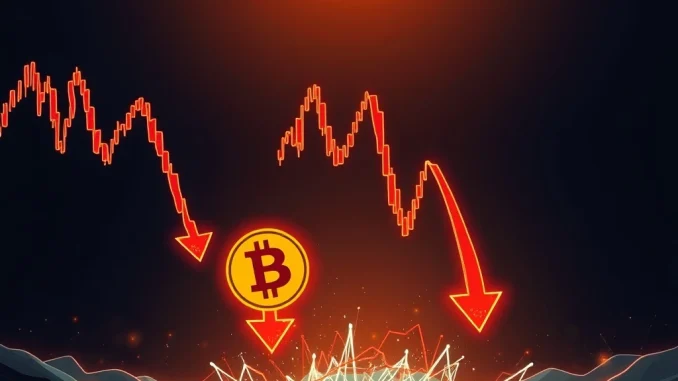
Over the past 24 hours, the cryptocurrency market experienced substantial liquidation events. Specifically, Bitcoin (BTC) futures saw an astounding **$74.91 million liquidated**. A closer look reveals a striking trend: **short positions** comprised a dominant 90.76% of these liquidations. This indicates a strong upward price movement caught many bearish traders off guard. Consequently, they were forced to close their positions at a loss.
When prices rise unexpectedly, traders with short positions often face margin calls. If they cannot meet these calls, their positions are automatically closed. This process is known as a liquidation. Furthermore, these forced closures can accelerate price increases, creating a ‘short squeeze.’ This phenomenon occurred prominently in the **Bitcoin liquidations** data. It underscores the rapid and unpredictable nature of highly leveraged **perpetual futures** markets. Market participants watch these metrics closely to gauge overall risk.
SOL Liquidations: Solana Shorts Also Suffer
Beyond Bitcoin, Solana (SOL) also experienced notable liquidation volumes. In fact, **SOL liquidations** reached $14.06 million within the same 24-hour period. Similar to BTC, short positions accounted for a significant portion, specifically 64.57%. This pattern suggests a broader market move that challenged bearish sentiment across major altcoins. Solana’s price action mirrored Bitcoin’s, leading to substantial losses for those betting against its rise.
This trend highlights the interconnectedness of major digital assets. Often, a strong move in Bitcoin can influence the broader altcoin market. Therefore, traders must consider the wider market context. These SOL liquidations demonstrate the risks involved in taking highly leveraged short bets, especially during periods of unexpected upward momentum. Moreover, understanding these patterns helps traders refine their strategies.
Ethereum’s Distinct Liquidation Profile
In contrast to BTC and SOL, Ethereum (ETH) presented a different liquidation profile. ETH futures recorded $41.74 million in liquidations. However, long positions constituted the majority, accounting for 56.52%. This means that traders betting on a price increase for Ethereum faced more liquidations than those betting on a decrease. This divergence from Bitcoin and Solana is noteworthy. It suggests a unique set of market dynamics affecting Ethereum during this period.
Perhaps ETH experienced a slight price dip or consolidation, catching long traders off guard. Alternatively, profit-taking activities might have triggered some liquidations. This distinct pattern for ETH underlines that not all cryptocurrencies move in lockstep. Each asset possesses its own supply, demand, and sentiment drivers. Consequently, analyzing each asset individually remains crucial for informed trading decisions. Understanding these differences can provide a strategic edge.
What Are Crypto Liquidations and Perpetual Futures?
**Crypto liquidations** occur when a trader’s leveraged position is forcibly closed. This happens because they cannot meet the margin requirements to keep the position open. The exchange closes the position to prevent further losses for both the trader and the platform. Liquidations are a common feature of leveraged trading. They serve as a crucial risk management mechanism in volatile markets.
**Perpetual futures** contracts are a type of derivative that allows traders to speculate on the future price of an asset without owning the underlying asset. Unlike traditional futures, they do not have an expiry date. This means traders can hold them indefinitely, provided they maintain sufficient margin. Perpetual futures are popular in crypto markets due to their flexibility and high leverage options. However, this flexibility also comes with increased risk, as evidenced by the recent liquidation events. Understanding these instruments is vital for anyone engaging in leveraged crypto trading.
The Impact of Short Positions Dominance
The dominance of **short positions** in BTC and SOL liquidations carries significant implications. Firstly, it suggests that a substantial number of traders were bearish on these assets. Their expectation was for prices to fall. However, the market moved against them. Secondly, a high percentage of short liquidations often precedes or accompanies strong upward price movements. This is because forced short covering (buying back to close a short) adds buying pressure. This creates a positive feedback loop for prices.
Furthermore, such events can reset market sentiment. It clears out overleveraged short positions, potentially paving the way for more sustainable price rallies. Traders must remain aware of these dynamics. High liquidation volumes, especially from one side of the market, can signal potential turning points or confirmations of existing trends. Monitoring these figures provides valuable insights into market health and direction.
Navigating Volatile Markets: A Trader’s Perspective
These recent liquidation events serve as a stark reminder of the inherent risks in cryptocurrency trading, particularly with leverage. While **perpetual futures** offer opportunities for amplified gains, they also expose traders to amplified losses. Prudent risk management is paramount. This includes setting stop-loss orders and managing leverage levels responsibly. Traders should never risk more capital than they can afford to lose.
Moreover, staying informed about market trends and liquidation data can help traders anticipate potential shifts. Understanding why **short positions** are being liquidated on assets like Bitcoin and Solana offers a clearer picture of market strength. Conversely, observing long liquidations on Ethereum provides insights into its specific challenges. Ultimately, successful navigation of these volatile markets requires continuous learning and disciplined execution.
Conclusion
The past 24 hours revealed significant **crypto liquidations**, with a clear distinction between assets. Bitcoin and Solana saw a massive squeeze on **short positions**, indicating strong upward momentum. Ethereum, however, experienced more long liquidations, suggesting different market pressures. These events underscore the dynamic and often unpredictable nature of **perpetual futures** trading. Traders must exercise caution and employ robust risk management strategies to navigate these volatile conditions effectively. Understanding these liquidation patterns provides crucial intelligence for making informed decisions in the fast-paced digital asset landscape.
Frequently Asked Questions (FAQs)
What are crypto liquidations?
Crypto liquidations occur when an exchange forcibly closes a trader’s leveraged position. This happens because the trader’s margin balance falls below the required maintenance level. The liquidation prevents further losses to the trader and the exchange.
What are perpetual futures contracts?
Perpetual futures are derivative contracts that allow speculation on an asset’s price without an expiry date. Unlike traditional futures, they can be held indefinitely. They are popular in crypto for their flexibility and leverage options.
Why did short positions dominate BTC and SOL liquidations?
Short positions dominated BTC and SOL liquidations because the prices of Bitcoin and Solana rose unexpectedly. Traders who bet on falling prices were forced to close their positions, leading to a ‘short squeeze’ and further upward price pressure.
What does long liquidation dominance for ETH imply?
Long liquidation dominance for ETH suggests that traders betting on a price increase for Ethereum faced more liquidations. This could be due to a price dip, consolidation, or profit-taking that caught long traders off guard, indicating different market pressures for ETH.
How do liquidations impact the cryptocurrency market?
Liquidations can significantly impact market volatility. Large-scale liquidations, especially from one side of the market (long or short), can accelerate price movements. They can also signal shifts in market sentiment and clear out overleveraged positions, potentially leading to more stable price action afterward.
How can traders manage liquidation risk in perpetual futures?
Traders can manage liquidation risk by using conservative leverage, setting stop-loss orders, monitoring their margin levels closely, and avoiding overexposure. Understanding market trends and not risking more than one can afford to lose are also crucial strategies.