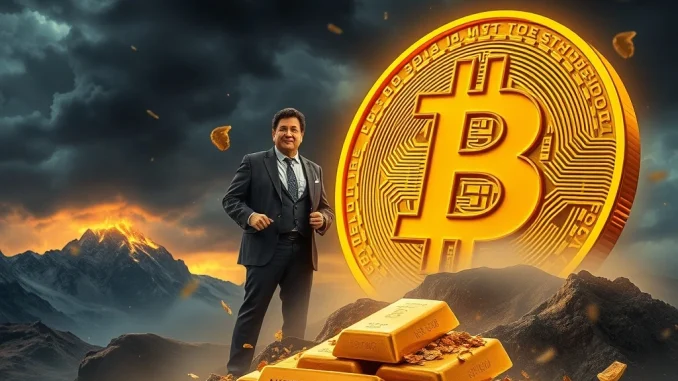
In the ever-evolving world of digital assets and traditional finance, voices like Robert Kiyosaki’s cut through the noise with stark warnings and unconventional wisdom. The author of the iconic ‘Rich Dad Poor Dad’ series has once again captivated the attention of investors, particularly those eyeing Bitcoin, with his emphatic calls to abandon conventional fiat currency in favor of tangible assets. His recent pronouncements highlight not just the perceived instability of traditional financial systems but also critical concerns regarding Bitcoin ETF risks and the specter of a looming market crash. This isn’t just financial advice; it’s a profound challenge to how many approach wealth preservation in uncertain times.
Robert Kiyosaki’s Bold Stance on Fiat and Hard Assets
Robert Kiyosaki has long been a proponent of hard assets, advocating for gold, silver, and Bitcoin as essential components of a robust investment portfolio. His recent statements across social media platforms, including X (formerly Twitter), reinforce his consistent message: traditional fiat currencies are inherently unstable and vulnerable to devaluation. He frames these assets as crucial hedges against inflation and systemic financial risks, urging investors to directly own them rather than relying on intermediaries.
- Ditching Fiat: Kiyosaki believes that government-issued currencies are prone to collapse due to unsustainable debt levels and flawed monetary policies. He frequently uses phrases like ‘stop saving fake $’ to emphasize his distrust.
- The Appeal of Tangibles: Gold and silver, with their long histories as stores of value, remain central to his strategy. Bitcoin, despite its digital nature, is seen as a modern equivalent – a decentralized asset outside government control.
- Protection Against Erosion: For Kiyosaki, these assets offer superior protection against the erosion of purchasing power, which he argues is an inevitable outcome of excessive money printing and economic instability.
Unpacking Bitcoin ETF Risks: Why Direct Ownership Matters
While the advent of Bitcoin ETFs has democratized access to cryptocurrency for many traditional investors, Robert Kiyosaki remains a vocal critic, emphasizing what he perceives as significant Bitcoin ETF risks. His primary concern revolves around the concept of ownership and control, which he argues is diluted when investors opt for an ETF over direct self-custody.
Kiyosaki vividly describes ETFs as ‘having a picture of a gun for self-defense’ – a metaphor highlighting that while they offer exposure, they don’t grant the tangible control of direct asset ownership. This perspective is rooted in Bitcoin’s foundational principle of decentralization, where individuals are empowered to be their own bank.
Key Concerns with Bitcoin ETFs:
| Aspect | Kiyosaki’s Critique | Implication for Investors |
|---|---|---|
| Counterparty Risk | Reliance on custodians and fund managers introduces third-party risk. | Exposure to the solvency and security practices of the ETF provider. |
| Loss of Control | Investors don’t hold the private keys to their Bitcoin. | Lacks the fundamental self-sovereignty aspect of Bitcoin. |
| Decentralization Ethos | Intermediaries contradict Bitcoin’s decentralized principles. | Moves away from the core philosophy that makes Bitcoin unique. |
His advice is clear: ‘If you don’t own the keys to your Bitcoin, you’re trusting someone else to hold your wealth.’ This highlights a fundamental debate within the crypto community about balancing convenience with the core values of autonomy and security.
Navigating the Impending Market Crash: Kiyosaki’s Strategy
Robert Kiyosaki’s commentary frequently touches upon the possibility of a significant market crash. He acknowledges that during such downturns, even assets like gold, silver, and Bitcoin may experience price corrections. However, his outlook on these dips is notably optimistic, viewing them as prime buying opportunities.
He states, ‘When bubbles bust, odds are gold, silver, and Bitcoin will bust too. Good news. If prices crash, I will be buying.’ This reflects a consistent strategy of capitalizing on market downturns, a pattern seen throughout his career. For Kiyosaki, a crash is not merely a disaster but a chance to acquire valuable assets at a discount, reinforcing his long-term belief in their intrinsic worth.
While his forecasts have sometimes swung between extreme bullishness (e.g., Bitcoin reaching $1 million) and severe caution, this duality underscores the volatile nature of speculative markets and the challenges of precise predictions. His influence primarily resonates with retail investors, shaping sentiment rather than directly impacting institutional activity or on-chain transactions.
Beyond Bitcoin: The Enduring Appeal of Gold and Silver
While Bitcoin often takes center stage in Kiyosaki’s recent discussions, his advocacy for physical assets like gold and silver remains steadfast. These precious metals have historically served as safe havens during periods of economic uncertainty and inflation. Kiyosaki views them as foundational elements for wealth preservation, complementing Bitcoin’s role as a digital alternative to fiat.
The historical performance of gold and silver during economic downturns lends credence to Kiyosaki’s recommendations. As global economic uncertainties persist and regulatory frameworks for digital assets evolve, investors face the complex task of balancing accessibility, security, and long-term value preservation. Kiyosaki’s philosophy offers a direct approach to this challenge, urging a return to tangible, unencumbered wealth.
Conclusion: A Call to Action for Savvy Investors
Robert Kiyosaki’s persistent warnings about fiat currency, his critique of Bitcoin ETF risks, and his preparedness for a market crash serve as a powerful reminder for investors to critically assess their portfolios. His message is a call to action: prioritize direct ownership of assets like Bitcoin, gold, and silver to safeguard wealth against systemic vulnerabilities. While the market’s response to his views remains divided, particularly concerning ETFs, his emphasis on self-custody and tangible assets resonates with a growing cohort seeking alternatives to traditional financial systems. As we navigate an increasingly complex economic landscape, Kiyosaki’s insights offer a compelling perspective on building true financial resilience.
Frequently Asked Questions (FAQs)
Q1: Why does Robert Kiyosaki advise against holding fiat currency?
Robert Kiyosaki believes that fiat currencies are inherently unstable and subject to devaluation due to government debt, excessive money printing, and flawed monetary policies. He argues that they are ‘fake money’ that loses purchasing power over time, making them unreliable for long-term wealth preservation.
Q2: What are Kiyosaki’s main concerns regarding Bitcoin ETFs?
Kiyosaki’s primary concerns with Bitcoin ETFs revolve around counterparty risk and the lack of direct ownership. He argues that by investing in an ETF, you don’t actually hold the Bitcoin’s private keys, meaning you’re relying on a third party (the fund manager or custodian) to hold your wealth. This contradicts Bitcoin’s decentralized ethos of self-custody.
Q3: Does Kiyosaki believe Bitcoin, gold, and silver will be immune to a market crash?
No, Kiyosaki acknowledges that if a significant market crash occurs, even gold, silver, and Bitcoin may experience price corrections. However, he views these downturns as opportunities to buy more of these assets at lower prices, believing in their long-term value as hedges against financial instability.
Q4: Why does Kiyosaki advocate for gold and silver alongside Bitcoin?
Kiyosaki advocates for gold and silver because they are traditional hard assets with a long history of retaining value during economic uncertainty and inflation. He sees them as foundational elements for wealth preservation, complementing Bitcoin’s role as a modern, decentralized digital asset, providing a diversified approach to safeguarding wealth outside the traditional financial system.
Q5: How can investors apply Kiyosaki’s advice on self-custody for Bitcoin?
To apply Kiyosaki’s advice on self-custody, investors should withdraw their Bitcoin from exchanges and store it in a personal hardware wallet (like Ledger or Trezor) or a secure software wallet where they control the private keys. This gives them direct ownership and eliminates reliance on third parties.