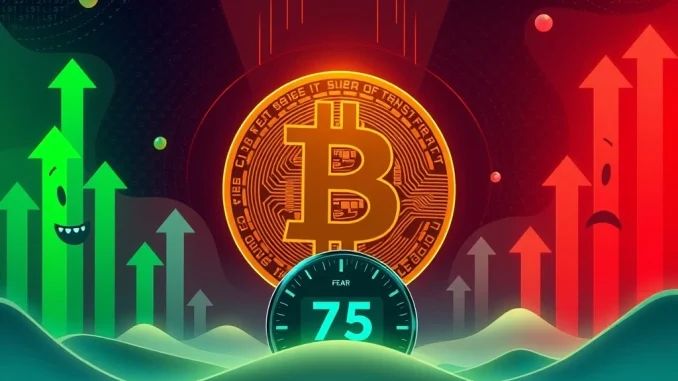
The cryptocurrency world is abuzz as the Bitcoin Fear & Greed Index recently surged to a score of 75. This significant jump places the market firmly in the ‘Greed’ zone, a powerful signal that investor optimism is at a high. For many, this score represents a period of strong buying pressure and confidence in rising prices, fueling the excitement that often characterizes a bullish crypto market. However, experienced analysts are quick to caution that such elevated sentiment can also be a harbinger of potential overvaluation risks and the looming possibility of a market correction. Understanding this delicate balance is crucial for any investor navigating the current landscape.
Decoding the Bitcoin Fear & Greed Index: What Does 75 Mean?
The Bitcoin Fear & Greed Index serves as a vital barometer for gauging collective investor emotion in the cryptocurrency space. It’s designed to cut through the noise and provide a snapshot of whether market participants are feeling overly optimistic (Greed) or overly pessimistic (Fear). A score of 75 indicates a significant shift towards ‘Greed,’ reflecting widespread confidence and a strong inclination to buy, often driven by the fear of missing out (FOMO).
But how exactly is this score calculated? The index aggregates six weighted factors, each contributing to the overall sentiment:
- Volatility (25%): Measures current Bitcoin volatility and maximum drawdowns, comparing them to average values over 30 and 90 days. High volatility often signals a fearful market.
- Market Momentum/Volume (25%): Analyzes the current volume and momentum of the Bitcoin market, comparing it to average values. High buying volumes and positive momentum indicate greed.
- Social Media Activity (15%): Scans various social media platforms for Bitcoin-related hashtags and measures the volume and sentiment of discussions. Increased positive mentions suggest growing enthusiasm.
- Surveys (15%): (Currently paused) These surveys directly ask investors about their market perception. When active, they provide direct insight into sentiment.
- Bitcoin Dominance (10%): Tracks Bitcoin’s share of the total cryptocurrency market capitalization. A declining dominance often suggests investors are diversifying into altcoins, a trend typically seen during periods of high optimism and risk-taking.
- Google Trends (10%): Analyzes search queries related to Bitcoin, looking for changes in search volume and the nature of those searches (e.g., searches for ‘Bitcoin price manipulation’ vs. ‘buy Bitcoin’). Rising interest often correlates with market excitement.
With surveys currently paused, the influence of the remaining five components is amplified, contributing to the strong bullish signal we see today. This holistic approach offers critical insights into the underlying dynamics of the crypto market, moving beyond mere price charts to capture the emotional pulse of investors.
Navigating the ‘Greed’ Zone: Opportunities and Overvaluation Risks
While a high Bitcoin Fear & Greed Index score of 75 certainly highlights a period of intense optimism and potential for further price appreciation, it also comes with a significant caveat: the heightened risk of asset overvaluation. History teaches us that periods of extreme greed often precede market corrections or even bear markets, as speculative fervor can push prices beyond their intrinsic value. This is where the concept of overvaluation risks becomes paramount.
When the market is driven by FOMO and speculative trading, rational decision-making can be overshadowed by emotion. Investors, fearing they’ll miss out on further gains, might enter positions at inflated prices, making them vulnerable to sharp downturns. The declining Bitcoin dominance, weighted at 10% in the index, further underscores this trend. It suggests a shift of capital towards altcoins, which, while offering explosive growth potential, also carry higher risk. This ‘altcoin season’ often accompanies the peak of market exuberance.
Rising social media activity and momentum metrics further amplify this sense of collective enthusiasm. Everyone seems to be talking about crypto, and positive narratives dominate. Conversely, subdued volatility, weighted at 25%, might seem reassuring, but in a ‘Greed’ environment, it can sometimes be the calm before a storm, as major players might be quietly taking profits while retail investors are still buying.
Expert Strategies for a High-Greed Market: Mitigating Correction Risks
In a market characterized by high Bitcoin sentiment and increasing overvaluation risks, disciplined risk management becomes not just advisable, but essential. Experts from COINOTAG emphasize the need for a pragmatic approach, advising investors to consider ‘practically profit-taking’ and to reassess their portfolio exposure. This doesn’t necessarily mean selling everything, but rather trimming positions to lock in gains and reduce overall risk. Consider these actionable insights:
- Profit-Taking: Systematically sell a small portion of your holdings when targets are met. This allows you to secure profits without completely exiting the market.
- Reassess Portfolio Exposure: Evaluate if your current allocation aligns with your risk tolerance, especially given the elevated sentiment. Are you over-exposed to volatile assets?
- Avoid Impulsive Decisions: Resist the urge to make rash trades fueled by social media hype or anecdotal success stories. Stick to your pre-defined investment plan.
- Dollar-Cost Averaging (DCA): While often associated with buying into a downtrend, DCA can also be applied in a high-greed market by gradually reducing exposure or by maintaining small, consistent buys to average out entry points over time, mitigating the risk of buying the absolute top.
- Diversification: Spread your investments across different asset classes or even different cryptocurrencies (beyond just Bitcoin) to reduce the impact of a downturn in any single asset. However, in a ‘greed’ phase, diversification into highly speculative altcoins can also increase risk, so careful selection is key.
- Set Stop-Loss Orders: Implement automated sell orders at a predefined price point to limit potential losses if the market suddenly reverses.
These strategies are designed to help investors navigate potential volatility and mitigate the impact of a sudden market correction, ensuring greater resilience in their investment journey.
Historical Context: Lessons from Past Bitcoin Sentiment Cycles
Understanding the historical patterns of the Bitcoin Fear & Greed Index provides crucial context for its current implications. Extreme greed scores, typically above 80, have frequently served as strong indicators that a market top is near, or that a significant correction is imminent. For instance, during the peak of bull runs in 2017 or 2021, the index often reached into the high 80s or even 90s, only to be followed by substantial pullbacks as overexuberance led to widespread asset overvaluation and subsequent profit-taking. Conversely, periods of extreme fear, often signified by scores below 20, have historically aligned with market bottoms, presenting opportune buying moments for those brave enough to ‘buy when there’s blood in the streets.’
It’s important to remember that while the index provides valuable sentiment context, it is not a direct price predictor. It tells us about the collective emotional state of the market, which can influence price, but it doesn’t guarantee specific price movements. Therefore, investors are strongly urged to combine its insights with robust fundamental and technical analyses for a holistic view of the market. Fundamental analysis assesses the intrinsic value of an asset, while technical analysis studies price charts and patterns to predict future movements. Integrating these approaches offers a more robust framework for decision-making than relying solely on sentiment.
Beyond the Index: Broader Influences on the Crypto Market
While the Bitcoin Fear & Greed Index offers a valuable snapshot of investor emotion, it’s just one piece of a much larger puzzle. The broader dynamics of the crypto market are continually shaped by a multitude of external factors, including:
- Regulatory Developments: Evolving regulations across different jurisdictions can significantly impact market confidence and the flow of institutional capital. Positive regulatory clarity, such as the approval of spot Bitcoin ETFs, can fuel optimism, while restrictive measures can induce fear.
- Macroeconomic Trends: Global economic indicators, such as inflation rates, interest rate decisions by central banks, and geopolitical events, directly influence investor risk appetite. When traditional markets face uncertainty, some investors might seek refuge in Bitcoin, while others might de-risk across all asset classes.
- Institutional Adoption: Increasing participation from large financial institutions, corporations, and even sovereign wealth funds lends credibility and stability to the crypto market. Their investments bring significant liquidity and can drive long-term growth.
- Technological Advancements: Innovations within the blockchain ecosystem, such as upgrades to Ethereum (e.g., Dencun, future sharding), advancements in Layer 2 solutions, and new decentralized applications (dApps), can drive adoption and value.
- Liquidity and Capital Inflows: The availability of capital and ease with which it can enter and exit the market plays a crucial role. Rising liquidity can support growth, but also amplify volatility during periods of high sentiment.
The current 75-point reading on the index underscores a delicate balance between opportunity and caution. Rising liquidity and sustained capital inflows certainly offer substantial growth potential for Bitcoin and the broader crypto ecosystem. However, risks such as sudden volatility spikes and abrupt corrections remain elevated. By adhering to prudent risk management frameworks, staying informed about broader market trends, and consciously avoiding emotionally driven trades, investors can navigate this exhilarating yet precarious phase with greater resilience and a higher probability of long-term success.
Conclusion: Informed Decisions in a Dynamic Market
The surge of the Bitcoin Fear & Greed Index to 75 is a clear indicator of the pervasive optimism currently sweeping through the crypto market. While this sentiment can propel prices higher and create exciting opportunities, it simultaneously highlights the growing overvaluation risks and the potential for a sharp market correction. This isn’t a time for reckless abandon, but rather for strategic prudence.
By understanding what drives the index, paying attention to its historical context, and integrating expert advice on risk management – such as disciplined profit-taking, diversification, and avoiding impulsive decisions – investors can position themselves more robustly. The future of Bitcoin and the broader digital asset space is undoubtedly bright, but navigating its inherent volatility requires a blend of analytical rigor and emotional discipline. Stay informed, stay cautious, and make decisions that align with your long-term financial goals, not just the fleeting emotions of the market.
Frequently Asked Questions (FAQs)
Q1: What is the Bitcoin Fear & Greed Index?
The Bitcoin Fear & Greed Index is a tool that measures the current sentiment of the cryptocurrency market. It aggregates various data points like volatility, market momentum, social media activity, Bitcoin dominance, and Google Trends to produce a score between 0 (Extreme Fear) and 100 (Extreme Greed), helping investors gauge collective market emotion.
Q2: What does a score of 75 on the index signify?
A score of 75 places the market firmly in the ‘Greed’ zone. This signifies a high level of optimism among investors, strong buying pressure, and confidence in rising prices, often driven by the fear of missing out (FOMO). However, it also indicates potential overvaluation and increased risk of a market correction.
Q3: How does the index help investors manage risk?
The index provides sentiment context, allowing investors to assess if the market is overly emotional. During periods of extreme greed, it warns of potential overvaluation, prompting investors to consider strategies like profit-taking, reassessing portfolio exposure, dollar-cost averaging, and diversification to mitigate the risks of a sudden downturn or market correction.
Q4: Does the Bitcoin Fear & Greed Index predict price movements?
No, the index does not directly predict price movements. It is a sentiment indicator that reflects the current emotional state of the market. While extreme scores have historically correlated with market tops (greed) or bottoms (fear), it should be used in conjunction with fundamental and technical analysis for a comprehensive investment strategy, not as a standalone predictive tool.
Q5: What other factors influence the crypto market besides the index?
Beyond the Bitcoin Fear & Greed Index, the crypto market is influenced by numerous factors, including regulatory developments (e.g., ETF approvals), macroeconomic trends (inflation, interest rates), institutional adoption (corporate and institutional investments), technological advancements within the blockchain ecosystem, and overall liquidity and capital inflows.