In the ever-evolving world of finance, few voices carry as much weight as BlackRock CEO Larry Fink. His recent pronouncements have sent ripples across global markets, particularly within the cryptocurrency space. The latest Bitcoin news reveals Fink’s urgent plea to the U.S. Federal Reserve: cut interest rates now. But why is the head of the world’s largest asset manager so keen on this move, and what does it mean for the future of the dollar and digital assets?
Larry Fink’s Urgent Message: Why BlackRock Wants Fed Rate Cuts Now
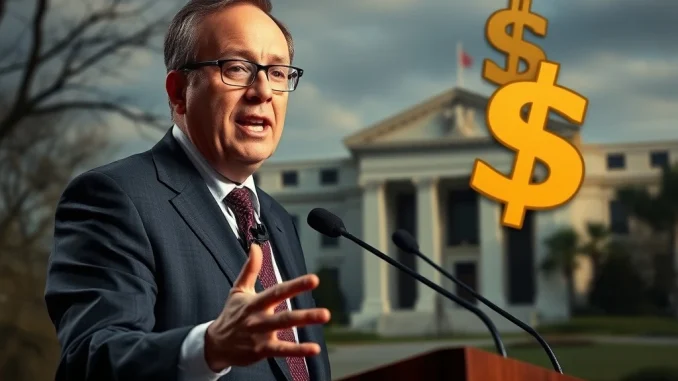
Larry Fink, the influential CEO of BlackRock, has made headlines with his direct appeal to the U.S. Federal Reserve. Speaking at the Future Investment Initiative in Saudi Arabia, Fink underscored a growing concern: the persistent threat of inflation and its potential to erode the U.S. dollar’s global standing. His core argument? Prolonged high interest rates risk undermining the dollar’s role as the world’s primary reserve currency, especially as institutional interest in cryptocurrencies accelerates.
Fink’s stance isn’t new; he’s been a vocal advocate for policy flexibility. He previously criticized the Fed for being “behind the curve” in reacting to economic signals, suggesting that rate adjustments often lag behind real market conditions. This perspective contrasts sharply with the Fed’s recent cautious pause, which has left many on Wall Street guessing about the precise timing of future cuts. Fink’s calls for Fed rate cuts resonate with bond market expectations, where analysts currently price in a significant probability of reductions by year-end.
Is Crypto a Real Threat to Dollar Dominance? Larry Fink Thinks So
One of the most striking aspects of Fink’s argument is his assertion that without intervention, the U.S. dollar could lose ground to decentralized digital currencies. He described this shift as “inevitable” if policymakers remain rigid. This isn’t just theoretical; BlackRock, under Fink’s leadership, has actively expanded its tokenized offerings, signaling a strategic alignment with the burgeoning crypto markets. Fink famously stated that “tokenized funds will be as familiar to investors as ETFs,” highlighting his belief in the convergence of traditional and digital finance. This embrace of tokenization by the world’s largest asset manager lends significant credibility to the idea of a crypto threat to dollar dominance.
The implication is clear: high interest rates can stifle innovation in asset-backed sectors, potentially accelerating the move towards alternative, decentralized assets. If the Fed delays action, critics argue it risks fueling this shift, further complicating its dual mandate of managing inflation and fostering economic stability.
Understanding the Impact on Bitcoin News and Crypto Markets
Fink’s statements carry immense weight, given BlackRock’s colossal influence, overseeing trillions in assets. His advocacy reflects a strategic pivot towards digital assets, which could significantly impact the Fed’s calculus. So, what does this mean for your portfolio, especially if you’re tracking the latest Bitcoin news?
The potential impact on financial markets is multifaceted:
- U.S. Equities and Bonds: Rate cuts typically make bonds less attractive, potentially pushing investors into equities.
- Cryptocurrencies: Assets like Bitcoin (BTC) and Ethereum (ETH) are particularly sensitive to monetary policy. Lower rates often make riskier assets, including crypto, more appealing due to a lower cost of capital and increased liquidity. This could lead to heightened volatility, but also potential upside for digital assets.
- Institutional Strategies: BlackRock’s expansion into tokenized offerings suggests a broader institutional shift. Fink’s statements could encourage other large asset managers to adjust their strategies, further integrating digital assets into mainstream finance.
However, it’s not a unanimous view. Some market participants question the immediacy of rate cuts, while others, like certain Swiss wealth managers, remain divided on Bitcoin’s long-term viability despite growing institutional interest. This mixed sentiment highlights the ongoing debate within the financial sector.
Navigating Larry Fink’s Vision for Global Finance
Larry Fink‘s vision extends beyond mere interest rate adjustments; it’s about the fundamental adaptation of the U.S. monetary system. His remarks echo sentiments from other prominent Wall Street figures, including JPMorgan CEO Jamie Dimon, who has also voiced concerns about the dollar’s vulnerability to crypto competition. Fink believes that the U.S. must adapt to evolving market dynamics or risk losing its preeminent role in global finance.
This perspective suggests a future where digital currencies play an increasingly significant role, not just as speculative assets, but as foundational elements of a new financial architecture. The debate isn’t just about whether the Fed cuts rates, but about how traditional finance responds to the irreversible march of digital innovation. Larry Fink is clearly pushing for proactive adaptation rather than reactive measures.
The Future of Dollar Dominance in a Digital Age
The concept of dollar dominance has been a cornerstone of global finance for decades, providing stability and influence to the U.S. economy. However, the rise of digital currencies and the increasing talk of central bank digital currencies (CBDCs) from other nations are putting this status under scrutiny. Larry Fink’s warnings serve as a stark reminder that even established hegemonies are not immune to disruption.
If the U.S. maintains a rigid monetary policy that stifles innovation and makes the dollar less attractive, it could inadvertently accelerate the adoption of alternative assets and currencies globally. This doesn’t necessarily mean the dollar will collapse overnight, but its gradual erosion of influence could have profound geopolitical and economic consequences. The ongoing discussions within the Fed, influenced by powerful voices like Fink’s, will be crucial in shaping the trajectory of dollar dominance in the years to come.
Larry Fink’s compelling call for the Federal Reserve to cut interest rates is more than just an economic forecast; it’s a strategic warning. His concerns about inflation and the accelerating threat of cryptocurrencies to the dollar’s global dominance underscore a critical juncture for U.S. monetary policy. As BlackRock continues to embrace tokenized assets, the intersection of traditional finance and the digital realm becomes ever more apparent. The coming months will be pivotal as market participants await the Fed’s next moves, balancing economic stability with the imperative to adapt to a rapidly evolving financial landscape where digital assets are no longer just a niche but a powerful force shaping the future.
Frequently Asked Questions (FAQs)
Q1: Why is BlackRock CEO Larry Fink urging the Fed to cut interest rates?
A1: Larry Fink is urging the Fed to cut rates primarily due to concerns about persistent inflation and the potential for prolonged high rates to undermine the U.S. dollar’s global dominance. He believes that a rigid monetary policy could accelerate the shift towards decentralized digital currencies.
Q2: How could Fed rate cuts impact the cryptocurrency market?
A2: Fed rate cuts typically make riskier assets, including cryptocurrencies like Bitcoin and Ethereum, more attractive. This is because lower interest rates reduce the cost of capital and can increase liquidity in the market, potentially leading to heightened volatility and upside for digital assets.
Q3: What does Larry Fink mean by the “crypto threat to dollar dominance”?
A3: Fink suggests that if the U.S. dollar’s value is eroded by inflation and its monetary policy remains inflexible, investors and nations might increasingly turn to decentralized digital currencies as alternatives, thereby diminishing the dollar’s role as the world’s primary reserve currency.
Q4: Is BlackRock involved in the cryptocurrency space?
A4: Yes, BlackRock, under Larry Fink’s leadership, has significantly expanded its involvement in the crypto space. They have launched tokenized offerings and Fink has expressed strong belief in the future of tokenized funds, stating they will become as common as ETFs.
Q5: Are all financial institutions in agreement with Larry Fink’s views?
A5: No, there are mixed reactions within the financial sector. While some prominent figures like JPMorgan CEO Jamie Dimon share concerns about the dollar’s vulnerability to crypto, others, such as some Swiss wealth managers, remain cautious or divided on Bitcoin’s long-term viability.