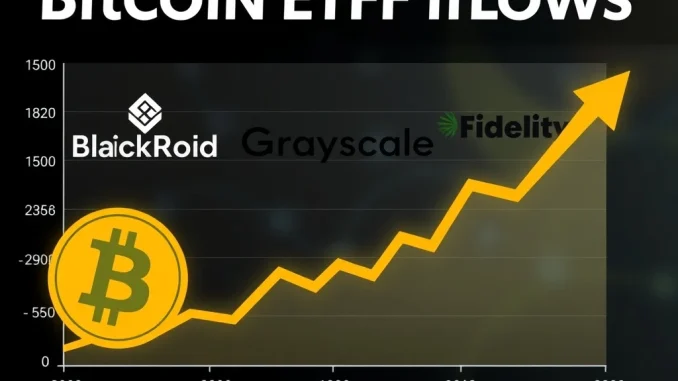
The U.S. spot Bitcoin ETF market is heating up! On July 8, these funds saw a combined net inflow of $80.08 million, marking the fourth straight day of positive momentum. This surge highlights growing investor confidence in Bitcoin ETFs as a gateway to crypto exposure. Let’s break down the key players and what this means for the market.
Why Are Bitcoin ETFs Gaining Traction?
Bitcoin ETFs offer a regulated and accessible way for institutional and retail investors to gain exposure to Bitcoin without directly holding the asset. The recent inflows suggest increasing trust in these products. Here’s a snapshot of the top performers on July 8:
- BlackRock’s IBIT: Dominated with $66.82 million in net inflows.
- Grayscale’s mini BTC: Added $4.82 million.
- Fidelity’s FBTC: Saw $4.75 million in inflows.
- Valkyrie’s BRRR: Recorded $3.69 million.
BlackRock’s IBIT: The Clear Leader
BlackRock’s IBIT continues to outpace competitors, accounting for over 80% of the day’s total net inflows. This dominance reflects the firm’s strong reputation and the growing appetite for Bitcoin exposure among traditional investors.
What’s Next for Bitcoin ETFs?
With four consecutive days of positive flows, the trend signals renewed optimism in Bitcoin’s long-term value. However, challenges like regulatory scrutiny and market volatility remain. Investors should stay informed and diversify their strategies.
Conclusion
The $80.08 million net inflow into U.S. spot Bitcoin ETFs on July 8 underscores the growing institutional interest in cryptocurrency. BlackRock’s IBIT leads the pack, but other funds like Grayscale’s mini BTC and Fidelity’s FBTC are also gaining traction. As the market evolves, these ETFs could play a pivotal role in bridging traditional finance and crypto.
Frequently Asked Questions (FAQs)
1. What are Bitcoin ETFs?
Bitcoin ETFs are exchange-traded funds that track the price of Bitcoin, allowing investors to gain exposure without owning the cryptocurrency directly.
2. Why did BlackRock’s IBIT attract the most inflows?
BlackRock’s strong brand and reputation in traditional finance make its IBIT ETF a preferred choice for investors seeking Bitcoin exposure.
3. Are Bitcoin ETFs safe?
While regulated, Bitcoin ETFs carry risks like market volatility and regulatory changes. Investors should assess their risk tolerance.
4. How can I invest in Bitcoin ETFs?
You can buy shares of Bitcoin ETFs through a brokerage account, just like traditional stocks or ETFs.
5. What’s the difference between spot and futures Bitcoin ETFs?
Spot Bitcoin ETFs hold actual Bitcoin, while futures ETFs track Bitcoin futures contracts. Spot ETFs are generally preferred for direct exposure.
6. Will Bitcoin ETFs continue to see inflows?
While recent trends are positive, inflows depend on market sentiment, regulatory developments, and Bitcoin’s price performance.