In the fast-paced world of cryptocurrency, where innovation often outpaces understanding, a stark warning from financial guru Robert Kiyosaki has sent ripples through the investor community. He cautions that while Bitcoin ETFs offer easy access, they might be creating a dangerous ‘illusion of ownership,’ fundamentally altering how investors perceive their digital assets.
Robert Kiyosaki’s Unflinching Stance on Bitcoin ETFs
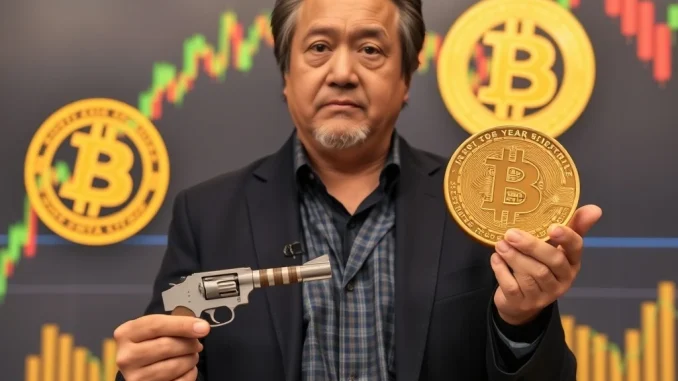
Robert Kiyosaki, the celebrated author of Rich Dad Poor Dad, has once again voiced his profound skepticism regarding crypto Exchange-Traded Funds (ETFs). His recent pronouncements on X serve as a potent reminder that not all forms of asset exposure are created equal. Kiyosaki draws a vivid analogy, likening the possession of an ETF to holding ‘a picture of a gun’ – it conveys the idea of utility but lacks the tangible control and real-world application of the actual item. This powerful metaphor cuts to the heart of his argument: while legal and convenient, Bitcoin ETFs do not grant investors direct custodial rights over the underlying assets.
The Dangerous Illusion of Crypto Ownership
Kiyosaki’s critique hinges on the structural design of ETFs, which, by their nature, rely on intermediaries. He argues that investing in crypto ETFs means entrusting your assets to third-party gatekeepers, thereby exposing you to significant counterparty risks. Should the issuing institution face insolvency, regulatory hurdles, or even a liquidity crisis, your access to or control over your assets could be compromised. This contrasts sharply with true crypto ownership, where assets are held in personal, self-custodied wallets, or physical gold, stored securely in vaults. Kiyosaki firmly believes that ‘When you own an ETF, you’re trusting the ETF provider with your crypto,’ underscoring his consistent advocacy for self-directed wealth strategies centered on decentralized, tangible assets.
Why Direct Custody Matters: Mitigating Financial Risks
The core of Kiyosaki’s philosophy champions direct custody of assets as a bulwark against systemic vulnerabilities. In a world increasingly prone to economic volatility and unforeseen financial shocks, the ability to control your own wealth without relying on intermediaries becomes paramount. He views the intermediary model of ETFs as a potential Achilles’ heel, especially during periods of market stress. Consider the recent market fluctuations in July 2025, which saw sharp price movements. While not directly linked by Kiyosaki, large-scale institutional transfers, such as Galaxy Digital moving 30,000 BTC (over $1.1 billion) to exchanges and OTC platforms, highlight the scale of institutional influence and the potential for market impact. For Kiyosaki, avoiding such indirect exposures is key to mitigating financial risks.
ETF Convenience vs. True Crypto Ownership: A Philosophical Divide
The debate surrounding crypto ETFs reveals a fundamental philosophical divide within the broader crypto community. Proponents hail ETFs as democratizing forces, lowering barriers to entry for both retail and institutional investors, offering regulatory clarity, and integrating digital assets into traditional financial portfolios. However, critics, echoing Kiyosaki’s sentiments, point to inherent risks like regulatory ambiguity, potential market manipulation through opaque structures, and the very concept of indirect asset holding. Kiyosaki’s ‘picture of a gun’ analogy resonates deeply with those who prioritize self-sovereignty and view financial intermediation as a barrier to true asset control. His warnings align with a growing subset of crypto maximalists who champion direct custody as the ultimate hedge against systemic failures.
Despite Kiyosaki’s compelling arguments, crypto ETFs continue to command a significant market share, attracting substantial capital due to their liquidity and ease of use. The approval of spot Bitcoin ETFs and the one-year anniversary of Ethereum ETFs have undeniably broadened access to the crypto market. However, the July 2025 market corrections, impacting Bitcoin and various altcoins, underscore the interconnectedness of traditional and digital financial systems. While Ethereum has shown some resilience, other assets like Solana and XRP have experienced divergent performances, reinforcing the complex nature of the crypto ecosystem. Kiyosaki’s critique extends beyond the technicalities of ETFs; it’s part of his broader advocacy for ‘hard assets’ like Bitcoin and gold, which he views as essential bulwarks against inflation and the encroaching centralization of financial systems. He frames ETFs as artificial constructs, reinforcing his narrative of decentralization and self-sovereign wealth. His warnings aren’t a dismissal of ETFs entirely, but rather a profound caution against overreliance on indirect ownership models in an increasingly volatile global economy.
Robert Kiyosaki’s consistent warnings about the ‘illusion of ownership’ created by Bitcoin ETFs serve as a crucial reminder for investors to critically evaluate how they hold their digital assets. While ETFs offer convenience and accessibility, Kiyosaki powerfully argues that true security and control lie in direct custody. As the crypto market continues to evolve, understanding the nuances between direct and indirect ownership, and the associated financial risks, will be paramount for investors navigating this dynamic landscape. His message encourages a deeper consideration of self-sovereignty and the long-term implications of trusting intermediaries with your wealth.
Frequently Asked Questions (FAQs)
What is Robert Kiyosaki’s main concern about crypto ETFs?
Robert Kiyosaki’s primary concern is that crypto ETFs create an ‘illusion of ownership.’ He argues that investors do not have direct custodial rights over the underlying assets, exposing them to counterparty risks and a lack of tangible control.
How does Kiyosaki define the ‘illusion of ownership’?
Kiyosaki defines the ‘illusion of ownership’ by comparing holding an ETF to having ‘a picture of a gun’ – it represents the asset but lacks the actual control, utility, or direct possession. He believes it gives a false sense of security and control over the asset.
What are the benefits of direct custody of cryptocurrencies?
Direct custody of cryptocurrencies means holding your assets in personal wallets, giving you full control and eliminating reliance on third-party intermediaries. This reduces counterparty risk, enhances security, and aligns with the decentralized ethos of cryptocurrencies.
What are the potential financial risks associated with crypto ETFs?
Potential financial risks with crypto ETFs include counterparty risk (if the issuer faces insolvency), regulatory changes impacting the fund, and a lack of direct control over the underlying assets, which can be problematic during market crises or unforeseen events.
Have Bitcoin ETFs seen significant inflows?
Yes, the approval of spot Bitcoin ETFs and the one-year anniversary of Ethereum ETFs have driven significant inflows, attracting both retail and institutional investors due to their ease of access and perceived stability within traditional financial frameworks.
Does Kiyosaki advise against all ETFs?
While Kiyosaki expresses strong skepticism about crypto ETFs and generally advocates for direct ownership of ‘hard assets’ like Bitcoin and gold, his warnings are primarily a caution against overreliance on indirect ownership models, rather than an outright dismissal of all ETFs in every context.