In the volatile world of cryptocurrency and traditional finance, few voices resonate as loudly as Robert Kiyosaki, the best-selling author of ‘Rich Dad Poor Dad.’ His recent, urgent warnings about the perceived vulnerabilities of Bitcoin ETFs during a financial crisis have ignited a fierce debate among investors. Are these popular investment vehicles truly a safe haven, or are they, as Kiyosaki suggests, merely ‘paper’ promises that could falter when true security is needed most?
Robert Kiyosaki’s Dire Warnings: Are Bitcoin ETFs Truly Secure?
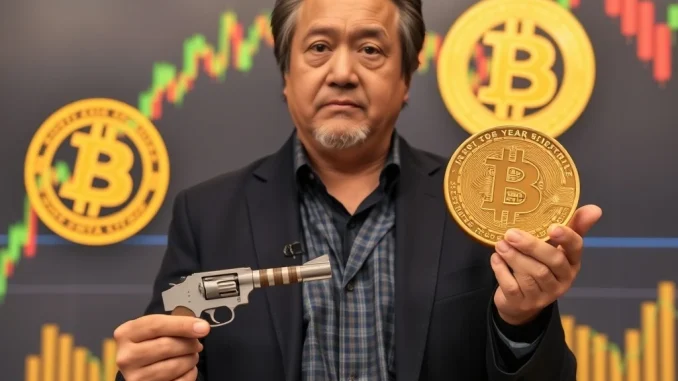
Robert Kiyosaki has consistently reiterated his cautionary stance on exchange-traded funds (ETFs), particularly in the context of a deepening financial crisis. His core argument centers on a fundamental distinction: the difference between owning a ‘real asset’ and holding a ‘paper’ representation of it. Kiyosaki describes ETFs as mere ‘pictures of a gun for self-defense,’ suggesting they are useful in stable conditions but ineffective during systemic collapses. He argues that ETFs do not confer direct ownership or control, which he deems essential for genuine financial protection.
- Lack of Direct Ownership: Kiyosaki stresses that ETFs rely on intermediaries and custodians. In a crisis, he warns, this reliance could prove fatal.
- The ‘Paper’ Analogy: He likens ETF investments to holding a photograph of a valuable item rather than the item itself. When the system falters, the ‘paper’ offers no tangible safeguard.
- Systemic Vulnerability: Kiyosaki’s critique highlights the inherent risks of relying on financial systems that could crumble under pressure, leaving investors exposed.
His philosophy aligns with a broader focus on financial sovereignty, advocating for direct ownership and self-custody to mitigate risks from market volatility or geopolitical instability. While acknowledging ETFs as accessible tools for average investors, he urges caution, stating, “Know your differences when it is best to have real and when it is best to have paper.”
Understanding Real Assets vs. Paper Claims in a Financial Crisis
Kiyosaki’s warnings underscore a critical distinction between traditional financial instruments and what he terms ‘real assets.’ For him, true security lies in tangible holdings that exist outside the conventional banking and financial system. This includes physical gold, silver, and crucially, Bitcoin held in self-custody.
| Feature | Real Assets (e.g., Physical Gold, Self-Custodied Bitcoin) | Paper Assets (e.g., ETFs, Fiat Currency) |
|---|---|---|
| Ownership & Control | Direct, immediate, unencumbered access. You hold the asset. | Indirect, reliant on intermediaries and custodians. You hold a claim. |
| Crisis Resilience | Potentially more resilient as they bypass failing financial systems. | Vulnerable to systemic collapse, counterparty risk, and devaluations. |
| Access | Requires physical possession or secure digital keys. | Easy to buy/sell via brokers, but access can be restricted in crises. |
| Inflation Hedge | Often seen as strong hedges against currency devaluation. | Fiat currencies are subject to devaluation; some ETFs may track inflation-sensitive assets but still rely on the system. |
For Kiyosaki, the devaluation of fiat currencies, which he labels as “fake currency,” further amplifies the need for real assets. He argues that while ETFs offer convenience and liquidity, they fundamentally lack the unambiguous security that direct ownership provides, especially when facing a financial crisis.
The Surge in Bitcoin ETF Inflows: A Conflicting Narrative?
Despite Kiyosaki’s strong warnings, the market for Bitcoin ETFs continues to see significant activity. Recent data shows that U.S. spot Bitcoin ETFs attracted $130 million in net inflows on a recent Friday, reversing a three-day outflow trend. Leading products like BlackRock’s IBIT and Fidelity’s FBTC drove this surge, reflecting a growing demand for digital assets through regulated financial products. Ethereum ETFs also saw substantial inflows during the same period.
Proponents of ETFs, including Bloomberg’s senior ETF analyst Eric Balchunas, offer a counter-argument. They contend that these products are backed one-to-one by their underlying assets and are stored securely with regulated custodians. Balchunas emphasizes that this structure offers a level of safety for investors who may lack the expertise or desire to manage cold storage solutions for their digital assets. He also points out that physical assets, whether gold or self-custodied Bitcoin, carry their own risks, such as theft, loss, or damage.
This highlights the tension between convenience and control in modern investing. ETFs provide ease of access and liquidity, making them attractive to a broad investor base. However, Kiyosaki insists that direct ownership of real assets—whether physical gold, Bitcoin, or silver—offers a superior, unambiguous form of security, particularly during periods of extreme market stress or a financial crisis.
Navigating Financial Sovereignty and Self-Custody
The concept of self-custody is central to Kiyosaki’s advocacy for real assets, especially when it comes to Bitcoin. Unlike participating in a Bitcoin ETF, where an investor relies on third-party custodians to hold the actual Bitcoin, self-custody means you hold the private keys to your cryptocurrency. This grants immediate, unencumbered access and control over your digital wealth.
Consider the implications:
- True Ownership: With self-custody, your Bitcoin is truly yours, not a claim against a third party.
- Reduced Counterparty Risk: You are not exposed to the financial health or operational risks of an ETF issuer or its custodians.
- Geopolitical Independence: In extreme scenarios, self-custodied assets are less susceptible to government seizures or freezes compared to assets held within the traditional financial system.
However, self-custody also comes with responsibilities, including securing your private keys, understanding wallet management, and mitigating risks like loss or theft due to personal error. For many, the perceived complexity or risk of self-custody makes ETFs a more appealing, albeit less sovereign, option.
Actionable Insights for Investors
Kiyosaki’s warnings are not about dismissing ETFs entirely but about urging investors to understand their limitations, especially in extreme scenarios. Here are some actionable insights:
- Diversify Wisely: Consider a balanced portfolio that includes both accessible ETF products and direct holdings of real assets like physical gold, silver, or self-custodied Bitcoin.
- Understand the Risks: Be aware of the counterparty risks associated with ETFs and the personal responsibility required for self-custody.
- Educate Yourself: Learn about cold storage solutions for Bitcoin if you opt for self-custody. Understand the mechanisms behind how ETFs are backed.
- Assess Your Needs: Determine if your primary goal is convenience and liquidity (ETFs) or ultimate control and crisis resilience (real assets/self-custody).
- Long-Term Perspective: Kiyosaki’s message often leans towards long-term wealth preservation. Consider how your investments would fare in a prolonged economic downturn or systemic shock.
Conclusion: The Enduring Debate of Convenience vs. Control
The debate ignited by Robert Kiyosaki highlights a fundamental question for investors: does the ease and liquidity offered by Bitcoin ETFs justify their potential limitations during a severe financial crisis? While ETFs undoubtedly provide an accessible gateway to digital assets for millions, Kiyosaki’s unwavering stance on ‘real assets’ serves as a powerful reminder of the importance of direct ownership and financial sovereignty. As more firms, including politically aligned entities, seek to launch new ETFs, the tension between ‘paper claims’ and ‘real assets’ is set to intensify. Ultimately, investors must weigh the convenience of modern financial products against the perceived security of tangible, self-controlled wealth, especially when preparing for an uncertain future.
Frequently Asked Questions (FAQs)
Q1: What is Robert Kiyosaki’s main concern about Bitcoin ETFs?
Robert Kiyosaki’s primary concern is that Bitcoin ETFs are ‘paper’ assets, meaning they do not grant direct ownership or control of the underlying Bitcoin. He argues that in a severe financial crisis, reliance on intermediaries and financial systems for these ‘paper’ claims could leave investors vulnerable, unlike physical assets or self-custodied Bitcoin.
Q2: How do ‘real assets’ differ from ‘paper assets’ according to Kiyosaki?
According to Kiyosaki, ‘real assets’ are tangible items like physical gold, silver, or self-custodied Bitcoin, which you directly own and control. ‘Paper assets,’ such as ETFs or fiat currency, are claims or representations of value that rely on third parties and the stability of financial systems, making them potentially fragile during a crisis.
Q3: Are Bitcoin ETFs considered safe by other financial experts?
Many financial experts, including Bloomberg’s Eric Balchunas, argue that Bitcoin ETFs are safe. They emphasize that these products are typically backed one-to-one by actual Bitcoin held by secure, regulated custodians, offering a convenient and secure way for investors to gain exposure to Bitcoin without the complexities of self-custody.
Q4: What are the benefits of self-custody for Bitcoin?
Self-custody of Bitcoin offers direct ownership and control over your digital assets, eliminating counterparty risk associated with third-party custodians. It provides immediate, unencumbered access to your Bitcoin and can offer greater financial sovereignty, especially in times of market volatility or geopolitical instability.
Q5: Should investors choose Bitcoin ETFs or self-custody?
The choice between Bitcoin ETFs and self-custody depends on individual investor goals, risk tolerance, and technical expertise. ETFs offer convenience, liquidity, and regulatory oversight, while self-custody provides ultimate control and reduced systemic risk. Many investors choose a diversified approach, utilizing both.
Q6: Why does Kiyosaki warn about the devaluation of fiat currencies?
Kiyosaki frequently warns about the devaluation of fiat currencies (government-issued money) because he views them as ‘fake currency’ susceptible to inflation and governmental manipulation. He advocates for real assets like gold, silver, and Bitcoin as hedges against this devaluation, believing they offer more stable long-term value.