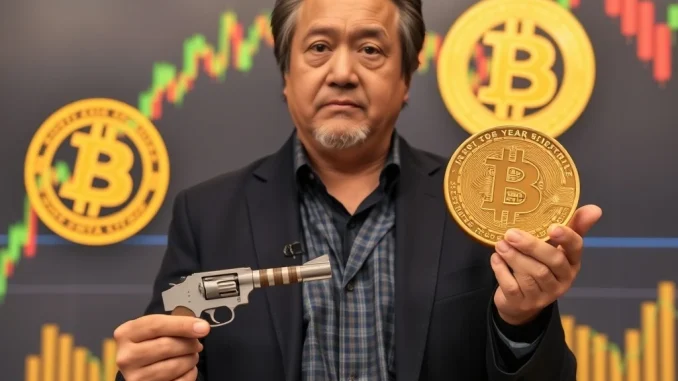
In the fast-paced world of cryptocurrency, where new financial products emerge constantly, a familiar voice of caution has once again resonated: Robert Kiyosaki, the renowned author of Rich Dad Poor Dad. On July 25, 2025, Kiyosaki issued a stark warning to investors, particularly those flocking to Bitcoin ETFs, labeling them as mere “paper assets” and urging a return to the foundational principles of direct ownership. His message challenges the prevailing enthusiasm for these accessible investment vehicles, prompting a crucial conversation about what it truly means to own an asset in the digital age. This isn’t just about Bitcoin; it’s about a fundamental shift in how we approach our entire crypto investment strategy.
Why Robert Kiyosaki Calls Bitcoin ETFs ‘Paper Assets’
Robert Kiyosaki’s skepticism toward Bitcoin ETFs isn’t new, but his recent statements have amplified his long-standing advocacy for tangible assets. His core argument is simple yet profound: an ETF, while providing market exposure, does not confer direct ownership of the underlying asset. He dramatically illustrated this point by stating that an ETF is like “having a picture of a gun for self-defense” rather than the actual weapon [3]. This analogy underscores his belief that convenience should not overshadow true control.
- No Direct Ownership: When you buy shares in a Bitcoin ETF, you don’t own Bitcoin itself. You own a share in a fund that holds Bitcoin. This means you don’t possess the private keys, which are essential for true cryptographic control over your assets [1].
- Custodial Risks: ETF holders rely on intermediaries (the ETF provider and their custodians) to safeguard the assets. This introduces counterparty risk – the risk that the intermediary might fail, be hacked, or face regulatory issues.
- Regulatory Vulnerabilities: Policy shifts or government interventions affecting these financial products could impact your investment, regardless of the underlying asset’s resilience. Kiyosaki consistently warns against relying on centralized systems.
For Kiyosaki, this distinction is vital, especially when considering assets designed to be decentralized and resistant to traditional financial systems. His philosophy emphasizes self-reliance and protection against economic instability, which he believes is best achieved through direct ownership of physical assets, not just Paper Assets.
The Crucial Debate: Gold vs Bitcoin ETFs and True Ownership
The debate ignited by Kiyosaki extends beyond just Bitcoin to include traditional safe-haven assets like gold and silver. He frequently highlights that if you buy an ETF for gold, “you’re not holding gold in your hand, you’re holding a derivative” [5]. This perspective forces investors to weigh the benefits of accessibility and liquidity offered by ETFs against the perceived security and autonomy of holding physical assets. The classic Gold vs Bitcoin debate finds a new dimension when considering their ETF counterparts.
Despite Kiyosaki’s warnings, the market shows a mixed response. On July 25, 2025, U.S. spot Bitcoin ETFs recorded significant net inflows of $226.6 million, following earlier outflows. This fluctuation indicates a strong and growing retail and institutional interest in these simplified tools for crypto exposure. Similarly, gold and silver ETFs have also seen record inflows, suggesting a broad market preference for synthetic products, even with their structural limitations [2].
However, Kiyosaki’s stance resonates with a segment of investors who are deeply wary of financial intermediaries. This historical debate over synthetic versus physical ownership gains renewed relevance in volatile markets. While analysts note that ETFs reduce counterparty risks compared to storing physical commodities and simplify trading, Kiyosaki’s influence provides a counter-narrative emphasizing personal control over wealth [2]. The core question remains: Is the convenience of an ETF worth the trade-off in direct control and ownership?
Navigating Your Crypto Investment: Convenience vs. Control
For many, the appeal of Bitcoin ETFs is undeniable. They simplify access to the volatile cryptocurrency market, allowing investors to gain exposure without the complexities of managing private keys, securing wallets, or navigating crypto exchanges. This convenience is a significant draw for traditional investors accustomed to brokerage accounts and regulated financial products.
However, Kiyosaki’s critique serves as a vital reminder that this convenience comes at a cost: the relinquishing of true asset control. His long-standing emphasis on tangible assets as a hedge against economic instability [4] underscores a preference for assets that cannot be easily seized, frozen, or diluted by third parties. This perspective aligns with the foundational ethos of Bitcoin itself – decentralization and financial sovereignty.
When considering your crypto investment, it’s essential to assess your priorities:
- Accessibility & Liquidity: If ease of trading and integration into traditional brokerage accounts are paramount, ETFs might be suitable.
- True Ownership & Security: If possessing private keys, mitigating counterparty risk, and maintaining full control over your assets are your top concerns, then direct ownership of Bitcoin (or physical gold) is preferable.
- Diversification: A balanced portfolio might include both, but with a clear understanding of the risks and benefits of each.
Beyond the Hype: Actionable Insights for Your Portfolio
Robert Kiyosaki‘s warnings about Paper Assets are not meant to deter all investors from ETFs, but rather to provoke critical thought about the nature of their holdings. His broader philosophy of financial independence, rooted in rejecting centralized systems, aligns perfectly with the foundational principles of cryptocurrency itself.
For investors navigating this complex landscape, here are some actionable insights:
- Understand What You Own: Before investing, clearly differentiate between direct asset ownership and derivative products like ETFs. Know the implications of not holding private keys for your crypto assets.
- Assess Your Risk Tolerance: Consider your comfort level with custodial risks and regulatory uncertainties associated with ETFs versus the responsibility of securing physical assets or self-custody of Bitcoin.
- Diversify Wisely: While Kiyosaki advocates for physical assets, a diversified portfolio might include various forms of exposure. Just be aware of the inherent trade-offs.
- Educate Yourself Continuously: The financial landscape, especially crypto, evolves rapidly. Stay informed about new products, regulatory changes, and the philosophical debates surrounding asset ownership.
The tension between accessibility and autonomy in financial markets remains unresolved. While Bitcoin ETFs serve as a bridge for traditional investors seeking exposure, they also remain a point of contention for advocates of direct ownership. Kiyosaki’s persistent voice serves as a potent reminder that true wealth, for some, lies not just in market gains, but in the uncompromised control of one’s assets.
Frequently Asked Questions (FAQs)
1. What are Bitcoin ETFs?
Bitcoin Exchange-Traded Funds (ETFs) are investment vehicles that allow investors to gain exposure to Bitcoin’s price movements without directly owning the cryptocurrency. They trade on traditional stock exchanges, making them accessible through standard brokerage accounts.
2. Why does Robert Kiyosaki call Bitcoin ETFs ‘Paper Assets’?
Kiyosaki labels Bitcoin ETFs as ‘paper assets’ because, unlike direct ownership of Bitcoin where you hold the private keys, an ETF only gives you a share in a fund that holds Bitcoin. He argues this lacks true control and ownership, similar to owning a picture of a valuable item rather than the item itself.
3. What are the main risks of owning Bitcoin ETFs according to Kiyosaki?
According to Kiyosaki, the main risks include not having direct control (no private keys), reliance on intermediaries (custodial risk), and vulnerability to regulatory changes or failures of the ETF provider. He believes these risks compromise the fundamental security and independence that physical assets or self-custodied Bitcoin offer.
4. What does Kiyosaki recommend instead of Bitcoin ETFs?
Kiyosaki strongly advocates for direct ownership of physical assets. For cryptocurrencies, this means holding actual Bitcoin (and other cryptos) in self-custody, where you control the private keys. He also consistently recommends physical gold and silver as essential tangible assets for wealth preservation.
5. Are Bitcoin ETFs suitable for all investors?
While Bitcoin ETFs offer convenience and accessibility, they are not suitable for all investors, especially those who prioritize direct asset control and wish to avoid intermediary risks. Investors should weigh the benefits of ease of access against the trade-offs of not holding the underlying asset directly, aligning with their personal investment philosophy and risk tolerance.
6. How does Kiyosaki’s view on Gold vs Bitcoin ETFs differ?
Kiyosaki applies the same ‘paper asset’ critique to both Gold ETFs and Bitcoin ETFs. He argues that buying an ETF for gold means you don’t hold physical gold, just a derivative. His core message is consistent: for true security and control, physical ownership (whether of gold, silver, or Bitcoin via self-custody) is always superior to a paper-based derivative, especially in times of economic uncertainty.
References
[1] Robert Kiyosaki Slams ETFs for Being ‘Paper Versions’ of …
[2] Kiyosaki Slams ETFs as Investors Flock to Gold Bitcoin …
[3] An ETF is like having a picture of a gun for self-defense …
[4] Robert Kiyosaki Warns Crypto ETF Investors, Urges to Hold Real Bitcoin
[5] Kiyosaki Warns ETFs Fail to Protect in Crisis Urges Real Assets