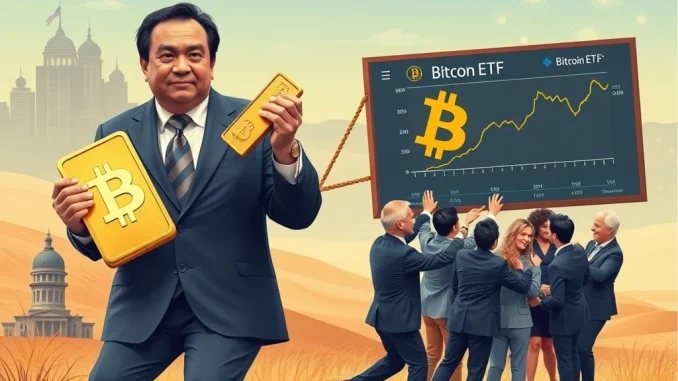
In the dynamic world of digital assets, few topics spark as much debate as the role of traditional financial instruments in a decentralized ecosystem. Recently, the acclaimed author of Rich Dad Poor Dad, Robert Kiyosaki, reignited this discussion with a stark Bitcoin ETF warning, labeling them mere ‘paper versions’ of the real thing. This comes at a time when spot Bitcoin ETFs are witnessing substantial inflows, highlighting a fascinating ideological and practical divide in how investors approach crypto investments. Let’s dive into the heart of this controversy and understand what it means for your portfolio.
Robert Kiyosaki’s Stark ETF Warning: Are Paper Assets a Trap?
Robert Kiyosaki has long been a vocal advocate for tangible assets, from gold and silver to Bitcoin, emphasizing the importance of direct, physical possession over financial instruments that merely represent ownership. His latest commentary extends this philosophy directly to Bitcoin and precious metals ETFs. Kiyosaki likens holding an ETF to owning a ‘picture of a gun’ for self-defense – effective in stable times, perhaps, but utterly useless when true protection is needed. His core argument is simple yet profound: an ETF does not grant you physical possession of the underlying asset.
For Kiyosaki, this lack of direct ownership is a critical vulnerability. He warns that in times of systemic crisis, such as institutional failures or severe liquidity crunches, these ‘paper claims’ could become worthless. He often cites historical examples of bank runs and financial collapses to underscore the dangers of relying on intermediaries for asset security. This perspective is deeply rooted in a distrust of centralized financial systems, a sentiment shared by many in the cryptocurrency community who champion decentralization and self-custody.
The Allure of Bitcoin ETFs: Convenience vs. Control
Despite Kiyosaki’s warnings, the U.S. spot Bitcoin ETF market tells a different story. Recent data shows significant net inflows, with $226.6 million recorded on July 25, 2025, following earlier outflows. This trend signals a growing appetite among retail and institutional investors alike for these accessible investment vehicles. So, what makes them so appealing?
- Simplicity and Accessibility: ETFs are traded on traditional stock exchanges, making them familiar and easy to buy and sell through standard brokerage accounts. This lowers the barrier to entry for many who find managing digital wallets or understanding blockchain complexities daunting.
- Regulatory Oversight: For many, the regulated nature of ETFs provides a sense of security and legitimacy that the often-unregulated crypto market lacks. Regulators typically require ETFs to maintain a one-to-one ratio with their underlying assets, theoretically ensuring their backing.
- Liquidity: ETFs offer high liquidity, allowing investors to enter and exit positions quickly, often without the spread issues sometimes seen in direct crypto purchases.
- Diversification: While a single Bitcoin ETF offers exposure to Bitcoin, the broader ETF market allows for diversified crypto exposure through various crypto-related funds.
This convenience, however, comes at a cost, as Kiyosaki points out: the sacrifice of true asset control. He maintains that ETFs are essentially contracts, claims on the real thing, not the assets themselves.
The Great Debate: Direct Ownership vs. ETF Exposure
The contrasting viewpoints of Kiyosaki and proponents of ETFs highlight a fundamental ideological divide. Bloomberg senior analyst Eric Balchunas, for instance, has countered Kiyosaki’s concerns by emphasizing the robust regulatory safeguards and the 30-year track record of operational stability within the ETF sector. He argues that the legal requirement for ETFs to hold underlying assets one-to-one mitigates much of the risk Kiyosaki describes. Balchunas also points out the inherent risks of self-custody for Bitcoin, such as theft, loss of private keys, and high storage costs for physical assets like gold.
Here’s a simplified comparison to help you weigh the options:
| Feature | Direct Ownership (e.g., holding Bitcoin in a cold wallet) | Bitcoin ETF |
|---|---|---|
| Asset Control | Full control; you hold the private keys. | No direct control; you own shares in a fund. |
| Custody Risk | Risk of losing keys, theft, technical errors. | Risk of fund insolvency, counterparty risk. |
| Accessibility | Requires setting up wallets, understanding blockchain. | Easy to buy/sell via traditional brokerage. |
| Cost | Transaction fees, potential storage costs. | Management fees, trading commissions. |
| Crisis Resilience | Potentially superior in systemic collapse (if self-custodied well). | Vulnerable to institutional failures, liquidity issues. |
| Regulation | Minimal (depends on jurisdiction). | Highly regulated by financial authorities. |
This ongoing debate reflects the broader tension between decentralized finance proponents and traditional financial systems. While ETFs have democratized access to digital and physical assets, critics like Robert Kiyosaki remain unconvinced, advocating for direct ownership as the only reliable hedge in times of economic uncertainty.
Navigating Your Crypto Investments: What’s Right for You?
The surge in inflows into Bitcoin ETFs suggests a market preference for simplicity and regulated access. However, Kiyosaki’s stance underscores the potential vulnerabilities of synthetic products in uncertain environments. For investors, this discourse highlights the need to weigh trade-offs between accessibility, control, and risk when allocating capital to hard assets. Experts often caution that Kiyosaki’s perspective, while valid, may not align with all investors’ circumstances. For instance, retail investors who lack the resources to secure physical assets or navigate the complexities of self-custody might find regulated ETFs a more pragmatic and safer option.
Ultimately, the choice between a Bitcoin ETF and direct ownership depends on individual risk tolerance, investment goals, and technical comfort. It’s crucial to conduct thorough due diligence and understand the implications of each approach for your long-term crypto investments strategy.
Conclusion: The Enduring Paradox of Digital Assets
The ongoing dialogue between traditional finance instruments and decentralized principles continues to shape the cryptocurrency landscape. Robert Kiyosaki’s warnings serve as a vital reminder of the potential pitfalls of relying on ‘paper versions’ during times of crisis, championing the age-old wisdom of direct asset control. Yet, the undeniable popularity and accessibility of Bitcoin ETFs demonstrate a powerful market demand for integrated, user-friendly investment solutions. As the market evolves, investors must carefully consider both perspectives, balancing the convenience and regulatory assurances of ETFs against the autonomy and perceived security of direct ownership. Your decision will likely be a reflection of your personal philosophy on trust, control, and the future of finance.
Frequently Asked Questions (FAQs)
Q1: What is Robert Kiyosaki’s main concern about Bitcoin ETFs?
Robert Kiyosaki’s primary concern is that Bitcoin ETFs are ‘paper versions’ of the actual asset. He argues that investors do not have physical possession or direct control over the underlying Bitcoin when they own an ETF, making these investments vulnerable to systemic risks, institutional failures, or liquidity crises, where the ‘paper claim’ could become worthless.
Q2: Why are Bitcoin ETFs so popular despite Kiyosaki’s warnings?
Bitcoin ETFs are popular due to their simplicity, accessibility, and integration with traditional financial markets. They allow investors to gain exposure to Bitcoin through standard brokerage accounts without the complexities of managing digital wallets or understanding blockchain technology. Their regulated nature also provides a sense of security for many investors.
Q3: What are the main differences between direct ownership of Bitcoin and owning a Bitcoin ETF?
Direct ownership means you hold the private keys to your Bitcoin, giving you full control and eliminating third-party risk. However, it comes with the responsibility of securing your assets against theft or loss. A Bitcoin ETF means you own shares in a fund that holds Bitcoin, offering convenience and regulatory oversight, but you do not directly control the underlying asset and are exposed to counterparty risk.
Q4: Does Kiyosaki recommend any alternatives to ETFs for investing in assets like Bitcoin?
Yes, Kiyosaki consistently advocates for direct ownership of tangible assets. For Bitcoin, this means holding the cryptocurrency in a self-custodied wallet (like a hardware wallet) where you control the private keys. He applies this same principle to precious metals like gold and silver, recommending physical possession over paper certificates or ETFs.
Q5: Are Bitcoin ETFs regulated?
Yes, U.S. spot Bitcoin ETFs are regulated by the Securities and Exchange Commission (SEC). This regulation includes requirements for the fund to hold the underlying Bitcoin in a one-to-one ratio and to have robust custody arrangements, aiming to provide investor protection and operational stability.