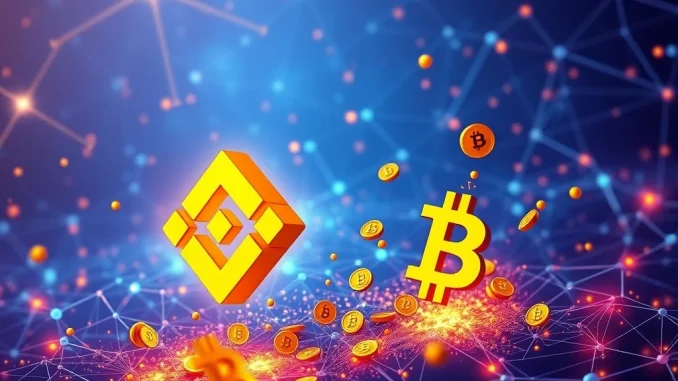
The world of cryptocurrency is constantly evolving, and at its heart lies the relentless pursuit of innovation. Today, a significant development is set to captivate the attention of enthusiasts and investors alike: Binance, a titan in the crypto exchange arena, has initiated a massive airdrop through its Bitlayer Booster Program. This strategic move, involving 5.7 million BTR tokens, aims to inject new life into the nascent but promising realm of Bitcoin DeFi, pushing the boundaries of what’s possible on the original blockchain.
Unpacking the Bitlayer Booster Program: What’s the Hype?
Binance has officially kicked off its Bitlayer Booster Program, distributing a substantial 5.7 million Bitlayer (BTR) tokens. This initial tranche represents a portion of a larger 30 million BTR allocation, which collectively accounts for 3% of the token’s total supply. Launched on July 24, 2025, this program isn’t just a random giveaway; it’s a meticulously designed initiative targeting users with at least 61 Binance Alpha Points. These points are a unique metric tied to engagement with select blockchain projects via the Binance Wallet, rewarding loyal and active participants.
The core objective of this program is clear: accelerate the adoption and development of Bitlayer’s ecosystem. By incentivizing participation in Bitcoin Layer 2 (BitVM) smart contract development, Binance is making a strategic play to expand decentralized finance (DeFi) applications directly on the Bitcoin network. This could unlock immense potential for Bitcoin, moving beyond its traditional role as a store of value to become a vibrant platform for complex financial instruments.
Why is this Binance Airdrop So Significant?
Binance’s strategy for the Bitlayer Booster Program mirrors its prior, highly successful campaigns, such as those for Arbitrum and zkSync. In those instances, early-stage token distributions proved instrumental in driving exponential ecosystem growth and fostering robust communities. By aligning BTR distribution with Alpha Points, Binance effectively leverages its vast existing user base to:
- Foster Liquidity: A wide distribution of tokens among active users encourages trading and participation, creating a more liquid market once BTR is publicly listed.
- Drive Network Activity: Incentivized users are more likely to explore and engage with the Bitlayer ecosystem, leading to increased transaction volume and dApp usage.
- Build Community: Early access and rewards cultivate a strong sense of community and loyalty among participants, essential for long-term project success.
It’s crucial to note that while the BTR Token distribution is underway, the tokens are not yet publicly listed. Their market dynamics will largely be determined following a Token Generation Event (TGE). Early participants who qualify for this 5.7 million BTR reward pool are positioned to potentially benefit significantly as the project matures and gains wider recognition.
Navigating the Market: What Does the Data Say About BTR?
As of July 26, 2025, market data reflects a mixed short-term performance for BTR. The token traded at $0.04, showing a modest 2.13% 24-hour price increase and a more significant 10.82% rise over 90 days, according to CoinMarketCap. However, the 24-hour trading volume declined by 27.41%, indicating fluctuating demand and perhaps a wait-and-see approach from the broader market given its pre-listing status.
Analysts offer a nuanced perspective. While airdrop campaigns can certainly provide a temporary boost to trading activity and generate considerable buzz, the long-term success of any project, including Bitlayer, hinges on sustained user engagement and robust ecosystem development. The true test for Bitlayer will be its ability to deliver on its promise of enhancing Bitcoin DeFi capabilities and attracting developers and users beyond the initial airdrop participants.
The Promise of Bitcoin Layer 2 and BitVM
The integration of Bitcoin Layer 2 solutions like BitVM is a game-changer for the Bitcoin network. Traditionally, Bitcoin’s scripting language is limited, making complex smart contracts challenging. Layer 2 solutions aim to overcome these limitations by moving computation off-chain while still leveraging Bitcoin’s unparalleled security. BitVM, in particular, holds the promise of enabling Turing-complete smart contracts on Bitcoin, which could unlock a new era for:
- Decentralized Exchanges (DEXs): Enabling peer-to-peer trading directly on Bitcoin.
- Lending and Borrowing Protocols: Creating new financial primitives using BTC as collateral.
- NFTs and Digital Assets: Expanding the scope of digital collectibles and ownership on Bitcoin.
- Complex Financial Derivatives: Building sophisticated financial products without centralized intermediaries.
While the potential is immense, widespread adoption remains pending. The success of programs like the Bitlayer Booster Program is critical in bridging this gap by bringing more users and developers into the fold, accelerating the practical application of these technologies.
Community Enthusiasm and Binance’s Strategic Role
Community enthusiasm for the Bitlayer Booster Program is palpable, with active discussions across Binance’s platforms. This initiative aligns perfectly with Binance’s historical Pre-TGE (Token Generation Event) model, which has consistently elevated initial trading activity for new tokens. By prioritizing Alpha Points-based eligibility, the exchange reinforces its pivotal role in shaping token economics through user-centric strategies.
The Bitlayer Booster Program could very well serve as a blueprint for future collaborations between Binance and promising blockchain projects aiming to amplify adoption. It underscores Binance’s unwavering commitment to fostering innovation, particularly in the rapidly evolving landscape of Bitcoin-based DeFi. By allocating a significant portion of Bitlayer’s token supply to early adopters, Binance not only incentivizes participation in BitVM’s development but also potentially enhances Bitcoin’s utility far beyond its current use cases as a digital gold.
Looking Ahead: The Future of Bitcoin DeFi with BTR
The success of this initiative will ultimately hinge on whether the influx of BTR holders translates into meaningful network effects and sustained ecosystem growth. Will these early adopters become active participants, building and using dApps on Bitlayer? Will the promised smart contract capabilities truly flourish, attracting a new wave of innovation to Bitcoin?
The journey to a fully realized Bitcoin DeFi ecosystem is long, but the Bitlayer Booster Program represents a crucial step forward. It’s a testament to the belief that Bitcoin, the bedrock of cryptocurrency, can evolve to support a rich and diverse decentralized financial future. Keep a close eye on BTR and the Bitlayer ecosystem; the coming months promise to be pivotal for the expansion of DeFi on Bitcoin.
Frequently Asked Questions (FAQs)
What is the Bitlayer Booster Program?
The Bitlayer Booster Program is an initiative by Binance to distribute Bitlayer (BTR) tokens to eligible users, aiming to accelerate the adoption and development of the Bitlayer ecosystem and expand decentralized finance (DeFi) applications on the Bitcoin network.
How do I qualify for the BTR airdrop?
To qualify for the initial airdrop, users need to have accumulated at least 61 Binance Alpha Points, which are earned through engagement with select blockchain projects via the Binance Wallet.
What is Bitcoin Layer 2 (BitVM)?
Bitcoin Layer 2 solutions, like BitVM, are protocols built on top of the Bitcoin blockchain. They aim to enhance Bitcoin’s capabilities by enabling more complex functionalities, such as smart contracts and faster transactions, without compromising the main chain’s security. BitVM specifically focuses on bringing Turing-complete smart contracts to Bitcoin.
What are the potential benefits of this airdrop for Bitcoin DeFi?
This airdrop is expected to drive liquidity, increase network activity, and foster community growth within the Bitlayer ecosystem. By incentivizing participation in BitVM development, it could significantly expand the types of DeFi applications possible on Bitcoin, enhancing its utility beyond a simple store of value.
When will the BTR token be publicly listed?
The BTR tokens are not yet publicly listed. Their market dynamics and trading availability will be determined following a Token Generation Event (TGE), the date of which is yet to be announced.
What are the risks associated with participating in such a program?
As with any pre-listing token distribution, risks include market volatility once the token is listed, potential for fluctuating demand, and the long-term success of the Bitlayer ecosystem itself. Users should conduct their own research and understand that the value of the BTR token is not guaranteed.