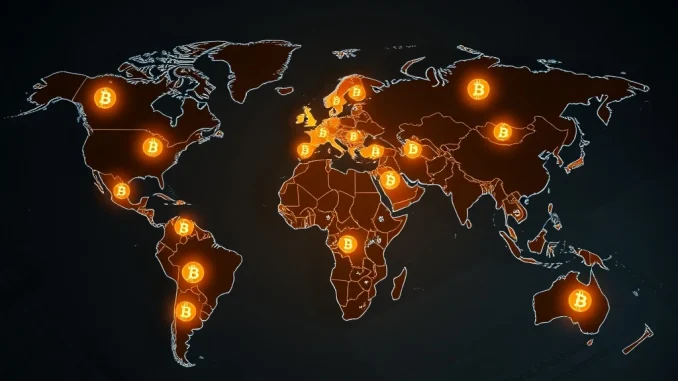
The global financial landscape is undeniably shifting. A groundbreaking report from the **Bitcoin Policy Institute** reveals a significant trend: 32 nations are actively working towards the formal **Bitcoin adoption**. This movement represents approximately one-sixth of the world’s countries. They are enacting crucial legislation to integrate Bitcoin into their economic frameworks. This widespread interest underscores a pivotal moment for digital currencies and national economies.
The Growing Momentum of Global Bitcoin Adoption
The **Bitcoin Policy Institute** report offers compelling insights. It details how these 32 countries are not merely observing Bitcoin. Instead, they are implementing concrete legislative steps. These steps aim to formally adopt the cryptocurrency. This formalization includes various aspects, from governmental holdings to citizen investment opportunities. The report emphasizes a proactive approach by these nations. They recognize Bitcoin’s potential impact on their financial futures. Many countries are evaluating Bitcoin’s role as a strategic asset. This signals a departure from traditional financial paradigms.
Furthermore, the institute’s research covered specific governmental and legislative activities. These include:
- **Holding Bitcoin:** Governments acquiring and maintaining Bitcoin reserves.
- **Bitcoin Mining:** Establishing frameworks for cryptocurrency mining operations.
- **Tax Payments:** Allowing citizens to pay taxes using Bitcoin.
- **Pension Investments:** Permitting pension funds to invest in cryptocurrencies.
These diverse activities highlight a comprehensive approach. Countries are exploring multiple avenues for integrating Bitcoin. This widespread engagement suggests a serious commitment. It moves beyond mere experimentation.
Crucial Bitcoin Legislation Paving the Way
The core of this global movement lies in **Bitcoin legislation**. Countries are drafting and enacting laws. These laws provide legal clarity and operational frameworks for Bitcoin. This legislative push is essential. It moves Bitcoin from a speculative asset to a recognized financial instrument. For instance, laws concerning Bitcoin mining can attract significant investment. They also create jobs within these nations. Similarly, allowing tax payments in Bitcoin simplifies transactions for many. It also legitimizes the digital currency further.
Moreover, legislative efforts extend to protecting consumers and investors. Clear regulations foster trust. They encourage broader participation. Without proper legal frameworks, widespread **Bitcoin adoption** would remain challenging. The focus on pension investments is particularly notable. It signifies a long-term view. Governments are considering Bitcoin as a viable asset for retirement savings. This move could significantly increase Bitcoin’s market stability and liquidity.
Bitcoin as a Strategic Reserve: A New Economic Frontier
Several nations are already leveraging **Bitcoin as reserve**. This strategy marks a significant shift in economic policy. Traditionally, countries hold gold or fiat currencies as reserves. However, Bitcoin offers unique advantages. It provides a decentralized, censorship-resistant asset. Its supply is also capped, making it a potential hedge against inflation. For smaller economies, holding Bitcoin could offer greater financial sovereignty. It reduces reliance on traditional global reserve currencies.
The motivations for holding Bitcoin as a strategic reserve are varied. Some nations seek to diversify their assets. Others aim to protect against currency devaluation. Still, others want to position themselves as leaders in the digital economy. This emerging trend challenges conventional economic wisdom. It also opens new dialogues about national financial security. The **Bitcoin Policy Institute** specifically noted this trend. They highlight its potential to reshape global financial power dynamics.
The Role of the Bitcoin Policy Institute
The **Bitcoin Policy Institute** plays a crucial role. Their report provides valuable data and analysis. It sheds light on these significant global developments. The institute’s research methodology focuses on tangible actions. They analyze governmental and legislative movements. This rigorous approach ensures accuracy and credibility. Their findings serve as an important benchmark. They help track the progress of **countries adopting Bitcoin**.
Furthermore, the institute’s work helps inform policymakers. It provides them with data-driven insights. These insights are essential for making informed decisions. They guide the development of sound regulatory frameworks. The institute’s commitment to independent research is vital. It contributes to a deeper understanding of Bitcoin’s evolving role. This includes its potential for national economies and global finance. Their reports often spark further discussion. They also encourage more nations to consider their own Bitcoin strategies.
Implications for Global Finance and Future Outlook
The formal **Bitcoin adoption** by 32 countries carries profound implications. It suggests a growing acceptance of cryptocurrencies. This acceptance extends beyond individual investors. It reaches the highest levels of national governance. This trend could accelerate further. More countries might follow suit. They will likely observe the successes and challenges of early adopters. The integration of Bitcoin into national economies could foster greater financial inclusion. It might also stimulate technological innovation.
However, challenges remain. Regulatory harmonization across borders is complex. The volatility of Bitcoin’s price is also a consideration. Nevertheless, the direction is clear. A significant portion of the world is moving towards a digital asset future. The efforts highlighted by the **Bitcoin Policy Institute** are foundational. They are laying the groundwork for a new era of global finance. This ongoing evolution merits close observation. It will undoubtedly shape the economic landscape for decades to come.
Frequently Asked Questions (FAQs)
What does ‘formal Bitcoin adoption’ mean for these 32 countries?
Formal Bitcoin adoption means these countries are enacting legislation. This legislation allows for various activities. These include holding Bitcoin as a national asset, regulating Bitcoin mining, accepting Bitcoin for tax payments, and permitting pension funds to invest in Bitcoin. It integrates Bitcoin into their official economic and legal frameworks.
Which organization reported on this global Bitcoin adoption trend?
The Bitcoin Policy Institute released the report. Their research highlighted that 32 countries are actively working towards formally adopting Bitcoin through legislative efforts.
Why are countries considering Bitcoin as a strategic reserve?
Countries consider Bitcoin as a strategic reserve for several reasons. Bitcoin is decentralized and has a capped supply. This can act as a hedge against inflation. It also offers financial sovereignty, reducing reliance on traditional reserve currencies. It helps diversify national assets and positions nations in the evolving digital economy.
What types of legislative activities are these countries pursuing regarding Bitcoin?
The legislative activities include laws related to governmental Bitcoin holdings, regulations for Bitcoin mining operations, frameworks for accepting tax payments in Bitcoin, and policies allowing pension funds to invest in cryptocurrencies. These measures aim to integrate Bitcoin into their financial systems.
What are the potential long-term impacts of 32 countries adopting Bitcoin?
The long-term impacts could be significant. It could lead to increased global financial inclusion and stimulate technological innovation. It may also reshape global financial power dynamics. Furthermore, it could drive greater market stability and legitimacy for cryptocurrencies worldwide.