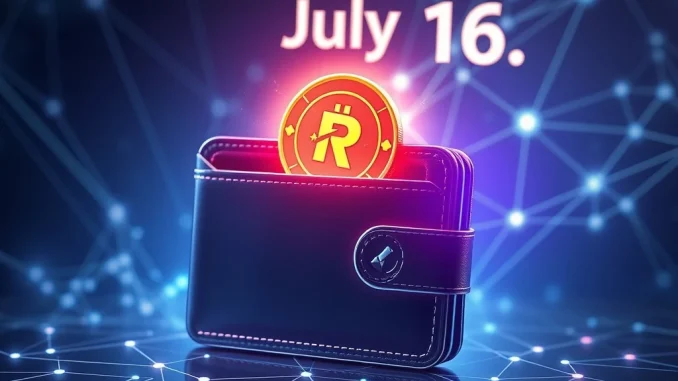
The crypto world is buzzing with anticipation as Binance, a titan in the digital asset space, announces a pivotal event: the Binance Wallet TGE for Hyperion (RION). This isn’t just another token launch; it’s a strategic move utilizing a unique Bonding Curve mechanism, set to unfold on July 16. For those immersed in the cryptocurrency landscape, this event represents a significant opportunity to engage with a new project right from its inception, facilitated by the robust infrastructure of Binance Wallet.
What is the Binance Wallet TGE for Hyperion (RION)?
Get ready to mark your calendars! Binance Wallet is set to host the Token Generation Event (TGE) for Hyperion (RION) on July 16, from 08:00 to 10:00 UTC. This announcement, made via an official X post from Binance, has quickly captured the attention of investors and crypto enthusiasts alike. A TGE is essentially the debut of a new cryptocurrency token, making it available to the public for the first time. In this instance, it’s a Bonding Curve TGE, a method designed to facilitate fair and transparent price discovery and distribution.
Participation in this highly anticipated event is exclusive, requiring participants to possess Binance Alpha Points. These points serve as a gateway, ensuring that the most engaged and loyal members of the Binance ecosystem get priority access to promising new projects like Hyperion (RION). It’s a testament to Binance’s commitment to fostering a vibrant and rewarding community.
Deep Dive into Hyperion (RION): What’s Its Promise?
While the initial announcement from Binance focuses on the event logistics, the true intrigue lies in Hyperion (RION) itself. Every new token aims to solve a problem or introduce an innovative concept. Though specific details about Hyperion’s utility are yet to be fully disclosed in the initial announcement, the fact that Binance Wallet is hosting its TGE suggests a certain level of vetting and potential. Typically, projects launched through such prominent platforms aim to bring novel solutions to areas like decentralized finance (DeFi), gaming, NFTs, or real-world asset tokenization.
Investors will be keen to understand Hyperion’s whitepaper, its use cases, and the team behind it. A successful TGE often hinges on the project’s long-term vision and its ability to deliver tangible value. As more information emerges, the community will gain a clearer picture of RION’s place in the evolving blockchain ecosystem.
Understanding the Token Generation Event (TGE) Model
A Token Generation Event (TGE) is a crucial phase in a cryptocurrency project’s lifecycle, marking the moment its native token is created and distributed. Unlike traditional IPOs, TGEs in the crypto space often employ various models to ensure fair distribution and initial price discovery. The Hyperion (RION) TGE will utilize a Bonding Curve, a particularly interesting mechanism.
What is a Bonding Curve?
A Bonding Curve is a mathematical curve that defines the relationship between a token’s price and its supply. Here’s how it generally works:
- Automated Price Discovery: As more tokens are bought, the price of subsequent tokens increases according to the curve. Conversely, if tokens are sold back to the curve, the price decreases.
- Liquidity Provision: The curve itself acts as an automated market maker, providing continuous liquidity for the token without needing external exchanges initially.
- Transparent Pricing: The pricing mechanism is pre-defined and transparent, accessible to all participants.
This model aims to provide a more stable and predictable environment for initial token sales compared to traditional order book exchanges, especially for new projects seeking to establish a fair market value.
Navigating Participation with Binance Alpha Points
The requirement of Binance Alpha Points for participation adds an exclusive layer to the Hyperion (RION) TGE. These points are typically awarded to users who actively engage with the Binance ecosystem through various activities, such as holding certain assets, participating in specific campaigns, or contributing to community initiatives. For potential participants, this means:
- Check Your Eligibility: Ensure you have accumulated sufficient Alpha Points in your Binance Wallet.
- Understand Point Utility: Alpha Points are not directly traded; they are used as a gateway or eligibility criterion for special events like this TGE.
- Future Engagement: This system encourages continuous engagement with Binance’s offerings, potentially rewarding long-term users.
It’s a smart strategy by Binance to reward its loyal user base while ensuring a dedicated audience for new token launches.
The Power of a Bonding Curve in Action for RION
The choice of a Bonding Curve for the Hyperion (RION) TGE is significant. This mechanism offers several advantages for both the project and early participants:
For Hyperion (RION):
- Guaranteed Liquidity: The curve ensures there’s always a market to buy and sell RION tokens.
- Predictable Price Movement: The price changes are determined by a mathematical formula, making them transparent and less susceptible to sudden, manipulative swings initially.
- Fair Distribution: It encourages gradual participation, potentially reducing the impact of large whales dominating the initial sale.
For Participants:
- Early Access Potential: Being among the first to acquire RION through this mechanism.
- Transparent Pricing: Knowing how the price will react to buy/sell pressure.
However, participants should also be aware that prices can rise quickly with high demand and fall if tokens are sold back into the curve. Understanding the specific curve parameters for RION will be crucial for informed decision-making.
Key Takeaways for the Hyperion (RION) TGE
The upcoming Hyperion (RION) TGE on Binance Wallet is more than just a date; it’s a strategic event demonstrating the evolving landscape of token launches. Here’s what you need to remember:
- Date & Time: July 16, 08:00 to 10:00 UTC. Don’t miss the window!
- Platform: Hosted on Binance Wallet, ensuring a secure and familiar environment.
- Participation Requirement: Binance Alpha Points are essential for eligibility.
- Mechanism: A Bonding Curve TGE, offering a unique approach to price discovery and distribution.
As with any new crypto venture, due diligence is paramount. Research Hyperion (RION) beyond just the TGE announcement, understand the Bonding Curve mechanics, and assess your risk tolerance before participating. This event promises to be an exciting chapter for both Binance Wallet users and the broader crypto community.
Frequently Asked Questions (FAQs)
1. What is a Token Generation Event (TGE)?
A Token Generation Event (TGE) is the initial launch and distribution of a new cryptocurrency token to the public. It’s often the first opportunity for investors to acquire the token directly from the project team or an associated platform.
2. How does a Bonding Curve TGE work?
In a Bonding Curve TGE, the token’s price is determined by a pre-defined mathematical formula that correlates price with supply. As more tokens are purchased, the price increases incrementally, and vice versa when tokens are sold back. This mechanism provides continuous liquidity and transparent price discovery.
3. What are Binance Alpha Points, and how do I get them?
Binance Alpha Points are loyalty points awarded to active users within the Binance ecosystem. They are typically earned through various forms of engagement, such as holding specific assets, participating in promotions, or using certain Binance services. These points often grant access to exclusive events like TGEs or special campaigns.
4. Can anyone participate in the Hyperion (RION) TGE?
No, participation in the Hyperion (RION) TGE on Binance Wallet requires the possession of Binance Alpha Points. This makes it an exclusive event for eligible and engaged members of the Binance community.
5. What should I do to prepare for the Hyperion (RION) TGE?
To prepare, ensure you have sufficient Binance Alpha Points in your Binance Wallet. Additionally, research Hyperion (RION) to understand its project goals, utility, and whitepaper. Familiarize yourself with the Bonding Curve mechanism to understand potential price dynamics during the event.