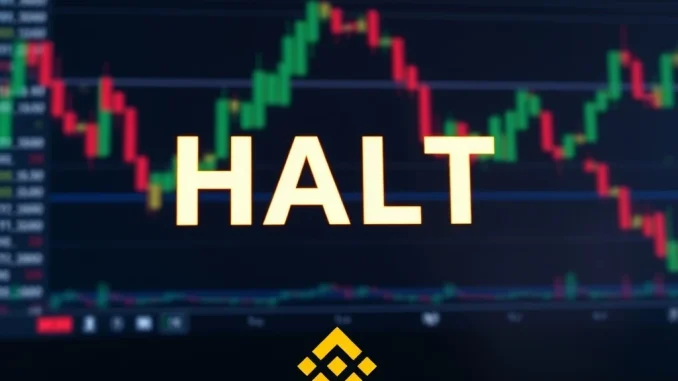
A sudden and significant event recently sent ripples through the cryptocurrency market. Binance, one of the world’s largest crypto exchanges, experienced an abrupt Binance Trading Halt affecting its USDT- and USDC-margined perpetual futures. This unexpected disruption immediately captured the attention of traders globally, raising concerns about market stability and operational reliability. The incident occurred on Friday at approximately 6:17 a.m. UTC, impacting both the exchange’s web and mobile application platforms. Consequently, users found themselves unable to execute trades or manage existing positions, leading to widespread anxiety and uncertainty.
Understanding the Sudden Binance Trading Halt
The Binance Trading Halt on Friday morning was an unannounced stoppage. It directly affected trading for both USDT-margined and USDC-margined perpetual futures contracts. These instruments are highly popular among cryptocurrency traders. They allow for leveraged speculation on the future price of digital assets. The outage meant that millions of users could not access their trading accounts for these specific products. This created a vacuum of activity on a crucial segment of the exchange. The disruption spanned across Binance’s entire ecosystem. This included its robust web interface and its widely used mobile application. Traders therefore faced complete inaccessibility to these critical markets. This situation highlighted the inherent risks associated with centralized exchange operations and their potential vulnerabilities.
During the halt, market participants expressed significant concerns. They worried about potential liquidations or missed opportunities. Binance later confirmed the technical issue was under investigation. They assured users that funds remained secure. However, the immediate impact was a freeze on trading activities. This left many positions vulnerable to market movements outside of their control. Such events underscore the importance of robust infrastructure and transparent communication from major trading platforms.
What are Perpetual Futures?
Perpetual Futures are a unique type of derivatives contract in the cryptocurrency space. Unlike traditional futures, they lack an expiration date. Traders can hold them indefinitely, provided they maintain sufficient margin. This feature makes them extremely popular for long-term speculative positions. They also appeal to those seeking continuous exposure to asset price movements. These contracts derive their value from an underlying cryptocurrency, such as Bitcoin or Ethereum. However, traders do not physically own the underlying asset. Instead, they speculate on its price direction. A funding rate mechanism keeps the perpetual futures price tethered to the spot market price. This rate encourages convergence between the two. The funding rate adjusts regularly, typically every eight hours. It ensures the contract price does not deviate too far from the spot price. This mechanism is crucial for the stability and functionality of perpetual futures markets.
The Significance of USDT Futures and USDC Futures
The recent halt specifically impacted USDT Futures and USDC Futures. These are perpetual futures contracts margined with stablecoins. USDT (Tether) and USDC (USD Coin) are two of the largest stablecoins by market capitalization. They are pegged to the US dollar. This stability makes them ideal for margining futures contracts. Traders use stablecoins to avoid additional price volatility from their collateral. This means their profit or loss is solely dependent on the underlying asset’s price movement. Consequently, stablecoin-margined futures have gained immense popularity. They offer a predictable and less volatile collateral base compared to using volatile cryptocurrencies like Bitcoin. For example, a trader using BTC as collateral for futures could see their collateral value fluctuate. This adds another layer of risk. However, with USDT or USDC, the collateral value remains stable. This simplifies risk management for many traders.
The vast liquidity and widespread adoption of both USDT and USDC further enhance their importance in the derivatives market. Many traders prefer them for their ease of use and perceived safety. Therefore, any disruption to USDT Futures or USDC Futures can have a significant impact. It affects a large segment of the active trading community. These stablecoins underpin a substantial portion of the global crypto derivatives volume. This highlights their systemic importance to the broader digital asset ecosystem.
Immediate Repercussions of the Crypto Exchange Outage
The Crypto Exchange Outage on Binance had immediate and far-reaching consequences. For traders with open positions, the halt meant an inability to manage their risk. They could not close positions, adjust stop-losses, or add margin. This left them exposed to market fluctuations. Any significant price movement during the outage could have led to forced liquidations. Such events can result in substantial financial losses for individual traders. Moreover, the lack of access created a ripple effect. It prevented new trades from being placed. This reduced overall market liquidity during the affected period. Consequently, this sudden cessation of trading activity can trigger increased volatility in other markets. It also undermines trader confidence in the reliability of major exchanges. Many traders rely on constant access to manage their leveraged positions effectively. A sudden halt therefore directly threatens their financial well-being and market strategies. The incident also highlighted the critical need for backup plans and diversified trading strategies among active participants.
Binance’s Response and Communication
Following the abrupt halt, Binance quickly acknowledged the issue. They communicated updates through their official channels, including Twitter. Initial statements indicated that their team was investigating the root cause. They also assured users that funds were secure. This proactive communication aimed to mitigate panic among their vast user base. However, the lack of immediate resolution or a clear timeline for restoration still caused concern. The exchange later provided details about the technical glitch. They worked diligently to restore full functionality. Such incidents test an exchange’s incident response protocols. They also highlight the importance of clear, consistent, and timely communication during crises. Binance’s ability to quickly identify, address, and resolve the issue was paramount to restoring trust.
Broader Implications for Crypto Trading
This Crypto Exchange Outage carries broader implications for the entire crypto trading landscape. It underscores the inherent risks associated with centralized exchanges. While convenient, these platforms are susceptible to technical failures, cyberattacks, or regulatory interventions. Such events can disrupt trading activities without warning. Therefore, traders must consider diversifying their strategies. They should avoid over-reliance on a single platform. The incident also reignites discussions around decentralization. Decentralized exchanges (DEXs) offer an alternative. They reduce single points of failure. However, DEXs often come with their own set of complexities, including lower liquidity for some assets and higher gas fees. The event further draws attention to regulatory scrutiny. Authorities worldwide are increasingly examining crypto exchanges. They focus on operational stability and consumer protection. Incidents like the Binance trading halt provide more fuel for these regulatory discussions. They highlight the need for robust oversight and industry standards. This ensures the integrity of financial markets. Ultimately, this disruption serves as a stark reminder for all market participants. They must prioritize risk management and remain vigilant in a rapidly evolving digital asset space.
In conclusion, the recent Binance Trading Halt was a significant event for the cryptocurrency community. It impacted USDT Futures and USDC Futures, along with other Perpetual Futures. While temporary, the Crypto Exchange Outage underscored several critical lessons. These include the importance of robust technical infrastructure, transparent communication, and diversified trading strategies. As the crypto market matures, such incidents will undoubtedly shape its future development. They will also influence how traders and regulators approach the evolving landscape of digital finance.
Frequently Asked Questions (FAQs)
1. What caused the recent Binance Trading Halt?
Binance reported a technical issue as the cause of the trading halt. While specific details were not immediately public, such outages often stem from system overloads, software glitches, or infrastructure maintenance challenges.
2. Which trading products were affected by the outage?
The halt specifically impacted trading for USDT-margined and USDC-margined perpetual futures contracts. Other spot markets or different types of derivatives may not have been affected.
3. What are Perpetual Futures and why are they important?
Perpetual futures are cryptocurrency derivative contracts without an expiration date. They allow traders to speculate on asset prices with leverage. They are crucial for market liquidity and price discovery in the crypto derivatives space.
4. How did the Crypto Exchange Outage affect traders?
Traders were unable to open, close, or manage their positions on the affected perpetual futures markets. This could have led to financial losses due to forced liquidations or missed opportunities during market movements.
5. What steps did Binance take during the trading halt?
Binance quickly acknowledged the issue and communicated updates via official channels. Their technical team actively investigated the problem and worked to restore services, assuring users that their funds remained secure throughout the process.
6. What can traders learn from this Binance Trading Halt?
This event highlights the importance of risk management, diversifying trading platforms, and having contingency plans. Traders should also stay informed about exchange announcements and understand the risks associated with leveraged trading on centralized platforms.