Big news for the NFT world! Binance, one of the largest cryptocurrency exchanges globally, has announced a significant shift in its NFT services. If you’re one of the thousands of Bored Ape Yacht Club (BAYC) or Mutant Ape Yacht Club (MAYC) holders who’ve been earning passive income through Binance NFT staking, you’ll want to pay close attention. The platform is officially discontinuing its BAYC and MAYC NFT staking products, a move that will affect approximately 10,000 users and reshape how these high-profile digital assets interact with the exchange.
Understanding the End of Binance NFT Staking
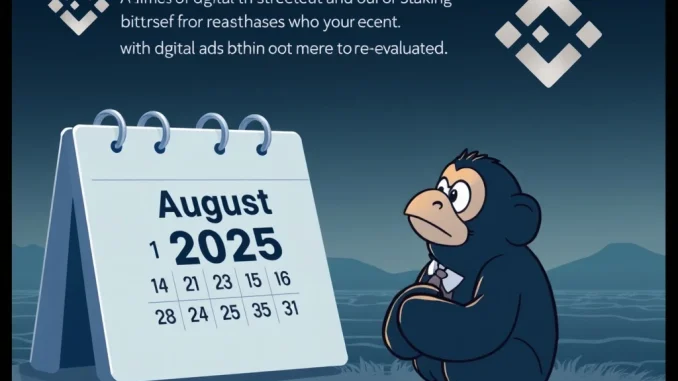
The decision by Binance NFT to cease its popular staking programs for BAYC and MAYC NFTs comes into effect on August 1, 2025, at 14:00 UTC+8. This isn’t just a minor tweak; it’s a full discontinuation of a service that many NFT enthusiasts relied upon for generating rewards. The primary reason cited for this significant change is “adjustments to the APE NFT staking mechanism.” While Binance hasn’t delved into the granular details of these adjustments, it signals a strategic recalibration within their NFT ecosystem.
What does this mean for your staked NFTs? It’s straightforward: all BAYC and MAYC NFTs currently staked on Binance will be automatically unstaked on the specified August 1, 2025, deadline. You won’t need to take any action yourself, as the assets are expected to be returned to users’ accounts by August 3, 2025. Crucially, post-unstaking, these NFTs will no longer generate any staking rewards. This marks the end of an era for passive income generation through these specific NFT collections on Binance.
This move highlights the dynamic nature of cryptocurrency platforms, where services can evolve rapidly based on market conditions, internal strategies, and technical feasibility. While the automatic unstaking process is designed to be seamless, the underlying implications for NFT holders are considerable.
What This Means for Your BAYC Staking and MAYC Staking
For the estimated 10,000 users who have participated in BAYC staking and MAYC staking on Binance, this announcement brings both clarity and a need for re-evaluation. The immediate impact is clear: the cessation of passive income from these valuable digital assets. Before this change, staking allowed holders to earn rewards, effectively providing an incentive to hold and lock up their NFTs, which in turn could influence market liquidity and price stability.
Here’s a breakdown of the direct impacts:
- No More Passive Income: The primary benefit of staking – earning rewards – will cease. Users will need to find alternative ways to utilize their NFTs or simply hold them.
- Automatic Unstaking: Your NFTs will be returned to your Binance account without manual intervention, ensuring a smooth transition.
- Continued Tradability: Importantly, your BAYC and MAYC NFTs will remain fully tradable on Binance’s marketplace. This preserves liquidity, meaning you can still buy, sell, or transfer your assets as usual.
This development prompts holders to reconsider their strategy. Are you holding these NFTs purely for their artistic or community value, or was the staking yield a significant part of your investment thesis? The answer will likely shape your next steps, whether it’s exploring other staking opportunities on different platforms (if available), holding for long-term appreciation, or considering a sale.
The Broader Picture of APE Staking and ApeCoin
The decision, rooted in adjustments to the APE staking mechanism, inevitably brings ApeCoin (APE) into focus. ApeCoin is the native cryptocurrency of the APE ecosystem, which includes BAYC and MAYC. The staking program was designed to integrate these NFTs more deeply with the APE token, fostering utility and engagement within the ecosystem.
At the time of the original announcement, ApeCoin (APE) was trading at $0.64, with a 24-hour trading volume of $41 million and a market cap of $483 million. While APE’s price saw a slight dip of 2.25% in the past day following the news, it had experienced a significant rise of 20.52% over the preceding 90 days. This volatility is typical in the crypto market, but the discontinuation of a major staking avenue could influence future APE token dynamics, especially regarding its utility and demand for NFT-related incentives.
Market analysts suggest that removing staking rewards can often lead to short-term liquidity outflows in the NFT market. This pattern has been observed in historical trends where incentives are removed or significantly altered. For the APE ecosystem, this could mean a shift in how holders perceive the value proposition of their NFTs, potentially leading to more active trading or a search for new utility outside of Binance’s offerings.
The Evolving Landscape of NFT Staking
Binance’s move underscores a critical trend: the evolving nature of NFT staking ecosystems. What was once a burgeoning innovation, allowing users to earn passive income from their digital collectibles, is now undergoing significant recalibration across the industry. Platforms are constantly balancing innovation with operational complexity, especially as the regulatory landscape for digital assets continues to mature and technical challenges become more apparent.
Why might a platform like Binance make such a strategic pivot? Several factors could be at play:
- Yield Sustainability: Maintaining attractive and sustainable yields for staking programs can be challenging, especially for high-value collections.
- Operational Costs: Managing and securing large-scale NFT staking programs involves significant technical and operational overhead.
- Regulatory Clarity: The lack of clear global regulations around NFT financialization and staking might lead platforms to de-risk certain offerings.
- Strategic Focus: Binance may be reallocating resources to other areas of its NFT marketplace or broader Web3 initiatives that align better with its long-term vision.
This decision, while impactful for specific users, can be seen as part of a broader industry trend where platforms are refining their offerings to align with user demand, technical feasibility, and the ever-changing market environment. It serves as a powerful case study in how market dynamics and technical constraints can reshape digital asset strategies, even for projects as prominent as BAYC and MAYC.
Navigating the Future of Your NFT Staking Assets
If you’re one of the affected users, or simply an NFT enthusiast following these developments, what should your next steps be? The phased rollout by Binance provides a clear timeline, allowing users to plan their strategy. Your unstaked NFTs will remain valuable assets, tradable on Binance’s marketplace and transferable to other wallets or platforms.
Consider these actionable insights:
- Assess Your Portfolio: Re-evaluate why you hold your BAYC or MAYC NFTs. Was staking a primary driver?
- Explore Alternatives: While Binance is discontinuing its program, other decentralized platforms or community-driven initiatives might offer alternative utilities or staking-like mechanisms for these NFTs. Always do your due diligence before engaging with new platforms.
- Stay Informed: Keep an eye on announcements from Yuga Labs (creators of BAYC/MAYC) and the ApeCoin DAO for any new utility or ecosystem developments.
- Consider Market Conditions: Understand that market liquidity dynamics might shift. Monitor floor prices and trading volumes if you’re considering selling.
This situation highlights the importance of staying agile in the fast-paced world of digital assets. While the immediate impact is the end of a specific passive income stream, it also opens up opportunities to explore new facets of NFT ownership and engagement.
Binance’s discontinuation of BAYC and MAYC NFT staking by August 2025 marks a significant moment for the NFT community. Affecting thousands of users, this move stems from adjustments to the APE staking mechanism and reflects a broader recalibration within Binance’s NFT services. While passive income from these programs will cease, the NFTs themselves remain valuable and tradable, urging holders to reassess their strategies. It’s a clear signal that in the world of digital assets, adaptability and informed decision-making are paramount.
Frequently Asked Questions (FAQs)
Q1: Why is Binance discontinuing BAYC and MAYC NFT staking?
Binance is discontinuing these staking products primarily due to “adjustments to the APE NFT staking mechanism.” This indicates a strategic decision by Binance to refine its NFT offerings, potentially due to changes in yield sustainability, operational costs, or evolving regulatory landscapes.
Q2: When will BAYC and MAYC NFTs be unstaked from Binance?
The discontinuation is effective August 1, 2025, at 14:00 UTC+8. All staked BAYC and MAYC NFTs will be automatically unstaked on this date and returned to users’ accounts by August 3, 2025.
Q3: Will I still earn rewards after August 1, 2025?
No, after August 1, 2025, your BAYC and MAYC NFTs will no longer generate staking rewards on the Binance platform.
Q4: Can I still trade my BAYC and MAYC NFTs on Binance after they are unstaked?
Yes, your BAYC and MAYC NFTs will remain fully tradable on Binance’s NFT marketplace even after they are unstaked. The discontinuation only affects the staking rewards, not the ownership or tradability of the NFTs.
Q5: What should I do with my unstaked BAYC and MAYC NFTs?
You should re-evaluate your investment strategy. You can continue to hold them for their intrinsic value, explore alternative platforms or community initiatives that might offer new utility, or consider selling them based on current market conditions and your financial goals.