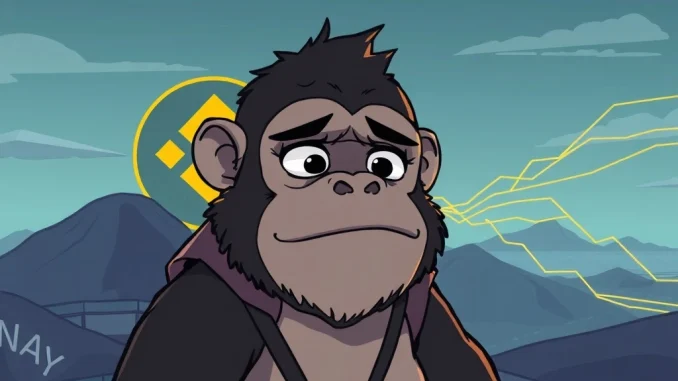
The world of digital collectibles just got a significant shake-up. Binance, a titan in the crypto exchange arena, has announced the discontinuation of its popular Bored Ape Yacht Club (BAYC) and Mutant Ape Yacht Club (MAYC) NFT staking programs. Effective August 1, 2025, this move marks a pivotal moment for holders of these iconic NFTs and raises crucial questions about the future of yield-generating opportunities within the NFT market.
Why is Binance Ending NFT Staking for BAYC and MAYC?
Binance’s decision stems primarily from “adjustments to the APE NFT staking mechanism.” While the official announcement from Binance didn’t delve into the specifics of these technical requirements, it signals an evolving landscape within the ApeCoin ecosystem. This could be due to several factors, including:
- Technical Evolution: The underlying architecture or smart contracts of the APE ecosystem may have undergone significant upgrades, making the previous staking integration incompatible or inefficient for Binance.
- Sustainability Concerns: Maintaining staking rewards can be costly. As the APE ecosystem matures, the economic model for distributing rewards might be shifting, prompting platforms like Binance to re-evaluate their participation.
- Decentralization Goals: The ApeCoin DAO, which governs the APE ecosystem, might be pushing for more decentralized staking solutions, reducing reliance on centralized exchanges.
- Regulatory Adaptation: Although not explicitly stated, changes in the regulatory environment for digital assets and yield-generating products could also influence such decisions.
This discontinuation impacts approximately 10,000 users who were actively participating in these programs, highlighting the significant reach of Binance’s offerings.
What Does This Mean for BAYC and MAYC NFT Holders?
For current participants, Binance has outlined a clear, automatic process. All staked BAYC and MAYC NFTs will be automatically unstaked and returned to users’ accounts by August 3, 2025. This ensures a seamless transition, alleviating the need for manual intervention from users.
However, the implications extend beyond just the technical process:
- Loss of Passive Income: The most direct impact is the cessation of staking rewards, which provided a passive income stream for holders. This removes a key incentive for holding these NFTs on Binance for yield.
- Potential Liquidity Shifts: Historically, the removal of staking incentives can lead to short-term outflows in the NFT market as users re-evaluate their holdings. While the NFTs remain tradable on Binance, the absence of staking rewards might temporarily affect their liquidity dynamics.
- Re-evaluation of Strategy: Holders will need to consider alternative avenues for their NFTs, such as self-custody, transferring to other platforms that might offer staking (if any exist for APE), or simply holding them for their intrinsic value and community benefits.
How Will This Affect ApeCoin (APE) Performance?
ApeCoin (APE), the native token of the APE NFT ecosystem, has shown mixed performance recently. As of July 27, 2025, CoinMarketCap data indicated a price of $0.64, with a 24-hour decline of 2.25% but a notable 90-day gain of 20.52%. Its market cap stood at $483.16 million, supported by a 24-hour trading volume of $41.17 million.
While Binance’s decision doesn’t explicitly mention financial reallocations for APE, the discontinuation of staking could indirectly influence token utility and demand. If users divest from staked positions, it could lead to increased selling pressure on APE. Conversely, if the underlying mechanism adjustments lead to a stronger, more sustainable APE ecosystem, the long-term impact could be positive. The direct link between Binance’s staking program and APE’s utility is significant, as it provided a clear use case for the token within a major exchange’s ecosystem.
The Broader Impact on the NFT Market and Staking Programs
Binance’s move serves as a critical case study for the broader NFT market and the viability of NFT staking programs. Analysts from Coincu highlight that Binance’s procedural approach reflects broader challenges in maintaining user engagement within volatile NFT ecosystems, where technical upgrades can rapidly alter incentive structures. The reliance of NFT staking on the sustained relevance of both the tokens (like APE) and the platforms hosting them (like Binance) is underscored here.
While the NFT market exhibits signs of recovery, according to DappRadar, the termination of high-profile staking programs like this may temper enthusiasm for yield-generating opportunities. It reminds participants that even established platforms must adapt to technical and market dynamics, balancing innovation with user retention in a rapidly evolving industry.
Community Reactions and What’s Next
Community reactions remain largely uncharacterized by official commentary from Binance or Yuga Labs, the creators of BAYC and MAYC. Social media discussions reveal varied opinions, from concern over lost yield to optimism about potential new, more decentralized staking solutions directly from the ApeCoin DAO. The lack of public statements from key stakeholders, however, underscores the speculative nature of market responses to such structural changes.
For NFT holders, the key takeaway is adaptability. The crypto industry, particularly the NFT sector, is dynamic. Platform strategies must evolve in tandem with technological advancements, regulatory uncertainties, and shifting user preferences. This decision by Binance, while significant, is a testament to the fluidity of these ecosystems.
Conclusion: Navigating the Evolving NFT Landscape
Binance’s discontinuation of BAYC and MAYC NFT staking is a powerful reminder of the ever-changing nature of the digital asset space. While it marks the end of a specific yield opportunity, it also prompts a re-evaluation of how value is derived and sustained within the ApeCoin and broader NFT ecosystems. As the market continues to mature, participants must remain agile, informed, and prepared for shifts that redefine the boundaries of digital ownership and utility. This pivotal move by Binance will undoubtedly shape future discussions around centralized exchange involvement in decentralized finance initiatives.
Frequently Asked Questions (FAQs)
1. Why did Binance decide to end BAYC and MAYC NFT staking?
Binance stated the decision is due to “adjustments to the APE NFT staking mechanism” and evolving technical requirements within the ApeCoin ecosystem. This suggests changes in the underlying technology or strategy of the ApeCoin project that make Binance’s current staking program unsustainable or incompatible.
2. What will happen to my staked BAYC and MAYC NFTs on Binance?
All staked BAYC and MAYC NFTs will be automatically unstaked by Binance and returned to users’ accounts by August 3, 2025. Users do not need to take any manual action for this process.
3. Will I still be able to trade BAYC and MAYC NFTs on Binance?
Yes, Binance emphasized that the discontinuation applies solely to staking rewards. Your BAYC and MAYC NFTs will remain tradable on the Binance platform.
4. How might this impact ApeCoin (APE) price and utility?
The direct impact is uncertain, but the discontinuation of a major staking program could indirectly influence APE’s utility and demand, particularly if users who were staking decide to divest their APE tokens. However, if the APE ecosystem’s adjustments lead to stronger long-term utility, this could be a temporary setback.
5. Does this mean NFT staking is no longer viable?
Not necessarily. While Binance’s decision highlights challenges in maintaining centralized NFT staking programs amidst evolving ecosystems, it doesn’t mean all NFT staking is unviable. It emphasizes the need for programs to be robust, adaptable, and aligned with the underlying project’s long-term vision. Other platforms or decentralized protocols may continue to offer such opportunities.
6. Where can I find more information about these changes?
You should refer to official announcements from Binance and the ApeCoin DAO for the most accurate and up-to-date information regarding these changes and any future developments.