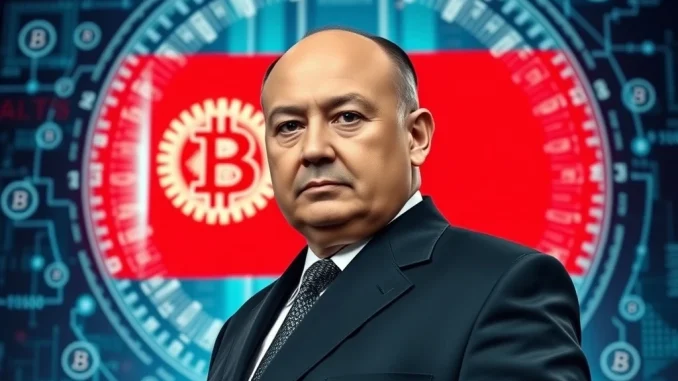
A significant announcement from Eastern Europe recently captured the attention of the global cryptocurrency community. Alexander Lukashenko, the President of Belarus, has reportedly voiced strong support for Bitcoin and other digital assets. This declaration marks a potentially transformative moment for **Belarus crypto** development, indicating a strategic shift in the nation’s approach to digital currencies. The news, initially reported by ‘The Bitcoin Historian’ on X, suggests that Belarus views cryptocurrencies as ‘very important to the entire country’ and plans to implement pro-Bitcoin policies.
A New Era for Digital Assets in Belarus
President Lukashenko’s statement signals a notable pivot for Belarus regarding its digital asset strategy. His explicit endorsement of Bitcoin and other cryptocurrencies suggests a recognition of their growing global importance. Furthermore, the pledge to implement ‘pro-BTC policies’ could pave the way for a more welcoming regulatory environment. This development is particularly noteworthy given the often cautious stance many nations take towards decentralized digital currencies. Therefore, the commitment from Belarus’s highest office could accelerate the integration of crypto into the national economy.
Indeed, this endorsement arrives at a time when countries worldwide are grappling with how to regulate and incorporate digital assets. Belarus, consequently, appears ready to embrace this financial evolution. The potential for new legislation or economic incentives aimed at fostering cryptocurrency use is now a distinct possibility. Such measures could attract foreign investment and encourage domestic innovation in the blockchain sector. Moreover, the President’s words emphasize the perceived national importance of these technologies, moving beyond mere speculation to strategic national interest.
Understanding Lukashenko’s Stance on Digital Currency
President Lukashenko’s recent comments build upon a foundation of existing, albeit sometimes ambiguous, digital economy initiatives in Belarus. Previously, Belarus has explored various aspects of the digital realm, including IT parks and blockchain development. However, a direct, high-level endorsement of Bitcoin and other cryptocurrencies by the head of state represents a significant escalation. Historically, Belarus has maintained a somewhat centralized economic model. Thus, a move towards embracing decentralized digital assets like Bitcoin signifies a remarkable shift in perspective. This change could reflect a pragmatic recognition of global financial trends and the potential benefits of digital innovation.
It is important to understand that Belarus has a unique approach to its digital economy. The Hi-Tech Park (HTP) in Minsk, for instance, has long been a hub for IT development and innovation. This park provides a special legal regime for its residents, offering tax benefits and a more flexible regulatory environment. While the HTP has accommodated some crypto-related activities, President Lukashenko’s latest declaration extends beyond these specific zones. It suggests a broader, nationwide embrace of digital currencies. Consequently, this indicates a potential for comprehensive regulatory frameworks rather than isolated experimental zones. Such a comprehensive approach could significantly impact **Lukashenko crypto** policy moving forward.
Potential Pro-BTC Policies: What Could They Mean?
The promise of ‘pro-BTC policies’ opens up a range of possibilities for cryptocurrency integration in Belarus. These policies could manifest in several ways, each with distinct implications for users and businesses. Firstly, the government might introduce clear and favorable taxation regimes for crypto transactions and holdings. This would provide legal certainty and encourage broader participation. Secondly, Belarus could explore the legalization of Bitcoin as a means of payment, similar to steps taken by other nations. This would significantly enhance its utility within the country’s economy. Thirdly, the government might support the development of a robust domestic crypto mining industry, leveraging Belarus’s energy resources. Such initiatives would position Belarus as a key player in the global crypto landscape.
Furthermore, ‘pro-BTC policies’ could involve creating a more streamlined regulatory framework for cryptocurrency exchanges and service providers. This would foster a secure and transparent environment for crypto-related businesses to operate. Imagine a scenario where businesses find it easier to accept crypto payments or where individuals can seamlessly convert fiat to crypto and vice versa. This would boost liquidity and accessibility. Moreover, the government might also consider integrating blockchain technology into public services or national infrastructure projects. This would further legitimize digital assets and demonstrate their practical applications. Therefore, the implementation of such **pro-BTC policies** could catalyze significant economic and technological advancement for Belarus.
Driving Crypto Adoption in Belarus
The President’s endorsement directly aims to drive **crypto adoption Belarus**-wide. Increased adoption can bring several economic benefits to the nation. For instance, facilitating cryptocurrency use could boost foreign investment. International companies and individuals interested in the crypto space might view Belarus as an attractive destination for business and innovation. Moreover, widespread adoption could enhance financial inclusion for its citizens. Cryptocurrencies offer alternative financial services, potentially reaching segments of the population underserved by traditional banking systems. This could empower individuals with greater control over their finances and provide new avenues for economic participation.
Additionally, embracing digital assets could stimulate technological innovation within Belarus. The development of new blockchain-based applications, services, and startups would create jobs and foster a vibrant tech ecosystem. Consider the potential for decentralized finance (DeFi) platforms or non-fungible token (NFT) markets to flourish within a supportive regulatory environment. These innovations could position Belarus as a leader in emerging technologies. Furthermore, cryptocurrencies offer efficient and low-cost solutions for cross-border transactions and remittances. This could benefit Belarusian citizens working abroad and families receiving funds, reducing reliance on traditional, often expensive, transfer methods. Consequently, the push for crypto adoption could unlock new economic opportunities and modernize Belarus’s financial infrastructure.
Challenges and Opportunities on the Horizon
While the prospect of widespread **Bitcoin Belarus** adoption presents numerous opportunities, it also comes with inherent challenges. Regulating a decentralized asset like Bitcoin requires careful consideration to prevent illicit activities such as money laundering and terrorist financing. Therefore, robust anti-money laundering (AML) and know-your-customer (KYC) frameworks would be essential. Furthermore, energy consumption associated with cryptocurrency mining is a significant environmental concern. Belarus would need to balance its support for mining with its environmental commitments, potentially exploring renewable energy sources for these operations. International scrutiny and sanctions could also complicate Belarus’s crypto ambitions, necessitating a transparent and compliant approach.
Despite these challenges, the opportunities remain compelling. Belarus could establish itself as a regional hub for blockchain innovation, attracting talent and investment. The strategic embrace of digital assets could diversify its economy, reducing reliance on traditional industries. Moreover, by fostering a pro-crypto environment, Belarus might enhance its geopolitical standing in the digital age. This bold move could differentiate Belarus from its neighbors and create a unique economic niche. However, navigating the complex interplay of technology, regulation, and international relations will be crucial for the successful implementation of these ambitious plans. Therefore, a measured yet progressive approach will be vital for Belarus to capitalize on its newfound crypto enthusiasm.
The Road Ahead for Bitcoin and Belarus
President Lukashenko’s strong declaration marks a significant turning point for Belarus. The nation appears poised to explore the full potential of Bitcoin and other cryptocurrencies, moving beyond tentative experiments to a more committed embrace. The specific policies that will emerge remain to be seen, but the intent is clear: Belarus views digital assets as a critical component of its future economic landscape. This development will undoubtedly be watched closely by the international community, as more nations consider their own paths regarding cryptocurrency integration. The coming months will reveal how Belarus translates its presidential support into concrete, impactful actions, potentially setting a precedent for other countries in the region.
Frequently Asked Questions (FAQs)
Q1: What exactly did Belarus President Lukashenko say about Bitcoin and crypto?
President Alexander Lukashenko reportedly stated that Bitcoin and other cryptocurrencies are “very important to the entire country.” He also pledged to implement “pro-BTC policies” to support their use and integration within Belarus.
Q2: What does “pro-BTC policies” mean for Belarus?
“Pro-BTC policies” could encompass various measures. These might include favorable tax regimes for crypto, legalizing Bitcoin as a payment method, supporting domestic crypto mining, or establishing clear regulatory frameworks for exchanges and service providers. The goal is to foster a more welcoming environment for digital assets.
Q3: Has Belarus had any prior involvement with cryptocurrencies or blockchain technology?
Yes, Belarus has explored digital economy initiatives, notably through its Hi-Tech Park (HTP), which offers a special legal regime for IT companies, including some crypto-related activities. However, the President’s recent statement signals a broader, nationwide commitment beyond specific innovation zones.
Q4: How might this affect crypto adoption in Belarus?
President Lukashenko’s endorsement is expected to significantly boost crypto adoption in Belarus. It could attract foreign investment, enhance financial inclusion for citizens, stimulate technological innovation, and streamline cross-border transactions, ultimately modernizing the nation’s financial infrastructure.
Q5: What challenges might Belarus face in implementing pro-crypto policies?
Challenges include developing robust regulatory frameworks to prevent illicit activities, managing the environmental impact of crypto mining, and navigating potential international scrutiny or sanctions. Balancing innovation with responsible governance will be crucial for successful implementation.
Q6: How does Belarus’s stance compare to other countries regarding crypto?
Belarus’s explicit presidential support for Bitcoin places it among a growing number of nations exploring or embracing digital assets. While some countries have adopted Bitcoin as legal tender (e.g., El Salvador), Belarus’s move signals a strategic intent to integrate crypto more deeply into its national economy, similar to countries exploring CBDCs or comprehensive regulatory frameworks.