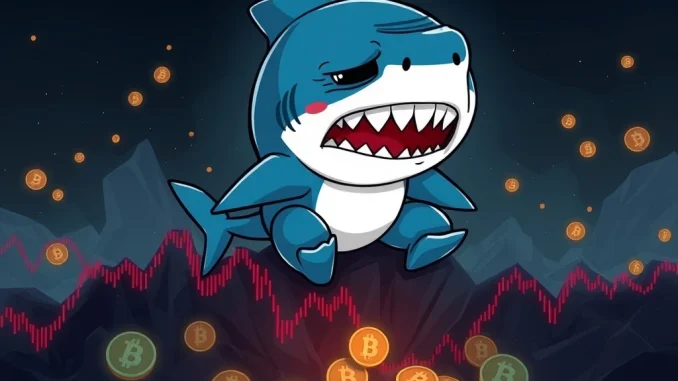
The cryptocurrency market, known for its volatility, recently witnessed a significant event involving a popular children’s character. A specific **Baby Shark token**, purportedly linked to the global phenomenon, suffered an **alarming 90% plunge** in value. This dramatic **crypto crash** occurred following crucial revelations that the project lacked official backing from Pinkfong, the brand behind Baby Shark. Consequently, this incident highlights the critical importance of verifying the legitimacy of digital assets before investment.
The Alarming Baby Shark Token Plunge Unfolds
A particular **Baby Shark token**, developed on the innovative Story Protocol, experienced a catastrophic decline. Indeed, its value plummeted by over 90% in a short period. This drastic fall was directly triggered by Pinkfong’s public clarification regarding its official intellectual property (IP) rights. CoinDesk first reported these significant developments, drawing attention to the project’s questionable origins. Investors, therefore, faced substantial losses as the market reacted swiftly to the news.
Pinkfong, the South Korean educational entertainment company, clearly stated that the token built on Story Protocol was not an officially issued project. This denial immediately cast a shadow over the token’s perceived legitimacy. Consequently, many investors quickly divested their holdings, exacerbating the price decline. The lack of an **official license** proved to be a fatal flaw for the project, demonstrating the risks inherent in the unregulated crypto space.
Pinkfong’s Stance on Official License and Licensed Tokens
Pinkfong’s statement was unequivocal, directly addressing the widespread confusion. The company confirmed that only two specific tokens carry its **official license**. These legitimate projects include:
- Baby Shark Meme: This token operates on the Solana blockchain.
- Baby Shark Universe: This token is built on the BNB Chain.
Significantly, these two projects are the only ones recognized by Pinkfong as officially sanctioned. This clarification serves as a vital warning to investors. Moreover, it underscores the importance of verifying any crypto project claiming ties to established brands. An **official license** provides a crucial layer of trust and legitimacy, which was entirely absent for the Story Protocol-based token. Therefore, investors must always conduct thorough due diligence.
Understanding the Risks of Unofficial Crypto Projects and Meme Coins
The **Baby Shark token** incident serves as a stark reminder of the inherent dangers within the cryptocurrency market, especially concerning unofficial projects. Many projects attempt to capitalize on popular intellectual property without proper authorization. This practice often leads to significant risks for unsuspecting investors. Projects lacking an **official license** are frequently susceptible to:
- Rug Pulls: Developers abandon a project and disappear with investor funds.
- Lack of Transparency: Unofficial projects often have anonymous teams and unclear roadmaps.
- Legal Challenges: Brand owners can pursue legal action, leading to project instability or termination.
- Market Manipulation: Without regulatory oversight, prices can be easily manipulated.
Furthermore, the nature of a **meme coin** often amplifies these risks. Meme coins typically derive their value from community hype and speculative trading rather than fundamental utility. While some meme coins have seen meteoric rises, many also experience swift and devastating crashes, especially when their perceived legitimacy is challenged. Therefore, the **crypto crash** of the Baby Shark token on Story Protocol is a classic example of these amplified risks.
Investor Due Diligence: A Critical Defense Against Deception
In the volatile world of cryptocurrencies, diligent research is paramount. Investors must prioritize verifying the authenticity of any project, particularly those leveraging well-known brands like **Pinkfong**. Before committing funds, consider these essential steps:
- Check Official Channels: Always consult the official website and social media accounts of the brand (e.g., Pinkfong) to confirm any cryptocurrency partnerships.
- Examine Project Documentation: Review whitepapers, roadmaps, and team information. Look for clear, professional, and verifiable details.
- Assess Licensing: Explicitly look for statements or certifications of an **official license** from the brand owner.
- Community Sentiment: While not definitive, a project’s community discussion can sometimes reveal red flags or concerns.
By diligently following these practices, investors can significantly reduce their exposure to fraudulent or unauthorized projects. This proactive approach helps protect investments from sudden value collapses, like the recent **Baby Shark token** incident. Thus, personal responsibility plays a crucial role in navigating the crypto landscape safely.
The Broader Impact of Unlicensed Crypto Projects
The incident involving the unauthorized **Baby Shark token** extends beyond individual investor losses. It raises broader questions about intellectual property rights in the decentralized finance (DeFi) space. Brands like **Pinkfong** face the ongoing challenge of protecting their IP from unauthorized use in new digital formats. Moreover, such events can erode public trust in the wider crypto market. When projects misrepresent their affiliations, it casts a shadow over legitimate innovations.
Regulatory bodies globally are increasingly scrutinizing the crypto space. Incidents like this **crypto crash** provide further impetus for stricter oversight. They highlight the need for clearer guidelines on how brands can interact with blockchain technology. Ultimately, a more regulated environment could help prevent similar deceptive practices, protecting both consumers and legitimate businesses. The Story Protocol, as a platform, also faces scrutiny regarding how it manages projects deployed on its network that may infringe on existing IPs.
Conclusion: Navigating the Crypto Waters with Caution
The dramatic **90% plunge** of the unauthorized **Baby Shark token** serves as a powerful cautionary tale for the cryptocurrency community. It vividly illustrates the perils of investing in projects that lack an **official license** and genuine backing from established brands like **Pinkfong**. While the allure of quick gains in the **meme coin** market can be strong, the risks are equally substantial.
Therefore, investors must prioritize rigorous due diligence and skepticism. Always verify official ties, understand project fundamentals, and be aware of the speculative nature of many digital assets. By adopting a cautious and informed approach, participants can better protect themselves from devastating financial losses and contribute to a more trustworthy and transparent crypto ecosystem.
Frequently Asked Questions (FAQs)
1. What caused the Baby Shark token crash?
The **Baby Shark token** crash was primarily caused by Pinkfong, the brand owner, publicly denying any official ties or licensing for the token built on Story Protocol. This revelation shattered the token’s perceived legitimacy, leading to a massive sell-off and a more than 90% **crypto crash**.
2. Which Baby Shark tokens are officially licensed by Pinkfong?
Pinkfong has clarified that only two tokens are officially licensed: the Solana-based Baby Shark Meme and the BNB Chain-based Baby Shark Universe. Any other token claiming affiliation with Baby Shark is not officially sanctioned by Pinkfong.
3. What is Story Protocol?
Story Protocol is a decentralized protocol designed to enable the creation, ownership, and licensing of intellectual property (IP) on the blockchain. The unauthorized Baby Shark token was reportedly built on this protocol, raising questions about IP verification on such platforms.
4. How can investors verify a crypto project’s legitimacy?
Investors should always check official brand websites for partnership announcements, review project whitepapers and team details, and look for explicit statements of an **official license**. Skepticism towards projects with anonymous teams or vague information is also crucial.
5. What are the risks associated with unofficial crypto projects and meme coins?
Unofficial crypto projects, especially **meme coins**, carry significant risks including rug pulls, lack of transparency, potential legal challenges from brand owners, and extreme price volatility due to speculative trading. The absence of an **official license** dramatically increases these risks.
6. Does this incident mean all Baby Shark-themed crypto projects are scams?
No, this incident specifically pertains to the unauthorized **Baby Shark token** on Story Protocol. Pinkfong explicitly stated that the Baby Shark Meme (Solana) and Baby Shark Universe (BNB Chain) tokens are officially licensed. It is crucial to distinguish between authorized and unauthorized projects.