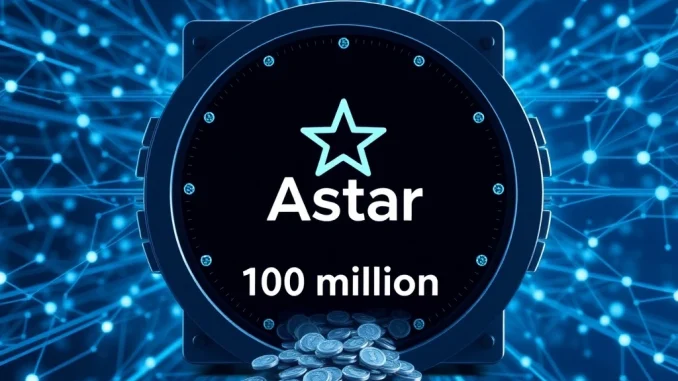
In a significant development for the decentralized finance (DeFi) sector, Astar, a prominent decentralized futures exchange, has announced a substantial token buyback. The platform confirmed the acquisition of 100 million ASTER tokens. This strategic move aims to reinforce the Astar ecosystem and its position within the competitive Perp DEX landscape. Furthermore, it signals strong confidence in the project’s future trajectory and its underlying tokenomics.
Astar’s Strategic ASTER Token Buyback Explained
Astar, known for its innovative approach to perpetual futures trading, recently executed a major token buyback. Specifically, the platform repurchased 100 million units of its native ASTER token. This action directly impacts the token’s circulating supply. Consequently, it can influence market dynamics and investor sentiment. A token buyback is a common strategy employed by crypto projects. It typically involves using a portion of project revenues or treasury funds to repurchase tokens from the open market. This process often reduces the total supply, potentially increasing scarcity and value for remaining token holders.
For Astar, this buyback serves multiple purposes. Firstly, it demonstrates the team’s commitment to long-term value creation. Secondly, it aims to stabilize or enhance the token’s price. Thirdly, it can improve various tokenomics metrics. The decision reflects a proactive management approach. It also aligns with the platform’s broader growth strategy. The buyback underlines Astar’s robust financial health. Moreover, it highlights its capacity to execute such significant market operations.
Understanding the ASTER Token and Perp DEX Ecosystem
The ASTER token is integral to the Astar ecosystem. It functions as the utility and governance token for the decentralized futures exchange. Holders often gain benefits such as reduced trading fees. They also participate in governance decisions. These decisions shape the platform’s future. The token’s utility is central to the Astar user experience. Thus, its value is closely tied to the platform’s success.
Astar operates as a Perp DEX, or perpetual decentralized exchange. This type of platform allows users to trade perpetual futures contracts. These contracts differ from traditional futures. They have no expiry date. Traders can use leverage to amplify their positions. Furthermore, they can speculate on asset prices without owning the underlying asset. Astar provides a non-custodial trading environment. This means users retain control of their funds. It enhances security and trust. The platform’s infrastructure supports high-speed, low-cost transactions. This makes it attractive for active traders. Its decentralized nature removes intermediaries. This fosters a more transparent and equitable trading experience.
Key features of Astar’s Perp DEX include:
- Decentralized Trading: Users trade directly from their wallets.
- Perpetual Contracts: No expiry dates for futures positions.
- Leverage Options: Amplified trading power for increased potential returns.
- Robust Liquidity: Designed to support efficient large-volume trades.
- Community Governance: ASTER token holders influence platform development.
Implications for Astar and the Broader DeFi Market
The Astar token buyback carries significant implications. Firstly, it sends a positive signal to the market. This can boost investor confidence. A reduced supply of ASTER tokens may lead to increased scarcity. If demand remains constant or grows, this could positively impact the token’s price. Furthermore, it enhances the overall health of the ecosystem. It demonstrates financial strength and a commitment to token holder value. This proactive measure positions Astar favorably.
In the broader DeFi landscape, such buybacks are becoming more common. Projects aim to create sustainable tokenomics. They seek to reward long-term holders. Astar’s move highlights a growing trend. Decentralized platforms are maturing. They are adopting strategies seen in traditional finance. This strengthens their economic models. The decentralized futures exchange sector is highly competitive. Therefore, strategic financial actions are crucial. They help maintain a competitive edge. This buyback reinforces Astar’s commitment to its community. It also solidifies its standing as a key player.
The Future Trajectory of Astar’s Decentralized Futures Exchange
This substantial token buyback aligns with Astar’s long-term vision. The platform aims to expand its offerings. It also seeks to enhance user experience. By strengthening the ASTER token, Astar improves its fundamental value proposition. This attracts more users and liquidity providers. A robust token encourages greater participation. It fosters a more vibrant ecosystem. The future of decentralized futures exchange platforms looks promising. They offer advantages over centralized counterparts. These include transparency and censorship resistance. Astar is well-positioned to capitalize on this growth.
Astar’s commitment extends beyond just tokenomics. The team continuously works on technological advancements. They focus on improving trading infrastructure. They also explore new features. These innovations ensure the platform remains at the forefront. The buyback is one piece of a larger strategy. This strategy focuses on sustainable growth. It prioritizes community engagement. Ultimately, Astar aims to be the premier destination for decentralized perpetual futures trading. The token buyback is a clear step towards achieving this ambitious goal. It demonstrates confidence in the platform’s continued success.
In conclusion, Astar’s repurchase of 100 million ASTER tokens marks a pivotal moment. It underscores the platform’s dedication to its ecosystem. This strategic decision strengthens the ASTER token’s position. It also reinforces Astar’s role as a leading decentralized futures exchange. This move signals a robust future for the platform and its community.
Frequently Asked Questions (FAQs)
What is Astar?
Astar is a decentralized futures exchange (Perp DEX) that allows users to trade perpetual futures contracts with leverage. It operates in a non-custodial manner, meaning users retain control of their assets throughout the trading process.
What is the ASTER token?
The ASTER token is the native utility and governance token of the Astar platform. It is used for various functions, including paying trading fees, staking, and participating in the platform’s governance decisions.
Why did Astar buy back 100 million ASTER tokens?
Astar conducted the token buyback to reduce the circulating supply of ASTER, potentially increasing its scarcity and value. This strategic move also demonstrates the project’s financial health, boosts investor confidence, and aligns with its long-term growth and tokenomics strategy.
What is a Perp DEX?
A Perp DEX, or Perpetual Decentralized Exchange, is a platform where users can trade perpetual futures contracts without an expiry date. These exchanges operate on a blockchain, offering advantages like transparency, self-custody of funds, and resistance to censorship, unlike traditional centralized exchanges.
How does this ASTER token buyback affect holders?
The ASTER token buyback can positively affect holders by potentially increasing the token’s scarcity. If demand remains stable or grows, a reduced supply could lead to an upward pressure on the token’s price, enhancing the value of existing holdings.
What are the benefits of using Astar’s decentralized futures exchange?
Benefits include non-custodial trading (you control your funds), access to perpetual futures with leverage, lower fees compared to some centralized exchanges, and participation in platform governance through the ASTER token.