Chainlink founder Sergey Nazarov’s recent revelations have sent ripples through the digital asset community. His meetings with top U.S. financial regulators signal a pivotal moment for **asset tokenization**. This development suggests a growing understanding and acceptance of blockchain technology within traditional finance. Furthermore, it highlights the increasing urgency for clear regulatory frameworks.
Unpacking the SEC’s Keen Interest in Asset Tokenization
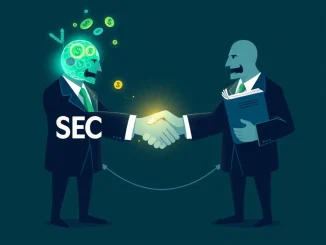
Sergey Nazarov, the visionary behind Chainlink, recently shared insights from his meeting with the U.S. Securities and Exchange Commission (SEC). He specifically met with SEC Chairman Paul Atkins. Nazarov reported Atkins’ significant interest in how to construct on-chain assets while adhering to existing securities laws. This focus indicates a pragmatic approach from the regulatory body. Indeed, the SEC aims to integrate new technologies responsibly.
Nazarov expressed his impression of the agency head’s dedication. Chairman Atkins, he noted, prioritized both market stability and efficiency. These objectives are distinct from the broader debate about permitting blockchain tokenization within the U.S. financial system. Therefore, the discussion centered on practical implementation rather than theoretical acceptance. This engagement marks a significant step towards regulatory clarity for **asset tokenization**.
White House Engagement and Rapid Policy Pace for Digital Assets
Beyond the SEC, Nazarov also disclosed a meeting with a White House crypto official last week. This additional high-level engagement underscores the federal government’s increasing attention to the digital asset space. Both the SEC and the White House, Nazarov observed, appear to be advancing policy on tokenization at a rapid pace. This accelerated progress suggests a concerted effort to address the burgeoning digital economy.
The speed of these policy discussions is notable. It indicates a shift from cautious observation to active development. Policymakers are clearly working to understand and integrate **digital assets** into the existing financial infrastructure. Consequently, this momentum could lead to more defined guidelines sooner than many anticipated. Such developments are vital for market participants seeking certainty.
Chainlink’s Vision and the Future of Blockchain Regulation
Chainlink, as a decentralized oracle network, plays a crucial role in the secure and reliable transfer of data between blockchains and real-world systems. This capability is indispensable for the widespread adoption of **asset tokenization**. Chainlink’s infrastructure ensures that on-chain assets can access accurate, tamper-proof information, which is critical for compliance and valuation. Therefore, its technology underpins much of the future of tokenized finance.
The discussions with regulators underscore the importance of robust infrastructure. Regulators need assurance that tokenized assets can operate transparently and securely. Chainlink’s solutions help bridge this gap. Furthermore, the focus on **blockchain regulation** reflects a desire to foster innovation within a controlled environment. This balance is essential for both growth and consumer protection. Chainlink continues to be a key player in this evolving landscape.
Defining Asset Tokenization: A New Era for Finance
What exactly is **asset tokenization**? It is the process of issuing a blockchain-based token that digitally represents a real-world asset. This asset can be anything from real estate and fine art to company shares and commodities. Each token typically represents fractional ownership of the underlying asset. This innovation unlocks new levels of liquidity and accessibility.
The benefits of tokenization are extensive. They include:
- Increased Liquidity: Assets that were previously illiquid, like real estate, can be easily traded.
- Fractional Ownership: Investors can own a small portion of a high-value asset, democratizing access.
- Enhanced Transparency: All transactions are recorded on an immutable ledger, boosting trust.
- Operational Efficiency: Automated processes reduce intermediaries and costs.
These advantages make tokenization a compelling prospect for modern finance. It fundamentally changes how value is represented and transferred.
Navigating Compliance and Securities Laws for On-Chain Assets
The core challenge for **asset tokenization** lies in fitting novel blockchain technology into existing legal frameworks. The SEC’s primary concern remains investor protection. This means ensuring that on-chain assets comply with traditional securities laws. These laws typically cover disclosure requirements, registration processes, and anti-fraud provisions. The digital nature of tokens introduces unique complexities.
Regulators are exploring how to apply these long-standing principles to a new paradigm. This involves defining what constitutes a security in the digital realm. It also means establishing clear guidelines for issuance, trading, and custody. The SEC’s **interest** in these specifics is paramount. Their engagement aims to prevent market manipulation and protect consumers. Therefore, collaborative discussions with industry leaders like Nazarov are crucial for developing effective rules.
The Broader Landscape of US Crypto and Blockchain Regulation
The regulatory environment for cryptocurrencies and blockchain in the U.S. is multifaceted. Beyond the SEC, other agencies play significant roles. These include the Commodity Futures Trading Commission (CFTC), the Department of the Treasury, and the Federal Reserve. Each body approaches **blockchain regulation** from its specific mandate. This often leads to a fragmented and sometimes overlapping regulatory landscape.
For instance, the CFTC primarily regulates commodities, while the Treasury focuses on financial stability and illicit finance. The Federal Reserve examines implications for monetary policy and payment systems. These various perspectives contribute to a complex framework. Efforts towards a unified approach are ongoing, but progress is slow. Industry participants often call for a clearer, more coordinated strategy. This would foster innovation while ensuring robust oversight.
Chainlink’s Strategic Position in the Evolving Regulatory Environment
Chainlink is not merely a technology provider; it is a critical piece of infrastructure for institutional blockchain adoption. Its oracle services are essential for smart contracts to interact with off-chain data and systems. This capability is vital for the legal and operational compliance of tokenized assets. Without reliable external data, many real-world use cases for blockchain cannot function securely or legally.
The network’s Cross-Chain Interoperability Protocol (CCIP) further strengthens its strategic position. CCIP enables secure communication and value transfer between different blockchains. This interoperability is key to building a truly integrated tokenized financial system. Consequently, Chainlink’s role extends beyond mere data provision to enabling a more connected and compliant blockchain ecosystem. This makes it an invaluable partner for institutions navigating **blockchain regulation**.
Anticipating the Impact of Progressive Digital Asset Policies
The increasing engagement from the SEC and White House regarding **asset tokenization** suggests a future with significant institutional adoption. This could transform traditional financial markets by making them more efficient and accessible. Imagine a world where fractional ownership of assets is commonplace, and trading occurs 24/7. This is the promise of tokenization, accelerated by clearer regulatory pathways.
However, challenges remain. These include:
- Technological Hurdles: Ensuring scalability and security of blockchain networks.
- Market Education: Informing investors and institutions about the benefits and risks.
- Cybersecurity: Protecting digital assets from evolving threats.
- Global Harmonization: Aligning regulations across different jurisdictions.
Despite these hurdles, the momentum for **digital assets** is undeniable. Progressive policies could unlock substantial economic benefits for the U.S. and global economies. The collaborative spirit between innovators and regulators is paving the way for a more robust and inclusive financial future.
In conclusion, Chainlink founder Sergey Nazarov’s insights reveal a critical shift in the U.S. regulatory approach. The SEC and White House are showing genuine and rapid **interest** in **asset tokenization**. This marks a significant step towards integrating blockchain technology into mainstream finance. As regulators continue to engage with industry leaders, the path towards a compliant and efficient digital asset ecosystem becomes clearer. This ongoing dialogue is essential for fostering innovation while ensuring market integrity and investor protection. The future of finance, undoubtedly, will be increasingly digital and tokenized.
Frequently Asked Questions (FAQs)
1. What is asset tokenization?
Asset tokenization involves converting the value of a real-world asset into a digital token on a blockchain. This process allows for fractional ownership, increased liquidity, and enhanced transparency for various assets like real estate, art, or commodities.
2. Why is the SEC interested in asset tokenization?
The SEC is interested in asset tokenization to understand how these new digital assets can comply with existing securities laws. Their primary goal is to ensure market stability, efficiency, and investor protection as this technology develops.
3. What is Chainlink’s role in asset tokenization?
Chainlink provides essential decentralized oracle services that connect blockchain-based smart contracts with real-world data and systems. This capability is crucial for ensuring that tokenized assets have access to accurate, tamper-proof information, which is vital for their valuation, compliance, and functionality.
4. How does tokenization comply with securities laws?
Compliance with securities laws for tokenization requires careful consideration of how existing regulations (like disclosure, registration, and anti-fraud provisions) apply to digital tokens. Regulators are working to define these applications, focusing on investor protection and market integrity.
5. What does “rapid pace” in policy mean for the industry?
A “rapid pace” in policy advancement suggests that U.S. regulators and the White House are actively developing guidelines and frameworks for asset tokenization. This indicates a proactive approach to integrating digital assets, potentially leading to clearer rules and greater certainty for the industry sooner than expected.
6. Are other government bodies involved in blockchain regulation?
Yes, beyond the SEC, other U.S. government bodies involved in blockchain regulation include the Commodity Futures Trading Commission (CFTC), the Department of the Treasury, and the Federal Reserve. Each agency addresses blockchain from its specific regulatory mandate, contributing to a complex, multi-faceted regulatory landscape.