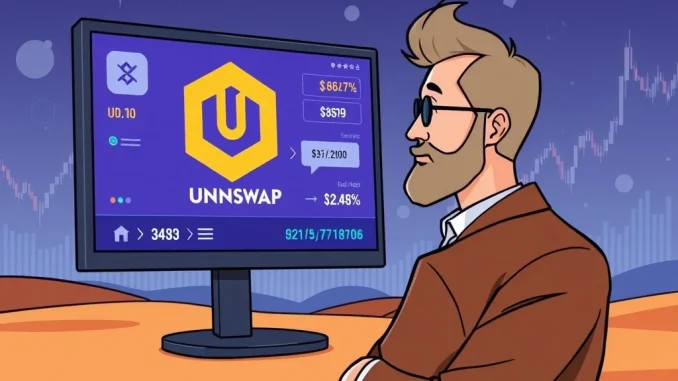
A notable event recently captured the attention of the cryptocurrency market. BitMEX founder Arthur Hayes made a significant move, purchasing 28,670 UNI tokens. This transaction, valued at approximately $244,000, marks his first acquisition of the token in three years. On-chain analytics firm Lookonchain reported this development. Consequently, this action by a prominent figure often sparks considerable discussion and speculation within the crypto community. Investors and analysts are now closely watching what this crypto investment might signify for the broader market.
Arthur Hayes’ Return to UNI Token Holdings
Arthur Hayes, a well-known personality in the cryptocurrency space, recently re-entered the Uniswap (UNI) market. His decision to buy 28,670 UNI tokens represents a substantial commitment. This specific purchase amounted to $244,000. It stands out because Hayes had not acquired UNI in three years. This long hiatus makes his current move particularly noteworthy. Furthermore, it highlights a potential shift in his investment strategy. The transaction was publicly identified through robust on-chain data analysis. Such transparency allows for real-time tracking of major market participants’ actions.
Hayes’ history as the co-founder of BitMEX lends significant weight to his actions. He is recognized for his insightful, often provocative, macroeconomic commentary. Therefore, his investments are frequently interpreted as signals. This recent UNI acquisition could suggest renewed confidence in the decentralized finance (DeFi) sector. It specifically points towards the future of Uniswap. Market observers are now evaluating the potential ripple effects of this strategic purchase.
Understanding Uniswap and the UNI Token
Uniswap stands as a leading decentralized exchange (DEX) within the DeFi ecosystem. It operates primarily on the Ethereum blockchain. This platform enables users to swap various cryptocurrencies without intermediaries. Uniswap uses an automated market maker (AMM) model. This model relies on liquidity pools funded by users. In return for providing liquidity, users earn a portion of trading fees.
The UNI token serves as Uniswap’s native governance token. Holders of UNI possess the power to vote on key protocol changes. They can influence future development and treasury usage. This governance mechanism empowers the community. It ensures decentralized control over the platform’s evolution. Consequently, the value of UNI often reflects the health and future prospects of the Uniswap protocol. Its utility extends beyond simple trading, encompassing significant decision-making power. This makes it an attractive asset for long-term investors.
The Significance of On-Chain Data for Crypto Investment
On-chain data provides unparalleled transparency in the cryptocurrency world. Every transaction on a public blockchain is recorded. This includes details like sender, receiver, amount, and timestamp. Firms like Lookonchain specialize in analyzing this information. They identify patterns and significant movements. For example, they track large whale transactions. They also monitor the activity of prominent figures like Arthur Hayes. This data offers crucial insights into market sentiment. It helps predict potential price movements. Investors often use it to inform their own strategies. The ability to see major players’ moves adds a layer of intelligence. It enhances decision-making in a volatile market. Such transparency is a core tenet of blockchain technology.
This level of detail contrasts sharply with traditional financial markets. In traditional markets, large institutional trades are often opaque. They become public much later, if at all. Blockchain’s inherent openness democratizes information. It allows anyone to verify transactions. This fosters greater trust and accountability. Therefore, tracking specific addresses linked to well-known investors becomes a powerful tool. It helps understand their current market outlook. Hayes’ recent UNI purchase exemplifies the utility of this data. It provides a clear, verifiable action from a respected crypto voice.
Arthur Hayes’ Investment Philosophy and UNI
Arthur Hayes is renowned for his bold market predictions. He often shares his macro views on global finance and crypto. His investment philosophy frequently involves contrarian bets. He also favors assets with strong long-term potential. His previous absence from UNI holdings for three years is notable. It suggests he either saw better opportunities elsewhere. Alternatively, he held a bearish short-term outlook on Uniswap. His current re-entry, therefore, signals a potential shift. It indicates a renewed belief in the platform’s future. It also shows confidence in the UNI token’s value proposition.
Hayes often discusses the importance of decentralized applications. He emphasizes their role in a future financial system. Uniswap, as a leading DEX, aligns well with this vision. The purchase could reflect his conviction. He might believe that DeFi is entering a new growth phase. Furthermore, his timing often coincides with broader market shifts. Therefore, his move is not merely a personal transaction. It is viewed as a potential indicator for wider market trends. This makes his every significant crypto investment a subject of intense scrutiny.
Potential Motivations Behind the UNI Purchase
Several factors might explain Arthur Hayes’ decision. Firstly, he might perceive UNI as currently undervalued. After a prolonged bear market, many altcoins have seen significant corrections. This could present an attractive entry point for strategic investors. Secondly, Uniswap continues to innovate. It consistently introduces new features and improvements. These developments strengthen its position as a DeFi leader. Hayes might be betting on these ongoing advancements. Thirdly, the broader market sentiment could be shifting. A general increase in institutional interest in DeFi could be a driver. This would naturally benefit foundational protocols like Uniswap. Finally, his macroeconomic outlook might play a role. If he anticipates increased capital flows into crypto, DeFi assets often perform well. This makes the UNI token a prime candidate for growth.
This purchase could also be part of a larger portfolio rebalancing. Hayes frequently adjusts his holdings based on market conditions. His past commentaries often highlight specific sectors he believes will outperform. Therefore, this acquisition aligns with a strategic positioning. It suggests he sees a strong future for decentralized exchanges. This reinforces the idea that smart money is returning to key DeFi assets. His move acts as a powerful signal for other market participants. They often look to such figures for directional cues.
Broader Market Implications and Future Outlook
Arthur Hayes’ UNI token purchase could send a positive signal across the DeFi sector. When influential figures make such moves, it often instills confidence. Other investors might interpret it as a bullish indicator. This could potentially lead to increased buying pressure for UNI. It might also positively impact other major DeFi tokens. The transaction underscores the growing importance of on-chain data. It allows for transparent insights into significant market activities. This level of transparency helps democratize financial information. It empowers retail investors with similar data access as professionals.
The long-term outlook for Uniswap remains strong. Its continuous development and robust community support are key factors. As the DeFi space matures, established protocols like Uniswap are likely to thrive. Hayes’ investment reinforces this perspective. It suggests that even seasoned veterans see significant growth potential. This particular crypto investment highlights the dynamic nature of the market. It shows how individual actions can ripple through the entire ecosystem. Therefore, the market will undoubtedly watch Uniswap’s performance closely in the coming months.
The move also serves as a reminder of the evolving landscape. Decentralized finance continues to attract significant capital. It also draws attention from high-profile investors. Hayes’ strategic acquisition is a testament to this ongoing trend. It positions him to potentially benefit from future growth. This action could inspire further institutional and retail interest in UNI. Consequently, the market awaits the next chapter in Uniswap’s journey, potentially fueled by renewed investor confidence.
Frequently Asked Questions (FAQs)
Q1: Who is Arthur Hayes?
Arthur Hayes is the co-founder and former CEO of BitMEX, a prominent cryptocurrency derivatives exchange. He is widely recognized for his insightful macroeconomic analyses and commentary on the crypto market.
Q2: What is the UNI token?
The UNI token is the native governance token of Uniswap, a leading decentralized exchange (DEX). UNI holders can vote on protocol changes, treasury usage, and other key decisions affecting the Uniswap platform.
Q3: Why is Arthur Hayes’ UNI purchase significant?
His purchase is significant because it marks his first acquisition of UNI in three years. As an influential figure, his actions are often interpreted as signals of market sentiment or strategic positioning, potentially indicating renewed confidence in Uniswap and the DeFi sector.
Q4: How was this UNI token purchase discovered?
The purchase was discovered through on-chain data analysis. Firms like Lookonchain monitor public blockchain transactions, identifying significant movements by known entities and providing transparency into market activity.
Q5: What are the potential implications for Uniswap and the DeFi market?
Hayes’ crypto investment could signal a bullish outlook for Uniswap and the broader DeFi market. It might encourage other investors, potentially leading to increased demand for UNI and other decentralized finance assets, reflecting growing confidence in the sector’s long-term potential.
Q6: Does this mean UNI’s price will definitely go up?
While a prominent figure’s investment can influence market sentiment, it does not guarantee a specific price movement. Cryptocurrency markets are highly volatile, and many factors contribute to price changes. Investors should conduct their own research.