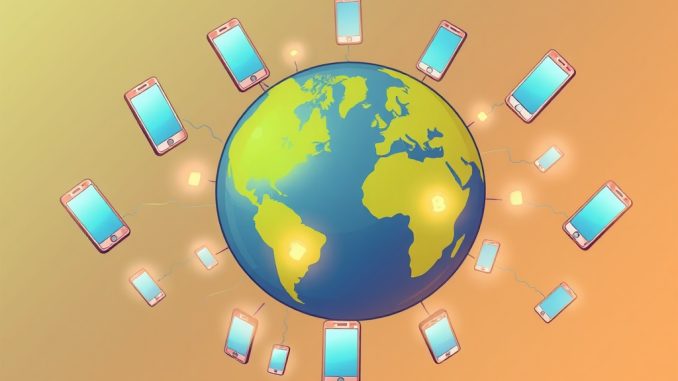
Imagine your smartphone not just as a device for communication, but as a powerful node contributing to a global computing network. This isn’t science fiction; it’s the ambitious vision of Acurast, a pioneering Swiss startup set to redefine the future of cloud services. By leveraging the immense, untapped power of everyday mobile phones, Acurast is launching a truly revolutionary decentralized computing alternative, challenging the traditional server-based giants. This groundbreaking approach promises to democratize access to computing power, making it more resilient, verifiable, and confidential for everyone.
Acurast’s Bold Vision for Decentralized Computing
At its core, decentralized computing moves away from relying on large, centralized data centers. Instead, it distributes computational tasks across a vast network of individual devices. Acurast is leading this charge by turning inactive smartphones into active, verifiable computing nodes. This innovative model has already secured an impressive $11 million in funding, gathered through various rounds between 2023 and 2025. This includes a mix of non-dilutive grants and successful token sales, highlighting diverse support for their vision.
A notable success was a public sale on CoinList last May, which alone raised $5.4 million and was significantly oversubscribed, clearly signaling strong market interest and investor confidence. The project has attracted significant figures from the crypto ecosystem, including Dr. Gavin Wood (co-founder of Ethereum, founder of Polkadot), Leonard Dörlochter (founder of peaq), and Michael van de Poppe (founder of MN Capital). Vineet Budki, CEO of Sigma Capital and an investor, aptly noted, “Acurast is creating a new computing layer owned by users, perfectly aligned with the evolution of AI.”
Unleashing the Genesis Mainnet: A New Era for Decentralized Computing
Acurast’s Genesis Mainnet is slated for launch on November 17, marking a pivotal moment for the project. This significant milestone will open the network to the public and introduce its native token, $ACU. Alessandro De Carli, Acurast’s founder, emphasized the importance of this step, stating, “the mainnet marks the moment when Acurast becomes a truly open and global computing fabric, ready to integrate into the real world.” This launch signifies Acurast’s commitment to making decentralized computing a mainstream reality.
Through this launch, Acurast aims to achieve several transformative goals for the landscape of decentralized computing:
- Transform billions of smartphones: Turn these ubiquitous devices into verifiable computing nodes, completely eliminating reliance on costly, energy-intensive data centers.
- Significantly reduce infrastructure costs: By utilizing existing and widely available hardware, Acurast makes powerful computing more accessible and affordable.
- Eliminate intermediaries: Offer direct, peer-to-peer access to computing power, fostering a more equitable digital economy.
- Provide secure and confidential execution: Ensure tasks are processed with the highest levels of privacy and integrity on a global scale.
By making the smartphone the foundational unit, Acurast is building an an accessible, resilient, and verifiable computing infrastructure layer for Web3 and beyond. This paradigm shift empowers individuals while strengthening the overall network. Start your crypto adventure safely with Coinhouse
What Makes Acurast’s Decentralized Computing So Robust?
Beyond the impressive fundraising, Acurast has demonstrated remarkable technical traction with its incentivized testnet, proving the viability of its decentralized computing model at a large scale. The numbers from the testnet are compelling, showcasing significant pre-mainnet adoption:
- Over 146,443 smartphones have registered to provide computing power, creating a vast distributed network.
- Developers have completed more than 85,784 deployments, actively utilizing the network’s capabilities.
- The network has successfully processed over 489 million on-chain transactions, demonstrating its high throughput.
- A robust and engaged community has formed, with 179,000 accounts created, indicating strong user interest.
Community initiatives, such as the “Cloud Rebellion” program, have played a crucial role in expanding the network’s reach and rewarding early contributors. This solid pre-mainnet adoption underscores the significant interest and potential of Acurast’s unique approach to decentralized computing.
The Technical Edge: Security and Confidentiality in Decentralized Computing
Acurast’s architecture is meticulously designed with security and confidentiality at its forefront. Task execution occurs within secure enclaves, ensuring that even the device owner cannot access sensitive on-chain data. This is a critical feature for privacy-conscious applications. Unlike many other computing platforms that rely on self-declared server specifications, Acurast employs cryptographic verification of hardware. This guarantees a high level of integrity and trust, crucial for sensitive applications and maintaining the credibility of its decentralized computing environment.
This advanced security positioning makes Acurast an ideal solution for dApp developers and companies seeking censorship-resistant backends. Its applications span critical use cases such as automation, artificial intelligence, secure web crawling, and resilience testing. By combining verifiability, confidentiality, and large-scale distribution through a smartphone-based model, Acurast is charting a new, more robust path for Web3 infrastructure. Each user truly becomes a vital participant in a global decentralized computing ecosystem, fostering a future where digital power is shared and secured by the many, not just the few.
Maximize your CoinPulseHQ experience with our “Read to Earn” program! For every article you read, earn points and access exclusive rewards. Sign up now and start earning benefits.
Frequently Asked Questions (FAQs)
Q1: What is Acurast and how does it challenge traditional cloud services?
Acurast is a Swiss startup developing a decentralized computing network that utilizes idle smartphones as verifiable computing nodes. It challenges traditional cloud services by offering a more distributed, confidential, and cost-effective alternative, removing reliance on centralized data centers.
Q2: How does Acurast ensure the security and confidentiality of data?
Acurast employs secure enclaves for task execution, meaning even the device owner cannot access sensitive on-chain data. Furthermore, it uses cryptographic verification of hardware, unlike platforms relying on self-declared server specifications, to ensure high levels of integrity and trust.
Q3: When is Acurast’s Genesis Mainnet launching and what is its significance?
The Genesis Mainnet is scheduled to launch on November 17. This marks the network’s official opening to the public and the deployment of its native token, $ACU. It represents Acurast becoming a truly open and global computing fabric, ready for real-world integration.
Q4: What are the key benefits of Acurast’s smartphone-powered decentralized computing model?
Acurast’s model offers several benefits: it reduces infrastructure costs by using existing hardware, eliminates intermediaries for accessing computing power, provides secure and confidential execution globally, and empowers users by turning their devices into active network participants. It aims to build a more resilient and accessible Web3 infrastructure.
Found this article insightful? Share the exciting news about Acurast’s decentralized computing revolution with your network! Let’s spread the word about how smartphones are set to transform the future of cloud services and Web3. Share this article on Twitter, LinkedIn, or your favorite social platform!
To learn more about the latest decentralized computing trends, explore our article on key developments shaping Web3 infrastructure institutional adoption.