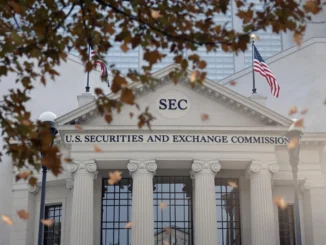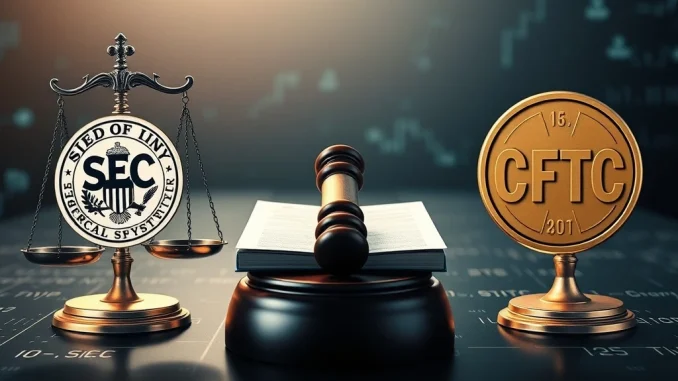
A significant development is underway in Washington D.C., potentially reshaping the future of cryptocurrency in the United States. Recently, a bipartisan **US crypto bill** was introduced, aiming to clarify **crypto oversight** by transferring primary regulatory authority from the Securities and Exchange Commission (SEC) to the Commodity Futures Trading Commission (CFTC). This proposed legislation represents a crucial step towards establishing a clearer framework for digital assets, impacting investors and innovators alike. This move could bring much-needed certainty to a rapidly evolving market.
The Proposed US Crypto Bill: A Game Changer?
U.S. Senators John Boozman (R-AR) and Cory Booker (D-NJ) have championed this new bipartisan legislation. They introduced a bill designed to streamline the regulatory landscape for digital assets. The core of their proposal involves reclassifying most cryptocurrencies. Specifically, it aims to categorize them as **digital commodities** rather than securities. This distinction is vital for determining which federal agency holds primary jurisdiction over the crypto market. Consequently, this shift would grant the CFTC enhanced powers to supervise and regulate this growing sector.
For years, the crypto industry has faced significant regulatory ambiguity. Both the SEC and CFTC have asserted some level of authority, leading to confusion and inconsistent enforcement. This new bill seeks to resolve that long-standing uncertainty. It aims to provide a definitive path forward for innovation and consumer protection. Furthermore, it reflects a growing consensus among lawmakers regarding the need for specialized oversight for digital assets. The proposed framework suggests a more tailored approach to crypto regulation.
Understanding the Current Regulatory Landscape: SEC vs CFTC
The debate over whether cryptocurrencies are securities or commodities has been central to the regulatory challenge. The SEC, led by Chairman Gary Gensler, generally views many cryptocurrencies as unregistered securities. This perspective subjects them to stringent disclosure requirements similar to traditional stocks and bonds. Historically, the SEC’s mission focuses on protecting investors in securities markets. Therefore, their approach has often been one of enforcement against projects deemed to be offering unregistered securities.
Conversely, the CFTC primarily regulates derivatives markets, including futures and options on commodities. They have traditionally overseen agricultural products, energy, and metals. The CFTC has already asserted jurisdiction over Bitcoin and Ethereum as commodities. This new bill would significantly expand their mandate. It would cement their role as the primary regulator for the broader digital asset market. This shift acknowledges the unique characteristics of cryptocurrencies. It moves away from applying traditional financial regulations directly.
Defining Digital Commodities and Their Implications
The classification of cryptocurrencies as **digital commodities** is perhaps the most impactful aspect of the proposed bill. This designation would mean that assets like Bitcoin and many other altcoins would fall under the CFTC’s purview. A commodity is typically defined as a raw material or primary agricultural product that can be bought and sold. Digital assets share characteristics with commodities, such as fungibility and being inputs for other economic activities (e.g., gas fees for blockchain transactions).
This reclassification offers several potential benefits:
- Regulatory Clarity: It provides a clear legal definition for most digital assets, reducing ambiguity for businesses and investors.
- Innovation: A predictable regulatory environment can foster innovation. It allows companies to build and operate without constant fear of SEC enforcement actions.
- Market Integrity: The CFTC’s expertise in commodity markets could lead to more tailored rules for preventing manipulation and ensuring fair trading practices.
However, this shift also raises questions. Not all digital assets fit neatly into a commodity definition. Some tokens might still possess characteristics of securities, requiring careful delineation. The bill will likely include provisions to distinguish between these categories. It will aim to ensure appropriate oversight for all types of digital assets. This careful distinction is paramount for effective **crypto oversight**.
Strengthening CFTC Crypto Regulation Powers
The proposed legislation is not merely about reclassification. It also aims to significantly strengthen the CFTC’s supervisory powers over the digital asset market. This would involve granting the agency new tools and resources to:
- Oversee Spot Markets: Currently, the CFTC primarily regulates derivatives. This bill would extend its authority to the underlying spot markets where most crypto trading occurs.
- Enhance Consumer Protection: The CFTC would be empowered to establish rules for exchanges, custodians, and other intermediaries to protect retail investors. This includes combating fraud and market manipulation.
- Enforce Compliance: The agency would gain clearer authority to pursue enforcement actions against bad actors in the digital commodity space.
This expansion of authority would necessitate significant investment in the CFTC’s capabilities. They would need increased funding, specialized personnel, and advanced technological tools. The agency must effectively monitor and regulate a complex and rapidly evolving market. Consequently, the bill would likely address these resource needs to ensure robust **CFTC crypto regulation**.
Industry Reactions and Future of Crypto Oversight
Initial reactions from the cryptocurrency industry have been largely positive. Many stakeholders have long advocated for a more commodity-centric approach to regulation. They believe this framework offers greater flexibility and fosters innovation. The prospect of a unified regulatory body, rather than fragmented oversight, is also appealing. However, some may express concerns about the CFTC’s capacity. They might question its readiness to handle the sheer volume and complexity of the crypto market. The bill’s passage is not guaranteed, however.
The legislative process involves several stages, including committee reviews and votes in both the Senate and House of Representatives. There will likely be extensive debate and potential amendments as the bill moves forward. The outcome will depend on bipartisan support and the ability to address concerns from various stakeholders. This includes other regulatory bodies. Ultimately, the success of this **US crypto bill** hinges on its ability to create a stable and predictable environment for digital assets. It must also protect consumers without stifling technological progress.
This bipartisan effort signifies a maturing understanding of digital assets within the U.S. government. Moving forward, the discussions surrounding this bill will shape the regulatory future of cryptocurrencies. It represents a pivotal moment for **crypto oversight**. The goal is to balance innovation with robust investor protection.
Frequently Asked Questions (FAQs)
Q1: What is the main goal of the proposed US crypto bill?
The main goal of the proposed US crypto bill is to transfer primary regulatory authority over most cryptocurrencies from the SEC to the CFTC. It aims to classify most digital assets as digital commodities, thereby providing clearer **crypto oversight** and reducing regulatory ambiguity.
Q2: Why is the distinction between a ‘security’ and a ‘digital commodity’ important?
The distinction is crucial because it determines which federal agency has jurisdiction. Securities are regulated by the SEC, while commodities and their derivatives fall under the CFTC. Classifying cryptocurrencies as **digital commodities** would place them under the CFTC’s established framework, potentially leading to more tailored and predictable **CFTC crypto regulation**.
Q3: Which senators introduced this bipartisan US crypto bill?
U.S. Senators John Boozman (R-AR) and Cory Booker (D-NJ) introduced this bipartisan legislation. Their collaboration highlights a cross-party effort to address cryptocurrency regulation.
Q4: How would this bill impact existing cryptocurrencies like Bitcoin and Ethereum?
Since Bitcoin and Ethereum are largely considered commodities, this bill would solidify their status as **digital commodities** under CFTC regulation. This could provide more regulatory certainty for these assets and the platforms that trade them, potentially fostering greater institutional adoption and market stability.
Q5: What new powers would the CFTC gain under this legislation?
The CFTC would gain significant new supervisory powers, including authority over the spot markets for digital commodities. This means they could establish rules for crypto exchanges, custodians, and other intermediaries, enhancing consumer protection and market integrity across the digital asset ecosystem.