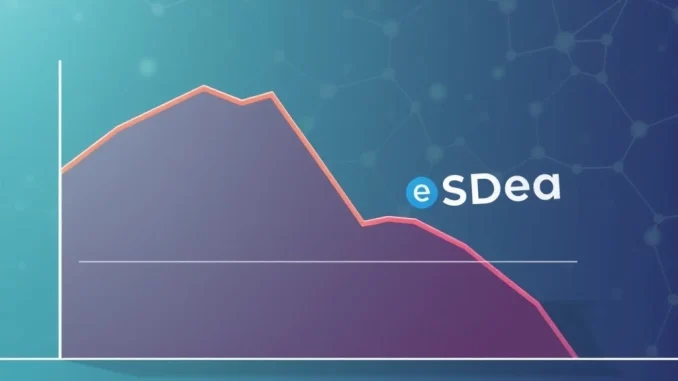
The cryptocurrency market often presents unexpected shifts. Recently, a significant event has captured the attention of DeFi participants and stablecoin enthusiasts alike. Specifically, the circulating supply of Ethena USDe, a synthetic dollar protocol, experienced a substantial reduction. This alarming drop exceeded 40% in October, raising questions across the digital asset landscape.
This dramatic contraction highlights underlying vulnerabilities. It also underscores the intricate dynamics within the stablecoin sector. Understanding the reasons behind this decrease is crucial for investors. It offers insights into the broader health of decentralized finance.
Understanding the Ethena USDe Decline
Reports from DL News confirmed the significant fall. The USDe supply dropped sharply during October. This reduction indicates a notable shift in user behavior and market sentiment. Colin Butler, head of global financing at Mega Matrix, provided valuable context. He explained that prevailing market instability directly impacts USDe. Both its user base and its unique revenue model face negative consequences.
Ethena’s USDe aims to provide a stablecoin solution. It generates yield for its depositors. This yield primarily comes from perpetual futures funding rates. However, these rates are highly volatile. They fluctuate based on market demand and sentiment. When funding rates are high, depositors earn attractive returns. This incentivizes holding and staking USDe. Conversely, when rates decline or turn negative, the protocol’s revenue suffers. The yield offered to stakers also decreases.
The Role of Perpetual Futures in USDe’s Model
Ethena USDe utilizes a unique mechanism. It generates yield through positions in perpetual futures markets. This involves delta-neutral hedging strategies. The protocol maintains an equivalent short position for every synthetic dollar minted. This strategy aims to stabilize USDe’s peg to the dollar. It also captures funding rates from these futures contracts. These rates are then distributed as yield to users.
However, this model is not without risks. The profitability of these strategies depends heavily on market conditions. Positive funding rates are essential for sustainable yield generation. These rates essentially represent a payment from traders holding long positions to those holding short positions. They ensure price convergence between the perpetual contract and the underlying asset. When market sentiment shifts, funding rates can decrease. They can even become negative. This directly impacts the attractiveness of staking USDe.
Impact of Crypto Market Instability on USDe
The broader crypto market instability played a significant role in USDe’s October performance. Periods of high volatility and uncertainty often lead to reduced trading activity. They also cause shifts in market sentiment. These conditions directly affect perpetual futures funding rates. For instance, a bearish market trend can lead to negative funding rates. In such scenarios, short position holders pay long position holders. This reverses the usual flow of revenue for Ethena.
A decline in funding rates directly translates to lower yield for USDe depositors. Lower yields reduce the incentive to hold the asset. Consequently, users may unstake their USDe. They might redeem it for other assets. This action contributes to the decrease in circulating supply. Therefore, market-wide instability acts as a critical factor. It influences both demand for USDe and its revenue generation capacity.
Understanding Stablecoin Yield Mechanisms
The concept of stablecoin yield has become popular in DeFi. Protocols like Ethena offer users returns on their stablecoin holdings. These returns often exceed traditional savings accounts. Various mechanisms power these yields. Some protocols use lending markets. Others engage in complex derivatives strategies. Ethena’s reliance on perpetual futures funding rates is one such innovative approach.
However, users must understand the risks involved. Yields are not guaranteed. They are subject to market forces. High yields often come with higher risks. The recent USDe supply drop serves as a stark reminder. It highlights the volatility inherent in even stablecoin-related products. Users should always conduct thorough due diligence. They must assess the sustainability and risks of any yield-generating protocol.
Analyzing the Future of Ethena USDe
The significant reduction in Ethena USDe circulating supply presents a challenge. It also offers an opportunity for adaptation. The protocol must address how it navigates periods of low or negative funding rates. Diversifying revenue streams could be one potential solution. Exploring alternative yield-generating strategies might also strengthen its resilience. Furthermore, enhancing transparency around its risk management practices could build greater user confidence.
The incident also prompts a broader discussion. It concerns the sustainability of high-yield stablecoin models. The DeFi space continues to evolve rapidly. Protocols must innovate to maintain stability and user trust. The experience of Ethena USDe provides valuable lessons. It shows how external market forces can profoundly impact even well-designed protocols. The ability to adapt and innovate will determine long-term success in this dynamic environment.
Market Reaction and Investor Sentiment
The crypto community closely monitors such events. A substantial supply drop in a prominent stablecoin often generates concern. It can affect investor sentiment towards similar DeFi projects. Transparency from Ethena is vital during these times. Clear communication about the causes and proposed solutions helps mitigate panic. It also reinforces trust. Investors are increasingly sophisticated. They seek robust and resilient protocols. Therefore, Ethena’s response to this challenge will be critical.
The event also underscores the interconnectedness of the DeFi ecosystem. Issues with one major protocol can ripple through others. This interconnectedness highlights the need for continuous monitoring and risk assessment. For the wider market, this serves as a reminder. Even assets designed for stability can experience significant fluctuations under certain conditions. This necessitates careful consideration for all participants.
Navigating Volatility in the Stablecoin Sector
The stablecoin sector is a cornerstone of DeFi. It facilitates trading, lending, and borrowing. Therefore, its stability is paramount. The USDe situation emphasizes the need for robust risk management. It also highlights diversified strategies within stablecoin protocols. Relying on a single revenue stream, especially one as volatile as perpetual futures funding rates, carries inherent risks. Protocols might consider incorporating multiple yield sources. They could also implement dynamic adjustments to their yield offerings.
For users, understanding the underlying mechanics of their chosen stablecoin is crucial. Not all stablecoins are created equal. Their stability mechanisms, collateralization, and yield generation methods vary widely. This knowledge empowers users. It helps them make informed decisions. It also allows them to navigate the complexities of the DeFi landscape more effectively. The Ethena USDe experience serves as a powerful case study in this regard.
In conclusion, the significant decline in Ethena USDe’s circulating supply in October was a notable event. It highlighted the challenges posed by market instability and the unique revenue model of the protocol. As the DeFi space matures, continuous innovation, transparent communication, and robust risk management will be essential for stablecoins like USDe to thrive amidst evolving market conditions. The crypto community will undoubtedly watch Ethena’s future developments closely.
Frequently Asked Questions (FAQs)
What caused the significant drop in Ethena USDe’s circulating supply?
The primary cause was a decrease in perpetual futures funding rates. Ethena USDe generates yield for depositors through these rates. When rates fall or turn negative, the protocol’s revenue and the yield offered to stakers decline. This reduces the incentive to hold USDe, leading users to unstake and redeem their assets.
How does Ethena USDe generate yield for its users?
Ethena USDe generates yield primarily by employing delta-neutral hedging strategies in perpetual futures markets. The protocol takes short positions to balance its synthetic dollar issuance. It then captures the funding rates from these perpetual futures contracts, which are distributed as yield to USDe depositors.
What is the role of perpetual futures funding rates in Ethena’s model?
Perpetual futures funding rates are crucial for Ethena’s revenue model. They are periodic payments exchanged between long and short position holders. Positive funding rates mean short holders pay long holders, generating revenue for Ethena’s short positions. Negative rates reverse this, impacting the protocol’s profitability and yield.
How does broader crypto market instability affect Ethena USDe?
Crypto market instability, particularly bearish trends, can lead to lower or negative perpetual futures funding rates. This directly reduces the yield offered by Ethena USDe. Lower yields diminish the incentive for users to hold the stablecoin, contributing to a decrease in its circulating supply as users opt to redeem their holdings.
What are the implications of this event for the wider stablecoin market?
This event highlights the inherent risks and complexities in yield-generating stablecoin models. It underscores the importance of diversified revenue streams, robust risk management, and transparent communication for stablecoin protocols. It also reminds users to thoroughly understand the underlying mechanisms and risks of any stablecoin they hold.
What steps might Ethena take to address these challenges?
Ethena might consider diversifying its yield-generating strategies beyond solely relying on perpetual futures funding rates. Enhancing transparency regarding its risk management and operational resilience could also help restore and maintain user confidence. Adapting to market conditions with innovative solutions will be key.