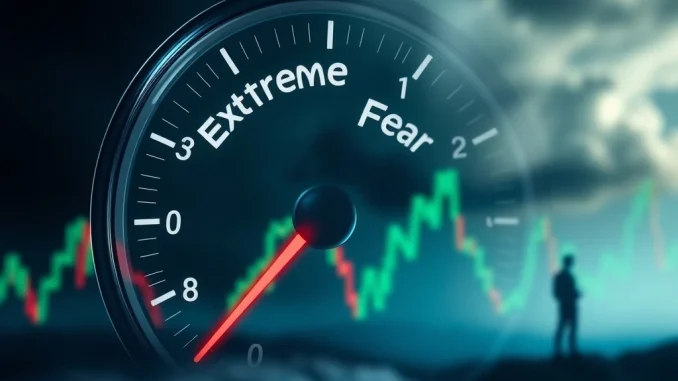
The cryptocurrency market often moves with strong emotional currents. Understanding these shifts is crucial for investors. Recently, the **Crypto Fear & Greed Index** has shown a significant improvement. This widely-watched metric has risen seven points, moving from 22 to 29. Consequently, it has exited the ‘extreme fear’ category. This shift marks a notable change in overall market sentiment. It suggests a potential easing of selling pressure among participants.
Understanding the Crypto Fear & Greed Index
The **Crypto Fear & Greed Index** serves as a vital barometer for market psychology. It measures the prevailing sentiment among cryptocurrency investors. The index operates on a scale from 0 to 100. A score of 0 signifies ‘extreme fear,’ indicating potential overselling. Conversely, a score of 100 represents ‘extreme greed,’ often signaling a market due for a correction. This tool helps market participants gauge whether the market is overly emotional or behaving rationally. Moreover, it provides insights beyond simple price action.
Alternative.me compiles this index from various data points. These factors collectively paint a picture of market participants’ emotional state. A low score suggests investors are very worried. They might be selling off assets. A high score means investors are optimistic. They might be buying aggressively. Therefore, the index offers a unique perspective. It highlights the often-irrational nature of financial markets.
Key Factors Influencing Investor Sentiment
The **Crypto Fear & Greed Index** is not based on a single metric. Instead, it aggregates data from six key sources. Each source contributes a specific percentage to the overall score. Understanding these components reveals how the index captures evolving **investor sentiment**. Let’s explore these factors in detail:
- Volatility (25%): This component measures current volatility and maximum drawdowns of Bitcoin. High volatility often indicates a fearful market. Conversely, stable prices can signal more confidence.
- Market Momentum/Volume (25%): This factor analyzes current trading volume and market momentum. High buying volumes in a strong market signal greed. High selling volumes in a weak market indicate fear.
- Social Media (15%): The index uses sentiment analysis on various social media platforms. It specifically tracks keywords related to Bitcoin. A surge in positive mentions suggests growing optimism. Conversely, negative discussions point to fear.
- Surveys (15%): While often paused, surveys directly poll investors. They ask about their market outlook. These direct insights can provide a snapshot of collective sentiment.
- Bitcoin’s Market Dominance (10%): This metric assesses Bitcoin’s share of the total cryptocurrency market capitalization. A rising dominance can indicate a flight to safety. Investors might be moving from altcoins to Bitcoin. This often happens during periods of uncertainty.
- Google Trends (10%): The index analyzes Google search data for Bitcoin-related terms. High search volumes for terms like ‘Bitcoin price manipulation’ or ‘Bitcoin crash’ suggest fear. Increased searches for ‘how to buy Bitcoin’ often signal growing public interest and potential greed.
Each of these elements contributes to the dynamic nature of the index. They help paint a comprehensive picture of current market psychology. This multi-faceted approach ensures a robust and reliable indicator of **investor sentiment**.
Exiting Extreme Fear: A Glimmer of Hope for Crypto Market Sentiment
The recent seven-point rise is significant. It moves the index from 22 to 29. This shift means the market has left the ‘extreme fear’ zone. It now resides in the ‘fear’ category. While still cautious, this change is a positive development. It suggests a reduction in intense selling pressure. Furthermore, it might signal a period of stabilization. The ‘extreme fear’ phase often presents unique challenges. Investors typically act impulsively during such times. They might sell assets at a loss. Therefore, moving out of this zone can restore some confidence. It can also encourage more rational decision-making.
This improvement reflects a slight easing of bearish pressures. Market participants are perhaps less panicky. They may be less inclined to capitulate. However, the market is not yet in a ‘neutral’ or ‘greed’ state. The overall **crypto market sentiment** remains cautious. Investors should still exercise prudence. They must continue to monitor market conditions closely. This gradual improvement could be the first step towards a broader recovery. Or, it could be a temporary reprieve. Only time will tell the true impact.
The Role of Bitcoin Market Dominance in Sentiment Analysis
The **Bitcoin market dominance** factor plays a crucial role in the Fear & Greed Index. Bitcoin, as the largest cryptocurrency, often acts as the bellwether for the entire market. When Bitcoin’s dominance rises, it often signals that investors are consolidating into the perceived ‘safer’ asset. This typically occurs during periods of market uncertainty. Investors might sell off riskier altcoins. They then move funds into Bitcoin. This behavior is a defensive play. It suggests a lack of confidence in the broader altcoin market.
Conversely, when Bitcoin’s dominance falls, it can indicate a ‘altcoin season.’ This means investors are rotating profits from Bitcoin into various altcoins. Such a trend typically signifies increased risk appetite. It suggests a more confident and greedy market. Therefore, monitoring **Bitcoin market dominance** offers valuable insights. It helps understand where capital is flowing. This factor provides a deeper layer to analyzing overall **crypto market sentiment**. Its current contribution to the index reflects ongoing market dynamics. It informs the overall fear or greed levels.
Navigating Extreme Fear Crypto Phases
Experiencing an **extreme fear crypto** phase can be challenging for any investor. These periods are characterized by significant price drops and widespread panic. Emotions often run high. Many investors make impulsive decisions. They might sell holdings at a loss. However, historical data often shows a different perspective. Periods of extreme fear can sometimes present long-term buying opportunities. Legendary investor Warren Buffett famously advised, “Be fearful when others are greedy and greedy when others are fearful.”
During these intense downturns, the market is often oversold. Assets might trade below their intrinsic value. Savvy investors look for strong projects. They seek those with solid fundamentals. They use such opportunities for accumulation. This requires a strong conviction. It also demands a disciplined approach. Exiting the **extreme fear crypto** category does not mean the danger is over. It simply indicates a lessening of the most intense panic. Investors should still conduct thorough research. They must avoid emotional trading decisions. A calm, analytical approach is always best.
Broader Crypto Market Sentiment: Beyond the Index
While the **Crypto Fear & Greed Index** is powerful, it is one of many tools. Analyzing the broader **crypto market sentiment** involves looking at various indicators. These include on-chain data, derivatives market activity, and macroeconomic factors. On-chain metrics, for instance, track network activity. They show transaction volumes and active addresses. A healthy network often suggests underlying strength. This can boost positive sentiment. Furthermore, the derivatives market offers insights into future price expectations. High open interest in futures contracts, for example, can indicate strong speculative interest.
Macroeconomic conditions also heavily influence crypto sentiment. Inflation rates, interest rate hikes, and global economic stability all play a part. Geopolitical events can also trigger significant market reactions. Therefore, a holistic view is essential. The index provides a snapshot of emotional temperature. However, combining it with other analyses gives a more complete picture. This helps investors make more informed decisions. It also allows them to anticipate future market movements more accurately.
What’s Next for Crypto Investor Sentiment?
The rise to 29 on the **Crypto Fear & Greed Index** is a welcome development. It signals a reduction in immediate panic. However, the market remains in a state of ‘fear.’ Several factors could influence future movements. Regulatory clarity, for instance, could significantly boost confidence. Major technological advancements within blockchain projects could also spur optimism. Conversely, unexpected negative news could quickly reverse this progress. Global economic instability might also push the index back down. Therefore, vigilance remains key for all participants.
The cryptocurrency market is inherently volatile. Sentiment can shift rapidly. Investors should focus on long-term strategies. They should avoid reacting to every short-term fluctuation. This improved reading offers a moment of reflection. It shows that even in challenging times, sentiment can recover. This resilience is a hallmark of the crypto space. Continued monitoring of the index and its underlying factors will provide ongoing guidance. It will help investors navigate this dynamic landscape effectively.
Frequently Asked Questions (FAQs)
What is the Crypto Fear & Greed Index?
The Crypto Fear & Greed Index is a tool that measures the current emotional state of the cryptocurrency market. It ranges from 0 (extreme fear) to 100 (extreme greed), helping investors understand prevailing market sentiment.
How is the Crypto Fear & Greed Index calculated?
The index is calculated using six weighted factors: volatility (25%), trading volume (25%), social media mentions (15%), surveys (15%), Bitcoin’s market capitalization dominance (10%), and Google search volume (10%).
What does it mean when the index moves from ‘extreme fear’ to ‘fear’?
This shift indicates a reduction in intense panic and selling pressure. While the market is still cautious, it suggests an easing of the most severe bearish sentiment, potentially signaling a period of stabilization.
Why is Bitcoin market dominance important for the index?
Bitcoin’s market dominance is crucial because it often reflects investor risk appetite. A rising dominance can indicate a flight to safety (fear), while a falling dominance often suggests increased confidence in altcoins (greed).
How should investors use the Crypto Fear & Greed Index?
Investors can use the index as a complementary tool to their analysis. It helps gauge market psychology and can inform decisions by indicating whether the market is overly emotional, but it should not be the sole basis for investment choices.
Does the index predict future price movements?
The index does not directly predict future price movements. Instead, it reflects current market sentiment. However, extreme readings (very high or very low) have historically coincided with potential market reversals, making it a valuable contrarian indicator.