The cryptocurrency world frequently generates headlines, yet few stories captivate like those involving its most prominent figures. Recently, **Changpeng Zhao**, the renowned **Binance founder**, found himself at the center of a swirling controversy. He addressed claims regarding a meeting with Eric Trump, a discussion now under intense scrutiny. This high-profile interaction and the subsequent denials have significant implications for public perception and regulatory oversight within the digital asset space.
Unpacking the **Changpeng Zhao** Denial: A Meeting of Minds, Not Motives
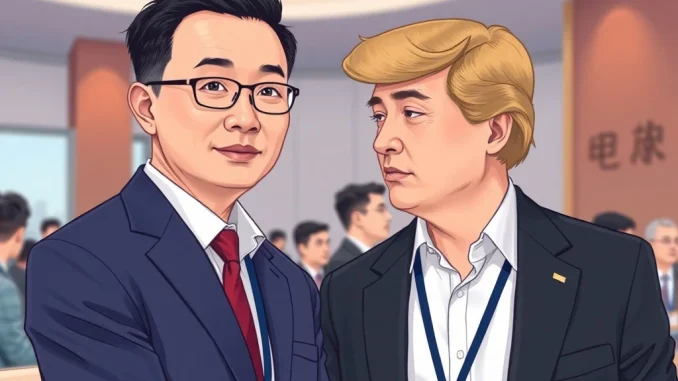
In a recent interview with Fox News, **Changpeng Zhao**, widely known as CZ, firmly stated that while he did indeed meet Eric Trump, the second son of former U.S. President Donald Trump, their interaction at a Bitcoin conference in Abu Dhabi involved no discussions about a presidential pardon. Furthermore, Zhao explicitly denied any negotiations or talks concerning World Liberty Financial (WLFI). He called claims linking this meeting to WLFI and his pardon entirely baseless. Zhao emphasized that no deal or discussion occurred, asserting he has no business relationship with WLFI whatsoever. These comments aim to clarify a situation that has drawn considerable attention across financial and political spheres.
The meeting itself reportedly took place in Abu Dhabi, a significant hub for global finance and increasingly, cryptocurrency innovation. Such conferences often attract a diverse range of influential figures from various sectors. Therefore, the presence of both Zhao and Trump at such an event is not inherently unusual. However, the context of Zhao’s recent legal challenges and the subsequent pardon granted by President Trump naturally fueled speculation. Understanding the timelines and specific allegations is crucial for a complete picture.
The Heart of the Matter: The **CZ Pardon** and Lobbying Allegations
Lobbying allegations emerged last month following President Donald Trump’s decision to pardon Zhao. This pardon came after Zhao pleaded guilty to charges related to anti-money laundering violations at Binance. The legal proceedings culminated in a significant fine for Binance and a personal penalty for Zhao, who stepped down as CEO. The presidential pardon, a powerful executive privilege, subsequently sparked questions about its origins and any potential influences. Critics and media outlets began to investigate whether the pardon was a result of legitimate legal review or if external factors played a role.
President Trump himself addressed the matter this week. He stated that he does not know who Zhao is and has never met him. Trump framed the pardon as a strategic move designed to keep the U.S. **crypto industry competitiveness**. This justification suggests a broader economic and technological rationale behind the decision, rather than personal acquaintance. The White House further reinforced this narrative. They issued an official statement asserting that the pardon underwent a thorough review process, adhering to established protocols. This aims to dispel any notions of impropriety or undue influence, emphasizing due diligence.
The controversy highlights the complex interplay between the rapidly evolving cryptocurrency landscape, political influence, and legal frameworks. As digital assets gain mainstream acceptance, the actions of key industry figures and political leaders face increasing scrutiny. Transparency and clear communication become paramount in maintaining public trust and ensuring market integrity. Furthermore, the incident underscores the ongoing debate surrounding the regulation of cryptocurrencies and the extent of government oversight required.
Navigating the Nuances: The **Eric Trump Meeting** and WLFI Connections
The alleged connection between the **Eric Trump meeting** and World Liberty Financial (WLFI) is a key point of contention. While details about WLFI’s operations are not widely publicized, the mere mention of its name in conjunction with a presidential pardon raises eyebrows. Zhao’s emphatic denial of any business relationship with WLFI is designed to sever this perceived link. This firm stance is essential for protecting his reputation and that of Binance, even after his departure as CEO. The lack of concrete evidence supporting the WLFI connection further strengthens Zhao’s position.
Understanding the context of presidential pardons is also vital. Pardons are executive grants of clemency that forgive an individual for a federal crime. They can be controversial, especially when granted to high-profile individuals or when questions arise about the motivations behind them. Historically, pardons have been used for various reasons, from correcting perceived injustices to political considerations. The timing and circumstances of Zhao’s pardon, coming amidst his legal troubles, naturally invited speculation, regardless of its merits.
The incident also sheds light on the broader lobbying efforts within the cryptocurrency sector. As the **crypto industry** grows, so does its presence in Washington D.C. Various crypto companies and advocacy groups engage in lobbying to influence policy, shape regulations, and promote favorable legislation. While lobbying is a legal and common practice, allegations of impropriety or attempts to influence executive decisions outside of established channels can lead to significant public and legal backlash. This case serves as a stark reminder of the heightened sensitivity surrounding such interactions.
Broader Implications for **Binance Founder** and the Crypto World
For the **Binance founder**, these denials are critical for managing his public image and his future endeavors. Despite stepping down as CEO, Zhao remains an influential figure in the crypto space. His statements directly address allegations that could tarnish his legacy and impact how the industry perceives him. His continued engagement with the public, even after his legal settlement, demonstrates a commitment to transparency, or at least to controlling the narrative surrounding these events. The ability to decisively refute unsubstantiated claims is paramount in the digital age.
The broader **crypto industry competitiveness** is also at stake. Allegations of backroom deals or undue political influence can erode public trust in cryptocurrencies. This trust is already fragile, given the industry’s relatively nascent stage and past instances of fraud or market manipulation. For the industry to mature and gain wider adoption, it needs to demonstrate adherence to ethical standards and transparent practices. Incidents like these, regardless of their veracity, can slow down regulatory progress and deter institutional investment, ultimately impacting growth.
Furthermore, this situation underscores the need for clear and consistent regulatory frameworks globally. Different jurisdictions have varying approaches to cryptocurrency regulation, creating a complex patchwork of rules. This complexity can inadvertently lead to situations where interpretations or enforcement actions become contentious. A unified and transparent regulatory environment would likely reduce the potential for such controversies, fostering a more stable and predictable landscape for all participants. Therefore, continued dialogue between industry leaders and policymakers is essential.
Ensuring Integrity: The Future of Crypto and Political Engagements
The saga involving **Changpeng Zhao**, Eric Trump, and the pardon highlights the increasing intersection of cryptocurrency with traditional political structures. As digital assets become more integral to the global economy, the interactions between crypto leaders and political figures will only intensify. Consequently, maintaining clear boundaries and ensuring transparency in these engagements is paramount. Both sides must operate with integrity to foster a healthy environment for innovation and economic growth. This includes adhering strictly to legal and ethical guidelines for all interactions.
The former President’s comments about keeping the U.S. **crypto industry competitiveness** also warrant attention. This perspective indicates a recognition of the strategic importance of the crypto sector for national economic interests. Governments worldwide are grappling with how to regulate cryptocurrencies effectively without stifling innovation. Striking this delicate balance is crucial. Policies that promote fair competition, protect consumers, and prevent illicit activities are essential for the long-term viability and success of the industry. Therefore, informed policy-making is critical.
Ultimately, Zhao’s denial serves as a critical update in an ongoing narrative. It reinforces his position that his legal issues and subsequent pardon were handled through proper channels, free from personal lobbying by political figures. The public and the industry will continue to monitor developments closely. This situation reinforces the importance of diligent reporting and factual verification in an era often characterized by rapid information dissemination and speculation. The pursuit of clarity remains vital for all stakeholders involved.
The ongoing scrutiny of such high-profile figures within the crypto space emphasizes the industry’s maturation. It signals a move towards greater accountability and a demand for transparent governance. As the digital asset economy continues its rapid expansion, the lessons learned from these controversies will undoubtedly shape its future trajectory. Upholding integrity and clarity will be key determinants of sustained growth and broader acceptance.
The incident also provides valuable insights into the public’s perception of cryptocurrency leaders. Trust is a fundamental currency in any financial system, and even more so in a decentralized one. When allegations of impropriety surface, they challenge this trust. Therefore, the actions and public statements of figures like **Changpeng Zhao** are scrutinized not just for their legal implications, but for their impact on the collective faith in the digital economy. Proactive communication and clear denials are often necessary to manage these perceptions effectively and maintain credibility.
Frequently Asked Questions (FAQs)
Q1: What did Changpeng Zhao deny regarding Eric Trump?
Changpeng Zhao denied discussing a presidential pardon or any business relationship with World Liberty Financial (WLFI) during his meeting with Eric Trump at a Bitcoin conference in Abu Dhabi.
Q2: Why was Changpeng Zhao pardoned?
Former President Donald Trump pardoned Changpeng Zhao after Zhao pleaded guilty to anti-money laundering violations. Trump stated the pardon was intended to keep the U.S. crypto industry competitive, and the White House confirmed a thorough review process.
Q3: What are the lobbying allegations related to the CZ pardon?
Allegations surfaced suggesting that lobbying efforts might have influenced President Trump’s decision to pardon Zhao. These claims were linked to the meeting between Zhao and Eric Trump, though Zhao has strongly denied any such discussions or influence.
Q4: What is World Liberty Financial (WLFI)?
World Liberty Financial (WLFI) is a entity mentioned in connection with the lobbying allegations. Changpeng Zhao has explicitly denied having any business relationship or discussions with WLFI regarding his pardon.
Q5: How does this situation impact the crypto industry?
This situation highlights the increasing scrutiny on interactions between crypto leaders and political figures. It underscores the importance of transparency and ethical conduct to maintain public trust and foster healthy **crypto industry competitiveness** and regulatory development.
Q6: What was President Trump’s response to the pardon controversy?
President Trump stated he does not know Changpeng Zhao and never met him. He framed the pardon as a move to support the U.S. crypto industry’s competitiveness, a position reinforced by an official White House statement confirming a thorough review.