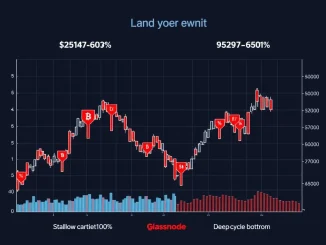
The cryptocurrency market recently experienced a significant shift. The Crypto Fear & Greed Index has sharply declined. It now stands at 24, re-entering the Extreme Fear stage. This drop signals a palpable change in investor mood. Such a low score often indicates widespread apprehension among market participants. Investors are clearly exercising caution. This movement impacts overall crypto market sentiment significantly. Understanding these shifts is crucial for informed decision-making in the volatile digital asset space.
Understanding the Crypto Fear & Greed Index
Understanding the Crypto Fear & Greed Index is crucial for market participants. Data provider Alternative developed this unique tool. It offers a daily snapshot of prevailing market emotions. The index operates on a straightforward scale. Zero signifies Extreme Fear, while 100 represents Extreme Greed. This metric is not just a random number. Instead, it aggregates various data points. These inputs help to gauge whether investors feel optimistic or pessimistic. Consequently, the index provides valuable insights. It helps individuals assess the prevailing mood in the volatile crypto space. A score of 24, as seen currently, means fear largely dominates. This level suggests investors are wary. They may be selling off assets. Conversely, extreme greed often indicates a market due for a correction. Therefore, the index acts as a counter-indicator for many experienced traders.
How the Index is Calculated: A Closer Look at Crypto Market Sentiment
The Crypto Fear & Greed Index relies on a sophisticated methodology. It combines several key market indicators. Each factor contributes a specific weight to the final score. Therefore, it provides a holistic view of crypto market sentiment. These components ensure a comprehensive assessment. Here is a breakdown of the contributing factors:
Volatility (25%): This component measures the current volatility and maximum drawdowns of Bitcoin. High volatility often signals a fearful market. Sudden price swings typically make investors nervous.
Market Volume (25%): It analyzes current trading volume and market momentum. Low trading volumes in a downtrend can indicate fear. A lack of buying pressure often points to investor hesitation.
Social Media (15%): This factor scans various social media platforms for relevant keywords. It assesses the number and sentiment of posts. A surge in negative sentiment points to fear. Conversely, positive buzz suggests greed.
Surveys (15%): The index incorporates weekly surveys. These polls ask investors about their market perceptions. However, this component is currently paused. Its historical data still influences the model.
Bitcoin Dominance (10%): Bitcoin dominance refers to Bitcoin’s share of the total cryptocurrency market cap. An increasing dominance can signal fear. Investors often flock to Bitcoin as a ‘safe haven’ during uncertain times. This shift typically comes at the expense of altcoins.
Google Trends (10%): This component analyzes Google search data for crypto-related terms. A rise in search terms like ‘Bitcoin price manipulation’ or ‘crypto crash’ indicates fear. Conversely, searches for ‘how to buy Bitcoin’ might signal growing interest and greed.
These diverse inputs collectively form the daily index value. Thus, it offers a comprehensive market sentiment analysis tool. Its multi-faceted approach aims to capture the true emotional state of the market.
The Significance of Extreme Fear in Crypto Markets
The current reading of 24 places the market firmly in the Extreme Fear category. This level is not merely an arbitrary number. Instead, it reflects a deep-seated anxiety among investors. Historically, periods of extreme fear have often preceded market bottoms. Conversely, extreme greed often signals impending corrections. This inverse relationship makes the index a valuable tool. It helps investors identify potential buying or selling opportunities. When the index shows extreme fear, many seasoned investors see it as a chance. They consider buying assets at discounted prices. This strategy aligns with the famous adage: ‘Be fearful when others are greedy, and greedy when others are fearful.’ However, acting on this requires conviction. It also demands a thorough understanding of market dynamics. Novice investors might find such periods challenging. They often succumb to panic selling. Therefore, understanding the index’s implications is vital. It helps to navigate these turbulent times more effectively.
Recent Factors Contributing to Extreme Fear
Several factors likely contributed to the recent slip into Extreme Fear. Global macroeconomic uncertainties play a significant role. High inflation rates and rising interest rates often reduce investor appetite for risk assets. Furthermore, regulatory scrutiny continues to be a concern for the crypto industry. News of potential crackdowns or new legislation can quickly dampen enthusiasm. Specific events within the crypto space also exert influence. For instance, major hacks or project failures can erode trust. These incidents create a ripple effect across the market. Consequently, investor confidence diminishes. The current geopolitical landscape also adds a layer of complexity. Geopolitical tensions can drive investors towards traditional safe havens. They move away from volatile assets like cryptocurrencies. All these elements converge. They create a climate of apprehension. This collective anxiety is then reflected in the falling Crypto Fear & Greed Index score. Monitoring these external factors is crucial. They often provide context for market movements.
Bitcoin Dominance and Its Role in Market Sentiment Analysis
Bitcoin dominance is a key component of the index. It also serves as a crucial metric for broader market sentiment analysis. When Bitcoin’s market capitalization increases relative to altcoins, it often indicates fear. Investors typically view Bitcoin as the most established and secure cryptocurrency. Therefore, during periods of uncertainty, capital tends to flow from altcoins into Bitcoin. This phenomenon is known as a ‘flight to quality.’ It suggests that investors are seeking stability. They are trying to minimize risk in a volatile environment. Conversely, when altcoins begin to outperform Bitcoin, it can signal increasing risk appetite. This usually happens during periods of ‘greed.’ Traders then seek higher returns from more speculative assets. The current increase in Bitcoin dominance, as factored into the index, supports the narrative of widespread fear. It underscores investor caution. Therefore, tracking Bitcoin dominance offers valuable insights. It helps to understand the underlying shifts in market psychology. This metric alone can sometimes predict broader market trends.
Navigating Extreme Fear: Strategies for Investors
Navigating periods of Extreme Fear requires a disciplined approach. Panic selling often leads to significant losses. Instead, investors should consider several strategies. Firstly, dollar-cost averaging can be effective. This involves investing a fixed amount regularly. It averages out the purchase price over time. Secondly, conducting thorough research is paramount. Identifying strong projects with solid fundamentals becomes even more important. Weak projects may not recover from downturns. Thirdly, setting clear risk management parameters is essential. This includes defining stop-loss levels and position sizing. Fourthly, diversifying portfolios can mitigate risk. Spreading investments across different assets reduces exposure to single-asset volatility. Lastly, maintaining a long-term perspective is vital. Cryptocurrency markets are inherently cyclical. Bear markets eventually give way to bull markets. Therefore, patience and conviction are key. Emotional decisions often prove costly in such environments. Focusing on long-term goals helps to weather short-term volatility. It allows investors to capitalize on potential future gains.
Beyond the Index: Comprehensive Market Sentiment Analysis
While the Crypto Fear & Greed Index offers valuable insights, it is not the only tool for market sentiment analysis. Savvy investors often use a combination of indicators. On-chain metrics provide deep insights into network activity. These include active addresses, transaction volumes, and exchange flows. High outflows from exchanges, for example, can indicate accumulation. Social media sentiment analysis tools offer more granular data. They track specific coin mentions and sentiment trends. Funding rates on perpetual futures markets also provide clues. Negative funding rates suggest bearish sentiment. Furthermore, traditional technical analysis plays a crucial role. Chart patterns, support, and resistance levels help identify potential price movements. Combining these tools offers a more robust picture. It reduces reliance on a single indicator. This multi-faceted approach enables more informed and confident investment decisions. Ultimately, a comprehensive understanding of market sentiment involves looking at various data points. It also requires interpreting them within the broader economic context.
In conclusion, the slip of the Crypto Fear & Greed Index to 24 marks a significant return to Extreme Fear. This shift reflects heightened investor anxiety. It is driven by various macroeconomic and crypto-specific factors. While challenging, such periods often present unique opportunities for disciplined investors. By understanding the index’s components, including Bitcoin dominance, and employing sound investment strategies, market participants can navigate these volatile times. Continuous market sentiment analysis using multiple tools remains essential for long-term success in the dynamic cryptocurrency landscape.
Frequently Asked Questions (FAQs)
Q1: What does a score of 24 on the Crypto Fear & Greed Index mean?
A score of 24 on the Crypto Fear & Greed Index signifies ‘Extreme Fear.’ This indicates widespread apprehension and negative sentiment among cryptocurrency investors. It suggests that many investors are cautious, possibly selling their assets, and are generally pessimistic about the market’s immediate future.
Q2: How is the Crypto Fear & Greed Index calculated?
The index is calculated using a weighted average of several factors: volatility (25%), trading volume (25%), social media mentions (15%), surveys (15% – currently paused), Bitcoin’s market cap dominance (10%), and Google search volume (10%). These components collectively gauge the prevailing market sentiment.
Q3: Is Extreme Fear a good time to buy cryptocurrencies?
Historically, periods of ‘Extreme Fear’ have often coincided with market bottoms, making them potentially opportune times for long-term investors to accumulate assets at lower prices. However, this strategy carries risks, and market recovery is never guaranteed. Investors should conduct thorough research and consider their risk tolerance.
Q4: What is Bitcoin dominance, and why is it included in the index?
Bitcoin dominance refers to Bitcoin’s share of the total cryptocurrency market capitalization. It’s included because an increasing Bitcoin dominance often indicates that investors are moving capital from altcoins into Bitcoin, which they perceive as a safer asset during times of market uncertainty and fear.
Q5: How can investors manage risk during periods of Extreme Fear?
Investors can manage risk by employing strategies like dollar-cost averaging, diversifying their portfolios, setting clear risk management parameters (e.g., stop-loss orders), focusing on projects with strong fundamentals, and maintaining a long-term perspective rather than reacting to short-term emotional swings.