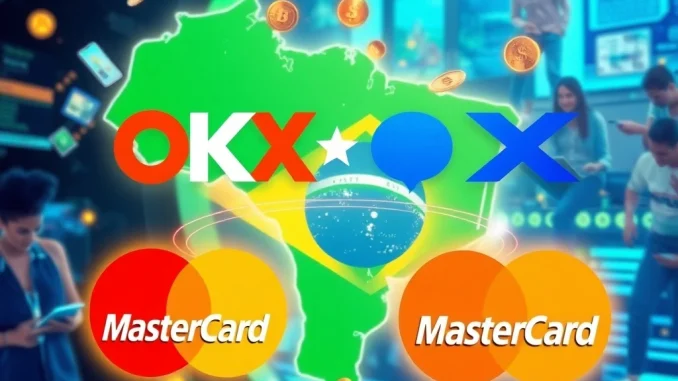
The cryptocurrency landscape consistently evolves, bringing forth innovative solutions for everyday transactions. A significant development recently emerged from Brazil, highlighting this rapid progress. Specifically, OKX, a leading global cryptocurrency exchange, has announced a groundbreaking OKX Mastercard partnership. This collaboration aims to revolutionize how Brazilians engage with digital assets. It specifically focuses on enabling stablecoin payments, making crypto more accessible and integrated into daily commerce.
Unlocking Stablecoin Payments Brazil: A New Era
This strategic alliance between OKX and Mastercard marks a pivotal moment for stablecoin payments Brazil. The partnership facilitates the use of stablecoins for everyday purchases, effectively bridging the gap between traditional finance and the burgeoning digital economy. For many, this represents a significant step towards mainstream crypto adoption. Consumers will soon enjoy the convenience of spending their stablecoins at millions of merchant locations that accept Mastercard.
Initially, the service will support a selection of major stablecoins. This allows users to convert their digital assets into fiat currency at the point of sale. The process promises to be seamless and efficient. Ultimately, it aims to provide a reliable payment solution that leverages the stability of stablecoins. This initiative could significantly boost the utility of cryptocurrencies in the country. It also underscores a growing trend where established financial institutions embrace digital assets.
The Strategic Rationale Behind the Collaboration
The decision by OKX to partner with Mastercard is a testament to its commitment to global expansion and user convenience. Mastercard, on the other hand, continues to solidify its position as a leader in innovative payment solutions. They actively explore the potential of blockchain technology. This partnership offers several key advantages:
- Enhanced Accessibility: Millions of Brazilians can now easily spend stablecoins.
- Increased Utility: Stablecoins gain practical use cases beyond trading.
- Market Expansion: Both companies tap into Brazil’s dynamic crypto market.
- Regulatory Compliance: The collaboration navigates local financial regulations.
This initiative aligns with a broader industry movement towards making digital assets more functional. Therefore, it moves beyond speculative investments. It emphasizes real-world application. This strategic move could set a precedent for similar partnerships in other emerging markets.
OKX Brazil: Expanding Footprint in Latin America
OKX has been actively expanding its presence across various global markets. Its focus on OKX Brazil highlights the country’s strategic importance in the Latin American crypto landscape. Brazil boasts a rapidly growing crypto user base and a progressive regulatory environment. This makes it an attractive market for digital asset companies. OKX aims to provide localized services that cater to the specific needs of Brazilian users.
The exchange offers a wide range of products, including spot trading, derivatives, and DeFi services. Furthermore, the Mastercard partnership strengthens OKX’s ecosystem within Brazil. It provides users with a tangible way to integrate their crypto holdings into their daily financial lives. This move demonstrates OKX’s long-term vision for the region. They are committed to fostering crypto adoption through practical solutions.
Mastercard’s Commitment to Digital Currency Payments
Mastercard has consistently shown a forward-thinking approach to digital currency payments. The company has invested heavily in blockchain technology and partnerships. It recognizes the transformative potential of digital assets. This collaboration with OKX is not an isolated event. It forms part of Mastercard’s broader strategy to support various forms of digital currency. This includes central bank digital currencies (CBDCs) and stablecoins.
Mastercard believes that digital currencies will play a crucial role in the future of commerce. Therefore, they are building the infrastructure to support this evolution. Their involvement lends significant credibility to the stablecoin ecosystem. It also provides a robust and secure payment rail. This partnership exemplifies how traditional financial giants can innovate alongside crypto native firms. They are jointly shaping the future of money.
How Stablecoin Payments Will Work for Brazilians
The mechanism for stablecoin payments through the OKX Mastercard partnership is designed for simplicity and user-friendliness. Here’s a breakdown of the expected process:
- Fund Your OKX Account: Users hold stablecoins (e.g., USDT, USDC) in their OKX wallets.
- Link Your Card: Users link their virtual or physical Mastercard-powered OKX card to their account.
- Make a Purchase: When a user makes a purchase, the system automatically converts the required amount of stablecoins to Brazilian Real (BRL).
- Seamless Transaction: The transaction completes instantly at the point of sale, just like a regular debit card payment.
This streamlined approach eliminates the need for manual conversions before spending. Consequently, it makes stablecoin usage as straightforward as using a traditional bank card. This convenience is a key factor in driving widespread adoption. It removes common barriers associated with cryptocurrency usage.
Benefits for Brazilian Consumers and Businesses
The introduction of stablecoin payments offers a multitude of benefits for both individuals and merchants in Brazil. For consumers, it provides a stable and efficient way to use their digital assets. This avoids the volatility often associated with other cryptocurrencies like Bitcoin. It also offers:
- Financial Inclusion: Access to digital finance for the unbanked or underbanked population.
- Lower Transaction Costs: Potentially reduced fees compared to traditional international remittances.
- Speed and Efficiency: Near-instantaneous transactions, especially for cross-border payments.
- Security: Leveraging Mastercard’s robust security infrastructure alongside OKX’s crypto security.
Businesses, in turn, can attract a new segment of customers. These are individuals who prefer to transact with digital assets. Furthermore, it simplifies international transactions. This partnership creates a win-win situation, fostering economic growth and innovation. Therefore, it contributes significantly to crypto adoption Brazil.
Brazil: A Hotbed for Crypto Adoption
Brazil stands out as a leading nation in cryptocurrency adoption within Latin America. Several factors contribute to this vibrant environment. The country has a tech-savvy population and a strong entrepreneurial spirit. Additionally, there is a growing interest in alternative financial solutions. High inflation rates and a desire for financial autonomy also drive crypto interest.
The Brazilian government and financial regulators have also shown a relatively progressive stance towards digital assets. They aim to integrate them into the existing financial framework. This supportive ecosystem makes Brazil an ideal launchpad for initiatives like the OKX Mastercard partnership. The market readiness for such innovations is palpable. It signals a future where digital assets are integral to the economy.
Navigating the Regulatory Landscape
Any significant financial innovation must navigate complex regulatory frameworks. The OKX Mastercard partnership operates within Brazil’s evolving digital asset regulations. Both companies are committed to compliance. They ensure that all transactions adhere to local laws. This includes anti-money laundering (AML) and know-your-customer (KYC) requirements.
Regulatory clarity is crucial for the long-term success of such ventures. Therefore, the collaboration will likely work closely with local authorities. This proactive approach helps build trust and stability in the market. It also sets a standard for future crypto-fiat integrations. The focus remains on secure and compliant services for all users.
Enhancing Financial Inclusion Through Digital Assets
One of the most profound impacts of the OKX Mastercard partnership could be on financial inclusion. Many individuals in Brazil, particularly in remote areas, lack access to traditional banking services. Stablecoins, combined with a widely accepted payment network like Mastercard, can offer a viable alternative. They provide access to digital financial tools.
This initiative empowers individuals to participate more fully in the digital economy. It allows them to store value, make payments, and access financial services. This could significantly improve economic opportunities for millions. Thus, it aligns with global efforts to reduce financial disparities. The partnership demonstrates how technology can bridge societal gaps.
The Technology Behind Stablecoin Transactions
Understanding the underlying technology helps appreciate the innovation. Stablecoins are cryptocurrencies designed to maintain a stable value. They are typically pegged to a fiat currency like the US Dollar or the Brazilian Real. This stability is crucial for their use as a medium of exchange. The transaction process involves several steps:
- Blockchain Settlement: Stablecoins move on a blockchain network.
- Conversion Engine: OKX’s system handles real-time conversion to local fiat.
- Mastercard Network: The fiat equivalent then travels through Mastercard’s global payment network.
- Merchant Acceptance: Merchants receive payment in their local currency, without needing to handle crypto directly.
This intricate yet efficient system ensures that the benefits of blockchain (speed, security) are combined with the widespread acceptance of traditional payment rails. The integration is seamless for both the user and the merchant. Therefore, it minimizes friction in the payment process.
Competitor Landscape and Market Positioning
The cryptocurrency payment space is becoming increasingly competitive. However, the OKX Mastercard partnership positions OKX as a frontrunner in Brazil. Few other exchanges have managed to secure such a comprehensive integration with a global payment giant. This collaboration offers a significant competitive edge. It provides a unique value proposition to Brazilian users.
Other players in the market may offer crypto cards, but the direct integration of stablecoin payments at this scale is notable. This move helps OKX attract new users. It also strengthens loyalty among existing ones. The partnership differentiates OKX by offering practical utility. It moves beyond just trading or holding digital assets. This strategic advantage will likely drive further market share growth.
Future Prospects for OKX and Mastercard
The success of this initiative in Brazil could pave the way for similar collaborations in other regions. Both OKX and Mastercard are global entities. Their partnership in Brazil serves as a significant pilot program. It demonstrates the viability and demand for stablecoin-powered payments. The insights gained from this launch will inform future strategies.
Furthermore, this partnership could evolve to include more digital asset services. Potential future developments might involve loyalty programs, enhanced security features, or even broader stablecoin support. The long-term vision is to create a more interconnected and efficient global financial system. Digital currencies will play a central role in this transformation. The collaboration embodies a forward-looking approach to finance.
Global Implications of the OKX Mastercard Partnership
While focused on Brazil, the implications of this OKX Mastercard partnership extend far beyond its borders. It sends a clear signal to the global financial community. Major payment networks are increasingly comfortable integrating with the crypto ecosystem. This collaboration validates the potential of stablecoins as a reliable medium of exchange. It also encourages other regions to explore similar integrations.
The success in Brazil could inspire a domino effect, accelerating crypto adoption Brazil and elsewhere. It highlights a growing trend of convergence between traditional finance and decentralized technologies. This integration is essential for crypto to achieve widespread acceptance. Ultimately, it moves digital assets from niche investment vehicles to everyday financial tools. This partnership is truly a milestone in the journey towards a digital-first economy.
In conclusion, the partnership between OKX and Mastercard to enable stablecoin payments in Brazil is a monumental step forward. It underscores the increasing mainstream acceptance of cryptocurrencies. This initiative will empower millions of Brazilians. They will gain greater financial flexibility and access. It also solidifies Brazil’s position as a leader in digital asset innovation. This collaboration truly unlocks a new chapter for digital currency payments globally.
Frequently Asked Questions (FAQs)
1. What is the core of the OKX Mastercard partnership in Brazil?
The core of the partnership is to enable Brazilians to make everyday payments using stablecoins through Mastercard’s network. This means users can spend their stablecoins at any merchant accepting Mastercard, with automatic conversion to local currency.
2. Which stablecoins will be supported for payments?
While specific stablecoins were not detailed in the initial announcement, such partnerships typically support major stablecoins like USDT and USDC. OKX will provide updates on the exact stablecoins available for use through this service.
3. How does this partnership benefit crypto adoption in Brazil?
This partnership significantly boosts crypto adoption by providing a practical, real-world use case for stablecoins beyond trading. It makes digital currency payments convenient, stable, and accessible to a broader population, including the unbanked, thereby integrating crypto into daily commerce.
4. Is the process of making stablecoin payments complicated?
No, the process is designed to be seamless. Users will link their OKX account to a Mastercard-powered card. When making a purchase, the system automatically converts the necessary amount of stablecoins to Brazilian Real at the point of sale, making it as simple as using a regular debit card.
5. What role does Mastercard play in this initiative?
Mastercard provides its extensive global payment network, allowing stablecoin payments to be accepted at millions of merchant locations. Their robust infrastructure ensures security, reliability, and widespread acceptance, bridging the gap between digital assets and traditional commerce.
6. What are the long-term implications of this OKX Mastercard partnership?
This partnership could serve as a blueprint for similar integrations in other countries, accelerating global digital currency payments. It validates stablecoins as a reliable medium of exchange and pushes for greater financial inclusion, ultimately shaping the future of finance where digital assets are more deeply integrated into daily economic activities.