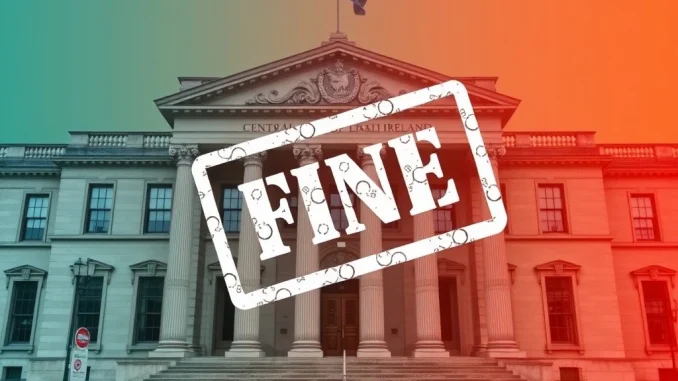
The cryptocurrency world often navigates complex regulatory landscapes. Today, a significant development impacts a major player. Coinbase Europe has agreed to pay a substantial €21.5 million ($24.7 million) **Coinbase fine** to the **Central Bank of Ireland**. This penalty addresses critical shortcomings in its transaction monitoring systems. This news highlights the growing emphasis on compliance within the digital asset space, particularly for large exchanges.
Understanding the Central Bank of Ireland’s Action
The **Central Bank of Ireland** serves as the primary financial regulator in Ireland. Its role involves ensuring stability and consumer protection within the financial sector. Therefore, its actions against a major crypto exchange like Coinbase carry significant weight. The fine stems from a coding error. This error occurred between 2021 and 2022. Consequently, the company only screened some transactions for suspicious activity. This oversight represents a serious breach of anti-money laundering (AML) obligations.
Regulators worldwide are increasing their scrutiny of crypto platforms. They aim to prevent illicit financial activities. This includes money laundering and terrorist financing. The Irish regulator’s decision underscores this global trend. It sends a clear message about accountability. All financial institutions, including crypto exchanges, must adhere to strict compliance standards.
Details of the Transaction Monitoring Failures
The core issue leading to the **Coinbase fine** was inadequate **transaction monitoring failures**. Specifically, a coding error caused a significant gap. Between 2021 and 2022, not all transactions were properly screened. This meant that potentially suspicious activities could have gone undetected. Effective transaction monitoring is crucial for any financial service provider. It helps identify unusual patterns. These patterns might indicate illegal activities.
For crypto exchanges, robust AML systems are paramount. They deal with high volumes of digital assets. These assets can be moved quickly and anonymously. This makes them attractive to criminals. Therefore, regulators expect exchanges to implement sophisticated screening tools. These tools must continuously analyze transaction data. The goal is to detect and report suspicious transactions to authorities. Coinbase’s error compromised this essential safeguard.
The Impact on Coinbase Europe and Beyond
This substantial **Coinbase fine** directly affects **Coinbase Europe**. As a regulated entity, compliance is non-negotiable. The financial penalty is significant. However, the reputational damage could be even greater. Customers expect their chosen exchange to operate securely and ethically. Failures in compliance can erode trust. This is especially true in the volatile cryptocurrency market.
Coinbase has a large presence in Europe. Its operations are vital for many users. The company will likely reinforce its compliance protocols. It must demonstrate its commitment to regulatory adherence. This incident also serves as a warning to other exchanges. All platforms operating in regulated jurisdictions must prioritize robust AML and know-your-customer (KYC) procedures. The cost of non-compliance is clearly high.
The Broader Landscape of Crypto Regulation
The **Central Bank of Ireland**’s action against Coinbase is part of a larger trend. Governments globally are tightening **crypto regulation**. They recognize the need to integrate digital assets into existing financial frameworks. This includes rules around market integrity, consumer protection, and financial crime prevention. The European Union, for instance, is advancing its Markets in Crypto-Assets (MiCA) regulation. MiCA aims to provide a comprehensive framework for crypto-asset issuance and service provision across member states.
Regulatory bodies are increasingly sophisticated. They understand the nuances of blockchain technology. They are also developing effective enforcement mechanisms. This evolving landscape means exchanges must remain agile. They need to adapt their operations continuously. Proactive compliance is no longer optional; it is a necessity for long-term viability. The industry expects more such actions as regulators mature their approach.
Lessons Learned from Coinbase’s Compliance Challenge
This incident offers critical lessons for the entire crypto industry. Firstly, even leading platforms can face significant compliance challenges. A coding error, though seemingly technical, can have massive regulatory consequences. Secondly, regulators are serious about enforcement. They will levy substantial fines for breaches of AML obligations. Thirdly, transparency and accountability are key. Companies must address issues promptly and effectively.
For users, this news reinforces the importance of choosing regulated exchanges. These platforms offer a layer of protection. They are subject to oversight by authorities like the **Central Bank of Ireland**. While no system is perfect, regulated entities generally adhere to higher standards. This helps safeguard user funds and data. The long-term health of the crypto ecosystem depends on strong regulatory compliance. It builds confidence among institutional investors and the general public alike.
Moving Forward: Enhancing Transaction Monitoring Systems
Following this fine, Coinbase will undoubtedly focus on enhancing its **transaction monitoring failures** prevention systems. This will involve several key steps. They must first rectify the coding error. Then, they need to implement more rigorous testing protocols. Continuous auditing of their compliance systems is also essential. This ensures ongoing adherence to regulatory requirements. Investing in advanced AI and machine learning tools can also bolster monitoring capabilities. These technologies can detect subtle patterns of suspicious activity more effectively.
Furthermore, internal training programs will likely be strengthened. All employees must understand their role in maintaining compliance. A culture of compliance starts from the top. It permeates every level of the organization. This proactive approach helps prevent future breaches. It also rebuilds trust with regulators and users. The goal is to create a robust and resilient compliance framework. This framework must withstand future scrutiny.
Conclusion: A Wake-Up Call for Crypto Compliance
The €21.5 million **Coinbase fine** from the **Central Bank of Ireland** serves as a potent reminder. Regulatory compliance is not a mere formality. It is a foundational pillar for operating in the financial sector. The incident highlights the critical importance of robust **transaction monitoring failures** prevention systems. As **crypto regulation** continues to evolve, all exchanges, especially those like **Coinbase Europe**, must prioritize adherence. This ensures market integrity, protects consumers, and fosters broader adoption of digital assets responsibly. The industry must learn from these challenges to build a more secure and trusted future.
Frequently Asked Questions (FAQs)
Q1: Why did the Central Bank of Ireland fine Coinbase?
The Central Bank of Ireland fined Coinbase Europe for significant failures in its transaction monitoring systems. A coding error between 2021 and 2022 caused the company to screen only some transactions for suspicious activity, violating anti-money laundering (AML) obligations.
Q2: How much was the Coinbase fine?
Coinbase Europe agreed to pay a fine of €21.5 million, which translates to approximately $24.7 million.
Q3: What are transaction monitoring failures, and why are they important?
Transaction monitoring failures refer to the inability of a financial institution to effectively screen and analyze customer transactions for unusual or suspicious patterns. This is crucial for preventing illicit activities like money laundering and terrorist financing, protecting the financial system’s integrity.
Q4: How does this fine affect Coinbase Europe’s operations?
While the fine is a significant financial penalty, it also impacts Coinbase Europe’s reputation. The company will likely need to invest further in strengthening its compliance systems and demonstrating its commitment to regulatory standards to rebuild trust with regulators and users.
Q5: What does this mean for the future of crypto regulation?
This fine signals a continued tightening of crypto regulation globally. Regulators like the Central Bank of Ireland are increasing their scrutiny of crypto platforms, emphasizing the need for robust AML/KYC procedures and proactive compliance from all digital asset service providers.
Q6: Is Coinbase still safe to use after this fine?
Coinbase remains a widely used and regulated exchange. This fine highlights past compliance shortcomings which the company is now addressing. Users should always consider an exchange’s regulatory standing and commitment to security, but regulatory actions like this are part of the process of maturing the crypto industry.