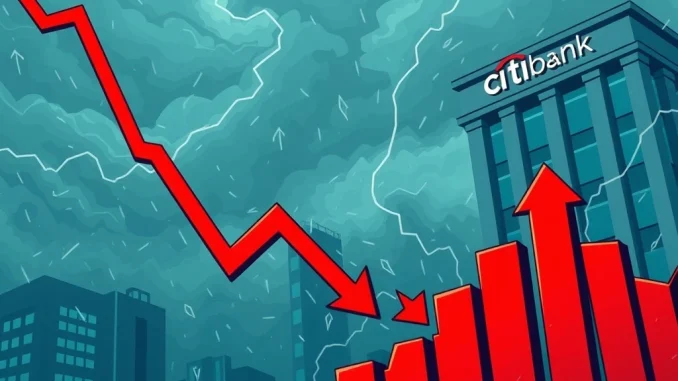
The cryptocurrency market often experiences volatility. However, a recent **Citibank crypto analysis** sheds light on a particularly challenging period. Citibank identified a significant event in October. This event severely impacted investor confidence across the digital asset space. Therefore, understanding the factors behind this downturn is crucial for all market participants.
Understanding the Critical October Crypto Liquidation
On October 10, the cryptocurrency market faced a substantial challenge. Citibank, a leading financial institution, pinpointed this date as a major liquidation event. This forced selling spree was not minor. In fact, the bank described it as the worst on record. Consequently, it sent shockwaves through the entire crypto ecosystem. Such events often trigger further price drops. They can also create a domino effect of selling pressure. This particular **October crypto liquidation** highlighted underlying market vulnerabilities.
Forced liquidations occur when leveraged positions cannot meet margin requirements. Traders must sell assets to cover these losses. This action, therefore, pushes prices down further. This creates a negative feedback loop. Citibank’s findings, reported by CoinDesk, emphasize the scale of this particular incident. It suggests that many investors were caught off guard. Moreover, the event’s magnitude had lasting consequences.
Impact on Investor Sentiment Crypto and Market Confidence
The immediate aftermath of the October liquidation was clear. Investor confidence took a significant hit. Citibank noted that this event “severely damaged investor confidence.” Such damage is not easily repaired. Indeed, it can linger for weeks or even months. This makes market recovery more challenging. Therefore, a cautious approach often follows these periods of instability.
Several factors contribute to waning **investor sentiment crypto**:
- Sudden Price Drops: Large liquidations cause rapid value declines.
- Fear of Further Losses: Investors become wary of additional market downturns.
- Uncertainty: The future direction of the market becomes less predictable.
- Loss of Trust: Some investors may question the stability of the asset class itself.
This decline in confidence has tangible effects. It often leads to reduced trading activity. Furthermore, it can discourage new capital from entering the market. This creates a challenging environment for growth.
Declining ETF Demand and Worsening Technical Indicators
Beyond the liquidation event, Citibank identified other contributing factors. One key area was the declining demand for exchange-traded funds (ETFs). ETFs offer a regulated way to gain exposure to cryptocurrencies. Therefore, a drop in their demand signals reduced institutional and retail interest. This trend can reflect broader market apprehension. It suggests that fewer investors are looking to enter the market via these traditional vehicles.
Additionally, technical indicators worsened considerably. Technical analysis involves studying past market data. It predicts future price movements. When these indicators turn negative, they signal bearish trends. This can include:
- Breakdowns below key support levels.
- Bearish crossovers in moving averages.
- Declining trading volumes during rallies.
These signals often reinforce negative sentiment. They encourage further selling. Consequently, they contribute to a prolonged **cryptocurrency price decline**. The combination of these factors created a perfect storm. It pushed the market into a downward spiral.
Analyzing the Broader Cryptocurrency Price Decline
The cumulative effect of these issues was a notable **cryptocurrency price decline**. Major digital assets saw significant corrections. This extended beyond just the immediate liquidation impact. The market experienced a broader re-evaluation. Many investors questioned the sustainability of previous price levels. This led to widespread selling. Moreover, long-term investors, typically resilient, also began to show signs of distress.
Citibank’s report suggests a worrying trend. The damage to investor confidence might compel long-term holders to sell. These investors often buy and hold assets for extended periods. Their selling indicates deep-seated concerns. It also removes a key support pillar from the market. Historically, long-term holders provide stability. Their conviction helps absorb selling pressure. Therefore, their potential capitulation marks a critical shift.
Navigating the Crypto Market Crash and Future Outlook
The recent **crypto market crash** serves as a stark reminder. The cryptocurrency market remains highly sensitive to external shocks. Liquidation events, combined with reduced demand and poor technicals, create powerful downward pressure. Investors must therefore remain vigilant. They should also understand the forces at play.
Moving forward, the market faces several challenges:
- Rebuilding Confidence: This requires sustained positive news and price stability.
- Regulatory Clarity: Clear regulations could attract more institutional capital.
- Innovation: Continued development of new use cases for blockchain technology.
- Macroeconomic Factors: Broader economic conditions also influence crypto performance.
The path to recovery is rarely linear. However, the crypto market has shown resilience in the past. Understanding the recent events helps investors prepare for future volatility. It also provides valuable lessons in risk management. Citibank’s detailed analysis offers crucial insights into these complex market dynamics.
In conclusion, Citibank’s **Citibank crypto analysis** provides a sobering assessment. The October 10 liquidation event was a major turning point. It severely damaged investor confidence. This, coupled with declining ETF demand and worsening technical indicators, drove a significant **cryptocurrency price decline**. The report warns that even long-term investors may begin divesting. Therefore, market participants must carefully consider these implications. The road to full recovery may be challenging. Nevertheless, awareness of these factors is the first step toward navigating future market conditions effectively.
Frequently Asked Questions (FAQs)
What was the main cause of the October cryptocurrency price decline, according to Citibank?
Citibank identified three primary causes for the recent decline: a major forced liquidation event on October 10, declining demand for exchange-traded funds (ETFs), and worsening technical indicators. The liquidation event was deemed the worst on record.
How did the October liquidation event impact investor sentiment?
The forced liquidation event severely damaged investor confidence. Citibank noted that this could lead even long-term investors to consider selling their holdings, indicating a deep impact on market psychology.
What role did ETF demand play in the market downturn?
Declining demand for cryptocurrency ETFs signaled reduced interest from both institutional and retail investors. This indicated a broader market apprehension and contributed to the overall negative sentiment and price decline.
What are ‘worsening technical indicators’ and how do they affect crypto prices?
Worsening technical indicators refer to analytical tools suggesting bearish trends, such as breakdowns below support levels or negative moving average crossovers. These signals reinforce negative sentiment, encouraging further selling and contributing to price drops.
Does Citibank’s analysis suggest a long-term bearish outlook for crypto?
While Citibank highlighted severe damage to investor confidence and the potential for long-term investors to sell, their analysis primarily focuses on the causes and immediate aftermath of the October event. It underscores the challenges ahead for market recovery and the need for careful consideration by participants.
What steps can investors take in response to such market analyses?
Investors should use such analyses to inform their risk management strategies. This includes diversifying portfolios, understanding the risks of leveraged trading, and staying informed about market dynamics and technical indicators. A cautious and informed approach is often advisable during periods of high volatility.