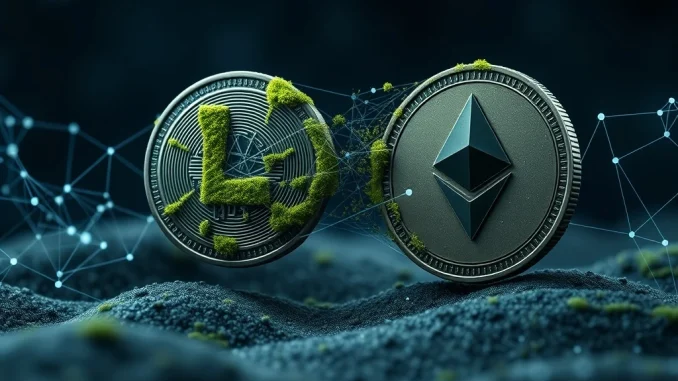
The cryptocurrency world is dynamic, marked by constant innovation and strategic shifts. A significant development for holders of Moss Coin (MOC) is now taking center stage. Moss Coin recently announced a crucial Moss Coin migration. This move involves transitioning from the Luniverse blockchain to the widely adopted Ethereum network. The project will re-emerge as an ERC-20 token. This strategic shift is anticipated around mid-November. This news marks a pivotal moment for the project’s future trajectory and its community.
Understanding the Strategic Moss Coin Migration
Moss Coin, often abbreviated as MOC, is a cryptocurrency project with a unique vision. It focuses on the tokenization of real-world assets. Specifically, MOC aims to create a digital ecosystem for metaverse assets and NFTs. These assets are backed by tangible values. The project currently operates on Luniverse. Luniverse is a blockchain-as-a-service (BaaS) platform. This platform offers a managed environment for blockchain development. However, MOC will soon reside on Ethereum. This upcoming Moss Coin migration signifies a major strategic pivot. The primary goal is to leverage Ethereum’s vast ecosystem. This move promises enhanced liquidity, broader accessibility, and greater integration for MOC within the global crypto landscape.
The decision to migrate is not uncommon in the rapidly evolving blockchain space. Projects often reassess their foundational technology. They seek platforms that best support their long-term goals. For Moss Coin, this means tapping into Ethereum’s established network effects. It also means benefiting from its robust security. Ultimately, this move aims to solidify MOC’s position. It seeks to ensure its future relevance in the competitive digital asset market.
The Advantages of Shifting to Ethereum ERC-20
The transition involves converting existing MOC tokens. These tokens will become compliant with the Ethereum ERC-20 standard. ERC-20 is a widely recognized technical standard. It governs smart contracts on the Ethereum blockchain. This standard defines a common list of rules for tokens. These rules dictate how tokens function. They also ensure how tokens interact with other applications. Consequently, this standardization offers several profound benefits. Firstly, it ensures seamless compatibility. MOC will work with numerous wallets, decentralized applications (dApps), and exchanges. Secondly, it integrates MOC into the most vibrant decentralized finance (DeFi) ecosystem. Ethereum hosts thousands of DeFi protocols. This access can unlock new opportunities for MOC holders. They can participate in lending, borrowing, and yield farming. Furthermore, being an ERC-20 token simplifies listing processes. It also increases potential trading volumes on global exchanges. This shift makes MOC significantly more versatile and interconnected.
The choice of Ethereum is strategic. Ethereum boasts the largest developer community in crypto. It also has the most battle-tested network security. This robust infrastructure provides a stable foundation for MOC. Developers can build new features and integrations. Users can transact with greater confidence. Therefore, the move to Ethereum ERC-20 is not just a technical change. It is a strategic alignment with the industry’s leading smart contract platform. This alignment can drive future growth and adoption for Moss Coin.
Why Depart the Luniverse Blockchain? Exploring the Strategic Rationale
Luniverse, developed by Dunamu & Partners, has served as MOC’s home. It provided a managed blockchain environment. This platform offered ease of development. It also presented a streamlined entry point for projects. Nevertheless, projects frequently seek wider adoption and greater decentralization. The Luniverse blockchain, while efficient, operates within a more confined ecosystem. It might not offer the same expansive network effect as Ethereum. Ethereum, by contrast, boasts unparalleled developer activity. It also has a massive user base and superior network security. Moving away from a more contained environment allows MOC to grow significantly. It opens doors to a larger global audience and a more diverse range of partnerships. This decision reflects a common trend in the crypto industry. Many projects migrate to more established chains. They do this for enhanced scalability, broader reach, and improved liquidity. The goal is often to maximize their potential and ensure long-term viability.
Furthermore, a dedicated blockchain like Luniverse requires ongoing maintenance and development. Shifting to Ethereum offloads some of this infrastructure burden. It allows the Moss Coin team to focus on core product development. They can concentrate on expanding their metaverse ecosystem. This strategic move aligns MOC with the future of decentralized technology. It ensures the project remains competitive and attractive to new users and investors. Therefore, while Luniverse provided a valuable starting point, the project’s ambition necessitated a move to a more globally recognized and interconnected platform.
Direct Implications for MOC Token Holders
This migration directly impacts all MOC Token holders. They will need to ensure their tokens are properly swapped. The official announcement specifies a “snapshot” will occur. This snapshot is a crucial step. It records all current token balances on the Luniverse blockchain. Subsequently, new ERC-20 tokens will be distributed. These will replace the old Luniverse-based MOC. Holders must follow official instructions carefully. These instructions will detail the exact swap process. Further details are forthcoming. They will be released by supporting exchanges and the Moss Coin team. This careful planning aims to ensure a smooth and secure transition for everyone involved.
For users holding MOC in self-custody wallets, a manual swap process may be required. This often involves sending old tokens to a designated address. Then, new ERC-20 tokens are received in return. Users should be extremely cautious. They must verify all official communication channels. This prevents falling victim to scams. The project team will provide clear guidelines. These guidelines will outline the steps for both exchange-held and self-custody tokens. Staying informed is paramount during this period. The success of the migration relies on user cooperation and awareness. Ultimately, this change is designed to benefit the long-term value and utility of the MOC Token.
Navigating the Complexities of Crypto Token Migration
A crypto token migration is a multi-stage process. It requires meticulous planning and execution. First, the project team announces its intentions publicly. This includes the rationale and timeline. Then, a specific date for a “snapshot” is set. This snapshot is a critical timestamp. It records all token holdings on the old blockchain. After the snapshot, deposits and withdrawals are typically suspended. This measure prevents any discrepancies during the token swap. It ensures data integrity. New tokens are then issued on the target blockchain. These new tokens correspond to the recorded balances. Finally, cryptocurrency exchanges facilitate the swap for their users. They manage the technical complexities. Users holding tokens on self-custody wallets, such as hardware wallets, often need to perform a manual swap. This usually involves interacting directly with the project’s official migration portal. Always consult official project channels for precise, up-to-date instructions. Avoid unofficial sources to protect your assets.
The entire process demands clear communication. Transparency from the project team is vital. Users need to understand each step. They must know how it affects their holdings. The success of any crypto token migration depends on user trust and adherence to guidelines. This ensures a seamless transition for the entire community. Projects undertake these migrations for various reasons. These include technological upgrades, enhanced security, or access to larger ecosystems. MOC’s move is a prime example of a project evolving to meet future demands.
Key Exchange Announcements: Upbit, Bithumb, and Coinone’s Role
Major South Korean exchanges will play a crucial role in this transition. Upbit, Bithumb, and Coinone are specifically mentioned in Moss Coin’s announcement. These platforms are incredibly vital for MOC’s existing user base. They command a significant share of the South Korean cryptocurrency market. These exchanges will announce their specific schedules. This includes critical details on deposit and withdrawal suspensions. They will also provide information on the token swap process. Users holding MOC on these exchanges should monitor their announcements closely. Following their guidelines will ensure a seamless and secure migration of their assets. These exchanges facilitate the process for millions of users. Their support is indispensable for a successful migration.
Furthermore, these exchanges often handle the technical aspects of the swap. This means users with MOC on these platforms may not need to take manual action. The exchange will automatically convert their old tokens to new ERC-20 MOC. However, users must verify this with their specific exchange. They should check the official notices from Upbit, Bithumb, and Coinone. Proactive monitoring of these announcements is highly recommended. It prevents any potential loss or delay during the migration period. The cooperation of these major exchanges streamlines the process for a large segment of MOC holders.
What’s Next for Moss Coin on Ethereum ERC-20?
The migration to Ethereum ERC-20 is more than just a technical upgrade. It represents a significant strategic repositioning for Moss Coin. Post-migration, MOC will benefit from Ethereum’s robust and expansive infrastructure. This includes unparalleled access to the thriving DeFi ecosystem. It also opens doors to a wider array of NFT marketplaces and dApps. Furthermore, MOC will gain exposure to Ethereum’s vast developer community. This community constantly innovates and builds new applications. The project aims to enhance its utility and broaden its reach significantly. This move could potentially attract new investors. It might also foster greater integration within the wider crypto ecosystem. The future success of MOC will depend on its ability to leverage these new opportunities. It must build upon Ethereum’s strengths. This strategic shift is designed to unlock new growth avenues and increase MOC’s long-term value proposition.
The Moss Coin team can now focus on developing its core metaverse and NFT offerings. They can build on a more stable and widely adopted platform. This includes expanding their ecosystem of digital assets. It also involves forging new partnerships within the Ethereum community. The move positions MOC for greater innovation and adoption. It signals a clear commitment to evolving with the blockchain industry. Therefore, the migration is a critical step. It paves the way for Moss Coin’s ambitious future plans.
The impending Moss Coin migration from Luniverse to Ethereum is a landmark event for the project. It signals a clear commitment to growth, innovation, and broader integration. This move aims to harness the unparalleled power and liquidity of the largest smart contract platform. Users should remain vigilant and well-informed. They must monitor official announcements from Moss Coin and supporting exchanges like Upbit, Bithumb, and Coinone. This proactive approach will ensure a smooth and secure transition of their assets. The shift promises a new, exciting chapter for the MOC Token. It firmly places Moss Coin within the dynamic and ever-evolving world of crypto token migration. The future looks promising for MOC on its new Ethereum home.
Frequently Asked Questions (FAQs) About the Moss Coin Migration
Q1: What is Moss Coin (MOC) migrating to?
A1: Moss Coin (MOC) is migrating from the Luniverse blockchain to the Ethereum network. It will be re-issued as an ERC-20 compliant token.
Q2: When is the Moss Coin migration expected to happen?
A2: The migration is anticipated to occur around mid-November. Specific dates for the snapshot and token swap will be announced by Moss Coin and supporting exchanges.
Q3: What is an ERC-20 token, and why is it important for MOC?
A3: ERC-20 is a technical standard for tokens on the Ethereum blockchain. It is crucial because it ensures compatibility with a vast ecosystem of wallets, exchanges, and decentralized applications (dApps). This enhances MOC’s liquidity, accessibility, and integration into the broader DeFi space.
Q4: Do I need to do anything if my MOC tokens are on an exchange like Upbit, Bithumb, or Coinone?
A4: If your MOC tokens are held on a supporting exchange like Upbit, Bithumb, or Coinone, the exchange will typically handle the token swap automatically. However, it is essential to monitor their official announcements for specific instructions regarding deposit/withdrawal suspensions and the migration process.
Q5: Why is Moss Coin moving from Luniverse to Ethereum?
A5: Moss Coin is migrating to leverage Ethereum’s extensive ecosystem, superior liquidity, broader user base, and robust security. This move aims to enhance MOC’s utility, foster greater adoption, and align the project with a more established and interconnected blockchain platform.
Q6: Will this migration affect the value of MOC tokens?
A6: While a migration itself doesn’t directly guarantee a price change, moving to a more liquid and widely adopted platform like Ethereum can positively impact a token’s long-term value. Increased accessibility and integration into DeFi can attract more users and investors, potentially leading to increased demand and value. However, cryptocurrency prices are subject to market volatility.