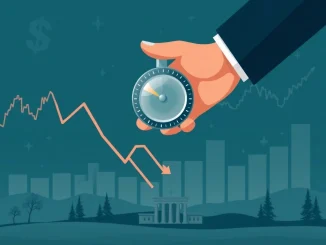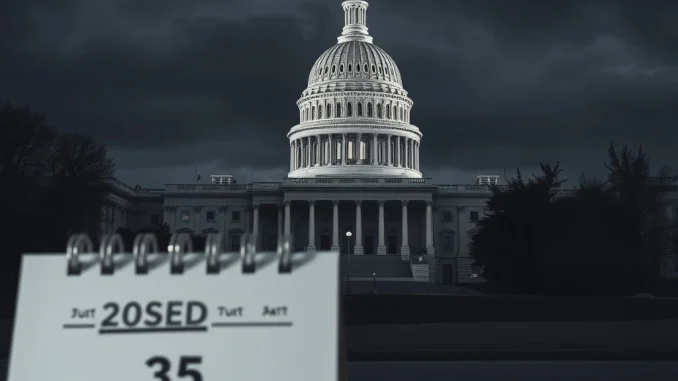
The ongoing US government shutdown has reached an alarming milestone. It has extended into its 35th day, solidifying its place as the longest in the nation’s history. For those tracking global financial stability, including participants in the volatile cryptocurrency markets, such prolonged political gridlock often signals a period of heightened market uncertainty. This unprecedented situation raises critical questions about economic stability and potential ripple effects across various sectors.
Understanding the US Government Shutdown’s Historical Context
The current US government shutdown marks a significant moment in American political history. It now surpasses previous records, notably the 21-day shutdown under President Clinton in 1995-1996. Essentially, a government shutdown occurs when Congress fails to pass appropriations bills or continuing resolutions. These financial measures fund federal government operations. Without them, non-essential government agencies must cease most activities. Therefore, many federal employees are furloughed. Furthermore, critical services operate with minimal staff, creating a strained environment.
Historically, shutdowns have varied in length and impact. Earlier instances were often shorter, leading to less widespread disruption. However, the current impasse demonstrates a deepening political divide. This prolongs the period of inactivity for many federal departments. As a result, the implications grow more severe with each passing day. SolidIntel first reported this historic duration, emphasizing the gravity of the situation and its profound national impact.
The Unprecedented Length: Longest Shutdown History Unfolds
The 35-day mark is not just a mere number; it represents a period of significant stress and national concern. This duration firmly places it as the longest shutdown history has ever recorded for the United States. Previous shutdowns, while disruptive, typically resolved much faster. This prolonged state of limbo affects millions of Americans. It includes federal employees, contractors, and businesses reliant on government functions. Moreover, the extended nature amplifies the challenges faced by these groups, creating a perception of instability both domestically and internationally.
Experts continually analyze the reasons behind this protracted stalemate. Disagreements over border security funding remain central to the impasse. Consequently, both major political parties find themselves entrenched in their positions. This makes a swift resolution increasingly difficult. The longer the shutdown continues, the more difficult it becomes to quantify the full scope of its economic and social costs. This extended period highlights a significant challenge in legislative compromise.
Direct Consequences: Federal Workers Furloughed and Impacted Services
One of the most immediate and painful consequences of the shutdown involves the federal workers furloughed. Hundreds of thousands of dedicated government employees are currently without pay. These individuals perform vital services across the nation. Many others are working without pay, deemed ‘essential.’ This includes TSA agents, Coast Guard personnel, and Border Patrol agents. They continue their duties under immense financial strain. Their ability to meet basic living expenses becomes severely compromised. This situation creates significant personal hardship for these families, impacting their daily lives and future planning.
Beyond individual employees, the shutdown disrupts a wide array of public services. For instance, national parks close or operate with minimal staff. This impacts tourism and local economies significantly. Additionally, some food inspections may slow down, raising public health concerns. Loan applications, including those for housing and small businesses, face considerable delays. Critical scientific research projects also halt, impacting long-term innovation. The cumulative effect of these disruptions weakens public trust. It also impedes the government’s ability to serve its citizens effectively and efficiently.
Broader Economic Impact and Market Uncertainty
The prolonged US government shutdown inevitably casts a long shadow over the broader economy. Initial estimates suggested a minor impact, but the extended duration changes this outlook significantly. Economists now project a measurable drag on GDP growth. Consumer confidence may also decline as uncertainty permeates the economic landscape. Small businesses, in particular, face challenges accessing government contracts or loans. The lack of reliable government data, such as economic reports, further complicates matters for investors and policymakers alike.
This climate of market uncertainty can have significant ripple effects. Traditional financial markets often react negatively to political instability. Investors may seek safer assets or simply reduce their exposure to risk. While cryptocurrency markets sometimes exhibit uncorrelated behavior, they are not entirely immune. A general downturn in global economic sentiment can still influence crypto prices. Traders watch closely for any signs of resolution or further escalation. The shutdown highlights the interconnectedness of political events and financial stability, even in decentralized asset classes.
Navigating the Economic Aftermath and Future Outlook
As the longest shutdown history has ever witnessed continues, the focus shifts to a potential resolution. Negotiations remain ongoing, but a clear path forward has yet to emerge. When the government eventually reopens, a period of recovery will follow. Agencies must then process backlogs of work. Furloughed employees will receive back pay. However, the psychological and financial toll on individuals may linger. Businesses that lost contracts or faced delays might struggle to fully recover. This demonstrates the lasting consequences of such political stalemates, affecting long-term economic health.
Looking ahead, this shutdown could influence future political dynamics significantly. It might lead to new strategies for budget negotiations. It could also prompt discussions about government contingency planning. The experience underscores the importance of a functioning government. Its role in maintaining economic stability is paramount. Therefore, stakeholders across all sectors, including financial technology and digital assets, closely monitor these developments. They understand the potential for wider implications on global markets.
The US government shutdown, now stretching into its 35th day, represents an unprecedented challenge. It impacts hundreds of thousands of federal workers furloughed and creates significant market uncertainty. While the immediate effects are most visible within government operations and federal employee households, the broader economic impact cannot be ignored. A swift and sustainable resolution is crucial. It will restore confidence and mitigate further damage. This historic event serves as a stark reminder of the delicate balance between political governance and economic stability.
Frequently Asked Questions (FAQs)
- What caused the current US government shutdown?
The current shutdown primarily stems from a disagreement between Congress and the President over funding for border security, specifically a proposed wall along the U.S.-Mexico border. - How long has this US government shutdown lasted?
As reported by SolidIntel, this shutdown has lasted 35 days, making it the longest in U.S. history, surpassing the previous record of 21 days. - Who is affected by the federal workers furloughed during the shutdown?
Hundreds of thousands of federal employees are either furloughed (sent home without pay) or working without pay (deemed essential). This impacts various agencies and services, from national parks to tax processing and air traffic control. - What is the estimated economic impact of the longest shutdown in history?
Economists estimate that the prolonged shutdown causes a significant drag on the U.S. GDP. It impacts consumer confidence, delays economic data releases, and affects small businesses and government contractors. - How does a government shutdown affect financial markets and investor confidence?
A prolonged shutdown can increase market uncertainty and lead to declines in investor confidence. Traditional markets may react negatively, and even cryptocurrency markets can experience volatility due to broader economic sentiment shifts. - When is the US government shutdown expected to end?
The exact end date remains uncertain as negotiations continue. A resolution requires an agreement between the legislative and executive branches on the budget, particularly regarding the contentious border security funding.