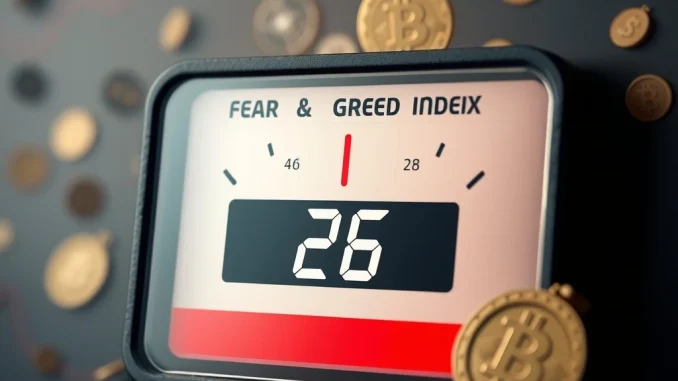
The cryptocurrency market is experiencing a significant shift. Recently, the **Crypto Fear & Greed Index** from data provider Alternative plummeted. This index is a crucial barometer for investor mood. It fell 21 points in just one day. Now, it stands at 21, marking its lowest level since April 9. This dramatic drop signals a move from fear to **extreme fear crypto** conditions. Such shifts often capture the attention of seasoned traders and new investors alike.
Understanding the Crypto Fear & Greed Index
What exactly is the **Crypto Fear & Greed Index**? Essentially, it measures the prevailing sentiment in the cryptocurrency market. The index operates on a simple scale. A score of 0 indicates extreme fear. Conversely, a score of 100 represents extreme optimism. Therefore, the recent score of 21 firmly places the market in a state of deep apprehension. Investors use this tool to gauge the collective emotional state. It helps them understand whether the market is overly bullish or bearish. Furthermore, it provides insights into potential overreactions by market participants.
The index is not just a random number. Instead, it aggregates data from various sources. These sources offer a comprehensive look at **crypto market sentiment**. Consequently, the index provides a more holistic view. It helps investors make informed decisions. Many believe that extreme fear can present buying opportunities. Conversely, extreme greed might signal a market top. Therefore, monitoring this index is vital for many crypto enthusiasts.
Key Components Driving Crypto Market Sentiment
The **Crypto Fear & Greed Index** relies on several key factors. Each factor contributes to the overall score. Understanding these components is crucial. They reveal the underlying drivers of **crypto market sentiment**. These factors are weighted differently, ensuring a balanced assessment:
- Volatility (25%): This measures how much the Bitcoin price fluctuates. High volatility often signals an uncertain market. It can lead to increased fear among investors.
- Trading Volume (25%): This component assesses current trading activity. High trading volumes in a declining market suggest strong selling pressure. This often indicates growing fear.
- Social Media Mentions (15%): The index analyzes sentiment from various social media platforms. High engagement with negative keywords points to rising fear. Conversely, positive discussions show optimism.
- Surveys (15%): Polls are conducted weekly to gather direct investor opinions. These surveys offer a snapshot of current market expectations.
- Bitcoin’s Market Cap Dominance (10%): Bitcoin’s share of the total crypto market cap is a significant indicator. A rising dominance often suggests a flight to safety. This occurs as investors move funds into Bitcoin during uncertain times.
- Google Search Volume (10%): This factor tracks search trends for terms like ‘Bitcoin price manipulation’ or ‘Bitcoin crash’. Spikes in such searches indicate heightened public anxiety.
Each component plays a role. Together, they paint a clear picture of the market’s mood. This multi-faceted approach ensures the index reflects broad sentiment. Thus, it offers a reliable gauge for investors.
The Alarming Plunge to Extreme Fear Crypto
The recent 21-point drop is significant. It pushes the index deep into the **extreme fear crypto** zone. This level of fear has not been seen since April 9. Such a sharp decline typically reflects a rapid deterioration in investor confidence. Many factors can contribute to this. Global economic concerns, regulatory news, or significant price drops in major cryptocurrencies often play a part. When the index shows extreme fear, it means investors are highly cautious. They might be selling assets or refraining from new investments. This often leads to increased selling pressure. Consequently, prices can fall further. Historically, periods of extreme fear have sometimes preceded market bottoms. However, this is not a guarantee. It simply indicates widespread negative sentiment. Therefore, investors must approach such periods with careful consideration.
Impact on Bitcoin Investor Sentiment
The **Crypto Fear & Greed Index** heavily considers Bitcoin. Therefore, its plunge directly impacts **Bitcoin investor sentiment**. When the overall index falls, it suggests a significant downturn in how Bitcoin holders feel. Many investors view Bitcoin as a bellwether for the entire crypto market. Its performance often dictates the direction of altcoins. A strong negative sentiment surrounding Bitcoin can spill over. It can affect the entire digital asset ecosystem. Investors might become more risk-averse. They may pull funds out of more volatile assets. This flight to safety often involves moving to stablecoins or even traditional assets. Consequently, this collective sentiment can create a self-fulfilling prophecy. Fear can lead to selling, which then fuels more fear. Understanding this dynamic is key for anyone involved in crypto trading.
Navigating Market Volatility Crypto
The current state of **extreme fear crypto** is often accompanied by heightened **market volatility crypto**. Volatility is a measure of how much an asset’s price moves over time. When the market is fearful, price swings tend to be larger and more unpredictable. This can be challenging for investors. However, it also presents opportunities for those who can navigate it effectively. Traders often use volatility indicators to inform their strategies. For instance, some might see a dip during high volatility as a chance to buy at a lower price. Others might prefer to wait for more stability. It is important to remember that volatility is a natural part of financial markets. Cryptocurrencies, by their nature, tend to be more volatile than traditional assets. Therefore, investors should always manage their risk exposure. They must also have a clear investment strategy.
Several factors can fuel this volatility. Macroeconomic events, such as interest rate hikes, can impact investor appetite for risk assets. Geopolitical tensions also play a role. Furthermore, specific crypto-related news, like major hacks or regulatory crackdowns, can trigger sudden price movements. Therefore, staying informed is crucial. Investors should monitor both the broader economic landscape and specific crypto news. This helps them anticipate potential shifts in **market volatility crypto**.
Historical Context and Future Implications
Looking back, the **Crypto Fear & Greed Index** has a history of fluctuating. It has swung between extreme fear and extreme greed many times. These swings often coincide with major market cycles. For example, during the 2018 bear market, the index remained in extreme fear for extended periods. Conversely, during the 2021 bull run, it frequently registered extreme greed. Therefore, the current plunge is not unprecedented. It reflects a common pattern in market psychology. However, each cycle is unique. Investors should not assume past performance guarantees future results. The index serves as a valuable indicator of current sentiment. It does not predict future price movements with certainty. It simply tells us how investors are feeling right now. This knowledge can be a powerful tool. It helps investors avoid emotional decisions. They can then stick to their long-term strategies. Ultimately, the index is one tool among many. It aids in understanding the complex world of cryptocurrency investments.
The recent plunge in the **Crypto Fear & Greed Index** to a state of **extreme fear crypto** highlights the current challenges in the market. It reflects a significant shift in **crypto market sentiment** and **Bitcoin investor sentiment**. While **market volatility crypto** can be daunting, understanding these indicators allows investors to approach the market with greater awareness. By focusing on data and a well-defined strategy, individuals can navigate these turbulent times more effectively.
Frequently Asked Questions (FAQs)
Q1: What is the Crypto Fear & Greed Index?
The Crypto Fear & Greed Index is a tool that measures the current emotional state of the cryptocurrency market. It ranges from 0 (extreme fear) to 100 (extreme greed), indicating whether investors are overly fearful or overly optimistic.
Q2: How is the Crypto Fear & Greed Index calculated?
It is calculated based on six weighted factors: volatility (25%), trading volume (25%), social media mentions (15%), surveys (15%), Bitcoin’s market cap dominance (10%), and Google search volume (10%).
Q3: What does ‘extreme fear crypto’ mean for investors?
Extreme fear suggests that investors are very apprehensive, potentially leading to selling pressure and price declines. Historically, some investors view extreme fear as a potential buying opportunity, but it’s crucial to conduct thorough research and manage risk.
Q4: How does the index relate to Bitcoin investor sentiment?
Since Bitcoin’s market cap dominance is a component, and Bitcoin often leads the broader market, the index strongly reflects **Bitcoin investor sentiment**. A drop in the index typically indicates a decline in confidence among Bitcoin holders.
Q5: Is the Crypto Fear & Greed Index a reliable trading signal?
The index is a sentiment indicator, not a direct trading signal. While it can highlight periods of potential overbought or oversold conditions, it should be used in conjunction with other technical and fundamental analysis tools, not in isolation.
Q6: What causes market volatility in crypto?
Market volatility in crypto can be caused by various factors, including macroeconomic events, regulatory news, significant price movements of major cryptocurrencies like Bitcoin, technological developments, and even social media trends.