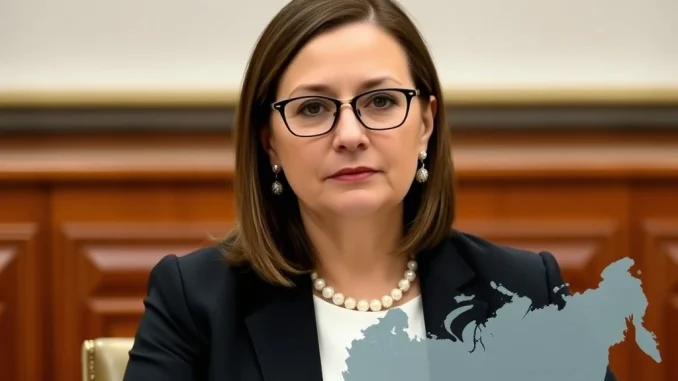
A significant development is reshaping the digital finance landscape. The **Central Bank of Russia** has clarified its stance on stablecoins. This pivotal announcement could redefine the nation’s economic approach. It signals a cautious yet progressive adoption of digital assets. For many in the cryptocurrency community, this news offers both clarity and continued questions. Understanding Russia’s position on **Russian stablecoins** is crucial for market participants globally.
The **Central Bank of Russia** Outlines Stablecoin Policy
Elvira Nabiullina, Governor of the **Central Bank of Russia**, recently delivered a key statement. She confirmed that stablecoins could indeed be issued within the country. However, she introduced a significant caveat. These digital tokens are explicitly prohibited for domestic payments. This distinction highlights a careful balancing act. The central bank aims to harness blockchain innovation. At the same time, it seeks to maintain firm control over its national monetary system. Therefore, the policy focuses on specific, controlled use cases. This ensures financial stability while exploring new technologies.
The governor’s remarks were reported by Cryptopolitan. They underscore a pragmatic approach. Russia acknowledges the potential benefits of stablecoins. Nevertheless, it prioritizes national economic sovereignty. This measured strategy aims to prevent market volatility. It also seeks to protect the ruble’s stability. Consequently, the door opens for certain applications. Other uses remain firmly closed. This dual perspective is central to understanding Russia’s digital asset strategy.
**Elvira Nabiullina** on Digital Currency Innovation and Investment
Nabiullina further elaborated on the permissible applications for these digital assets. She specifically highlighted their utility in **international settlements**. This area represents a significant strategic interest for Russia. Moreover, stablecoins could serve as an effective tool to attract foreign investment. This focus aligns directly with broader Russian economic objectives. The nation actively seeks to enhance its global financial connectivity. Thus, stablecoins offer a novel avenue for cross-border financial interactions. This approach strategically prioritizes external financial engagements. It carefully avoids internal monetary disruptions. Her vision emphasizes controlled integration.
The governor’s statements provide valuable insight. They reveal the central bank’s evolving perspective on digital currencies. She acknowledges the innovative potential of stablecoins. Yet, she stresses the need for stringent oversight. This ensures that new financial instruments support, rather than undermine, the existing system. Consequently, the focus remains on leveraging technology for specific economic advantages. This includes facilitating trade and attracting capital from abroad. **Elvira Nabiullina** continues to guide Russia’s financial institutions through this transformative period.
The Legislative Push for a Ruble-Pegged Stablecoin and **Crypto Regulation Russia**
These crucial remarks from **Elvira Nabiullina** did not emerge in a vacuum. They follow earlier significant discussions. Russian Senator Artem Sheikin had previously advocated for the issuance of a ruble-pegged stablecoin. He also emphasized the urgent need for a clear, comprehensive regulatory framework. This legislative push signals a growing governmental interest. Policymakers are actively exploring deeper digital currency integration. The overarching goal is to establish robust guidelines. This ensures stability, security, and transparency for all market participants. Therefore, the central bank’s recent statements offer vital guidance. They directly shape the ongoing dialogue around **crypto regulation Russia**. This collaboration between legislative and monetary authorities is absolutely crucial for future development.
Senator Sheikin’s proposal underscores a desire for domestic innovation. He envisions a stablecoin directly tied to the national currency. Such a development could streamline local digital transactions. However, the central bank’s current stance suggests a more cautious approach. It prioritizes external utility over immediate domestic adoption. This divergence highlights the complex considerations involved. Balancing innovation with monetary policy remains a key challenge. The regulatory landscape for **crypto regulation Russia** is thus continuously evolving.
Unlocking Efficiency in **International Settlements** with Stablecoins
The potential for stablecoins in **international settlements** is indeed vast. They promise faster, cheaper, and more efficient cross-border transactions. Traditional banking systems often involve significant delays and high processing fees. Stablecoins, by contrast, can bypass many of these inefficiencies. This makes them exceptionally attractive for global trade and finance. For instance, businesses could settle international invoices almost instantly. This significantly reduces operational costs. It also enhances overall financial fluidity for companies engaged in global commerce. Consequently, Russia could streamline its international trade relations. This would further strengthen its economic ties worldwide. The emphasis clearly remains on stablecoins’ external utility and their capacity to modernize cross-border payments.
This focus on **international settlements** also aligns with Russia’s broader economic strategies. The nation seeks alternatives to traditional financial channels. These alternatives can mitigate geopolitical risks. Stablecoins offer a decentralized, efficient pathway. They can facilitate trade without relying on specific legacy systems. Furthermore, they provide a stable value proposition. This is critical for businesses operating across different jurisdictions. The move represents a strategic step. It aims to bolster Russia’s position in the global digital economy. The benefits for importers and exporters are substantial.
Navigating the Evolving Landscape of **Crypto Regulation Russia**
Developing a comprehensive framework for **crypto regulation Russia** is an inherently complex task. Authorities must carefully balance promoting innovation with effective risk management. They need to protect consumers from potential scams and market volatility. Simultaneously, they must prevent illicit financial activities. Yet, they also aim to foster technological growth within the financial sector. The central bank’s current stance provides a foundational framework. It clearly defines the permitted boundaries for stablecoin usage. This initial clarity is highly beneficial for developers and potential investors. They can now better understand the scope of permissible activities. Future regulations will undoubtedly build upon these established principles. The journey towards full crypto integration continues. It demands careful consideration, strategic planning, and adaptive policy-making.
The ongoing dialogue about **crypto regulation Russia** involves multiple stakeholders. These include government bodies, financial institutions, and blockchain innovators. Their collective input is vital. It ensures that regulations are both effective and practical. The goal is to create an environment that supports responsible growth. This involves addressing concerns about money laundering and financial stability. It also means fostering a competitive digital economy. This complex process requires continuous engagement and a willingness to adapt. Russia aims to carve out a distinct path in digital finance.
Future Implications for the **Central Bank of Russia** and Digital Finance
The **Central Bank of Russia** is actively navigating a rapidly evolving digital landscape. Its cautious yet strategic approach to stablecoins mirrors broader global trends. Many central banks worldwide are exploring their own digital currencies. However, concerns about financial stability, consumer protection, and monetary sovereignty persist. Russia’s current strategy aims to harness the clear benefits of stablecoins. Simultaneously, it works to mitigate associated risks. This includes preventing capital flight or uncontrolled inflationary pressures. The parallel development of a digital ruble also remains a significant initiative. Both projects collectively highlight Russia’s commitment. They demonstrate its dedication to modernizing its financial infrastructure. The ultimate goal is to enhance economic resilience, efficiency, and international competitiveness.
This measured approach by the **Central Bank of Russia** sets a precedent. It defines how a major economy can selectively integrate digital assets. It balances the promise of innovation with the imperative of control. The long-term impact on Russia’s financial system will be substantial. It will also influence its role in the global digital economy. Stakeholders will closely monitor future policy developments. These will further shape the operational guidelines for stablecoins. This careful path ensures Russia remains a relevant player in the evolving digital finance world.
In conclusion, Russia’s central bank has established a clear and pragmatic position. Stablecoins are welcomed for specific external uses. However, they are strictly not permitted for domestic payments. This nuanced approach signals a strategic vision. It aims to integrate digital assets purposefully. The future trajectory of **Russian stablecoins** will heavily depend on ongoing regulatory refinements. It will also rely on their effective implementation in international trade. This carefully measured step marks a significant chapter. It defines Russia’s ongoing digital financial journey, balancing innovation with prudent oversight.
Frequently Asked Questions (FAQs)
Q1: What is the Central Bank of Russia’s current stance on stablecoins?
The **Central Bank of Russia** permits the issuance of stablecoins within the country. However, they are strictly prohibited for domestic payments. Their primary approved uses are for **international settlements** and attracting foreign investment.
Q2: Who is Elvira Nabiullina and what role does she play?
**Elvira Nabiullina** is the Governor of the Central Bank of Russia. She is a key figure in shaping Russia’s monetary policy and its approach to digital currencies. Her recent statements have clarified the central bank’s position on stablecoins.
Q3: Why are stablecoins not allowed for domestic use in Russia?
The prohibition on domestic use aims to maintain the stability of the national monetary system and the ruble. The **Central Bank of Russia** seeks to prevent potential risks. These risks include uncontrolled capital flows, inflation, and challenges to monetary sovereignty.
Q4: How can Russian stablecoins be used for international settlements?
**Russian stablecoins** can facilitate faster and cheaper cross-border transactions. They offer an efficient alternative to traditional banking systems. This can streamline international trade and financial transfers, reducing costs and delays for businesses.
Q5: What is the status of crypto regulation in Russia?
**Crypto regulation Russia** is continuously evolving. While stablecoins are permitted for international use, the broader regulatory framework for cryptocurrencies is still under development. Policymakers are working to establish comprehensive guidelines to ensure stability and security.
Q6: What is a ruble-pegged stablecoin, and is Russia planning to issue one?
A ruble-pegged stablecoin is a digital currency designed to maintain a stable value relative to the Russian ruble. While Senator Artem Sheikin has called for its issuance, the **Central Bank of Russia** has not yet committed to a domestic ruble-pegged stablecoin, focusing instead on the digital ruble project and stablecoins for international use.