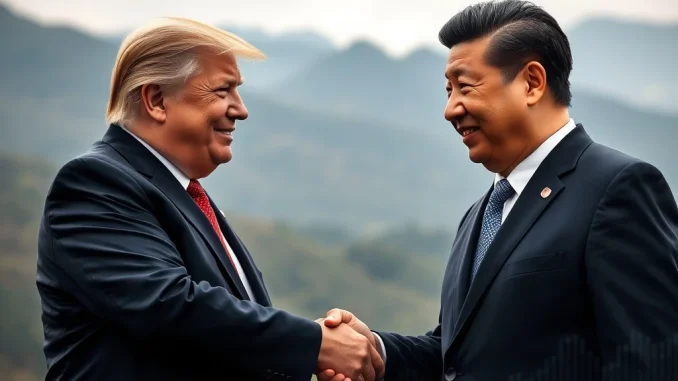
The announcement of high-level diplomatic engagements between the United States and China often sends ripples through global markets. This includes the dynamic digital asset landscape. News1 reported that U.S. President Donald Trump plans to visit China next April, with Chinese President Xi Jinping slated to visit the United States afterward. Such significant US-China relations developments invariably spark discussions about their broader economic and financial implications.
US-China Relations: A Critical Juncture for Global Economic Stability
The proposed exchange of visits between President Trump and President Xi marks a pivotal moment. These high-stakes diplomatic encounters hold the potential to reshape global trade dynamics. Furthermore, they can influence international cooperation on various fronts. The United States and China represent the world’s two largest economies. Consequently, their bilateral relationship impacts nearly every sector. This includes traditional finance and, increasingly, the burgeoning world of digital assets. Therefore, investors and analysts closely monitor any shifts in their interactions.
Unpacking the Diplomatic Schedule
According to News1, the initial visit will see President Trump travel to China next April. This trip aims to foster dialogue and address pressing bilateral issues. Following this, President Xi Jinping will journey to the United States. This reciprocal visit underscores the importance both nations place on direct communication. Such high-level exchanges are crucial. They provide a platform for leaders to discuss trade imbalances, technological competition, and geopolitical flashpoints. Ultimately, these meetings can set the tone for future international policy.
These planned visits occur amidst ongoing economic and strategic competition. The discussions will likely cover a range of topics. These include trade tariffs, intellectual property rights, and regional security concerns. Both leaders face domestic pressures. Therefore, the outcomes of these meetings will be scrutinized heavily. Observers anticipate that the agendas will be comprehensive. Furthermore, the implications will extend far beyond immediate political headlines. This is especially true for global economic stability.
Geopolitical Developments and Their Echo in the Digital Asset Landscape
Significant geopolitical developments frequently trigger volatility across financial markets. This pattern extends to the digital asset landscape. Historically, periods of international tension or cooperation have influenced investor sentiment. For instance, positive diplomatic breakthroughs can foster a ‘risk-on’ environment. This encourages investment in growth assets, including cryptocurrencies. Conversely, heightened uncertainty often leads to a ‘risk-off’ approach. Investors might then seek traditional safe havens or reduce exposure to volatile assets.
China’s stance on digital currencies remains a key factor. The nation has implemented strict regulations on cryptocurrency trading and mining. However, it actively develops its own central bank digital currency (CBDC), the digital yuan. This dual approach creates a unique dynamic. Any agreements or disagreements during these visits could indirectly impact China’s digital currency strategy. Such shifts could then reverberate across the global crypto ecosystem. Therefore, the discussions between Trump and Xi carry considerable weight for digital asset stakeholders worldwide.
Trade Dynamics and Crypto Market Impact
Trade relations between the US and China are complex. They often involve extensive negotiations. These upcoming visits will likely feature intense discussions on trade agreements. The potential for new trade deals or tariff adjustments could significantly affect global supply chains. Moreover, they can influence corporate earnings. These economic shifts directly impact investor confidence. Consequently, this influences the overall crypto market impact.
For example, a positive trade outcome might boost global economic sentiment. This could encourage more capital flow into speculative assets like cryptocurrencies. Conversely, stalled negotiations or new trade barriers could dampen enthusiasm. This might lead to market corrections in both traditional and digital markets. Many cryptocurrency projects aim for global adoption. Thus, stable international trade relations are beneficial for their growth. Investors should monitor these trade discussions closely. They provide crucial indicators for future market movements.
Navigating Future Uncertainty: Implications for Investors
The outcomes of these high-level meetings are crucial for fostering or hindering global economic stability. Stable international relations provide a predictable environment for businesses and investors. This predictability is vital for long-term planning and investment decisions. Conversely, any signs of escalating tensions can introduce significant market uncertainty. Such uncertainty often prompts investors to re-evaluate their portfolios. They might then seek less volatile assets.
For cryptocurrency investors, understanding these macro-economic trends is paramount. While digital assets often operate independently of traditional financial systems, they are not immune to global economic forces. Broader economic confidence, interest rate policies, and geopolitical stability all play a role. They influence the flow of capital and investor risk appetite. Therefore, the dialogues between President Trump and President Xi offer key insights. These insights can help anticipate future market conditions for digital assets.
The Broader Economic Outlook
These diplomatic efforts are not isolated events. They form part of a larger ongoing narrative of international relations. The success or failure of these talks will have lasting implications. They will affect currency valuations, commodity prices, and stock market performance. Ultimately, a stable and cooperative US-China relationship is generally viewed as positive. It supports global economic growth. This growth, in turn, can create a more favorable environment for innovation. It also supports the adoption of new technologies, including blockchain and cryptocurrencies. Therefore, the potential for enhanced cooperation is a significant positive indicator for all markets.
Conclusion: Monitoring the Diplomatic Horizon
The upcoming visits of President Trump to China and President Xi to the U.S. represent critical diplomatic engagements. They carry substantial weight for global markets and the evolving digital asset landscape. While the direct impact on cryptocurrency prices may not be immediately apparent, the underlying economic and geopolitical shifts are profound. These shifts influence investor sentiment, capital flows, and regulatory environments. Consequently, they shape the future trajectory of digital assets. Staying informed about these high-level discussions is essential for anyone navigating today’s interconnected financial world. The pursuit of strengthened US-China relations could bring significant benefits, fostering greater global economic stability and positively influencing the digital asset landscape. Conversely, any setbacks could amplify existing market uncertainties, highlighting the critical role of these geopolitical developments in determining the overall crypto market impact.
Frequently Asked Questions (FAQs)
Q1: How do US-China diplomatic visits typically affect financial markets?
A1: High-level US-China diplomatic visits often create significant market movements. Positive outcomes, like trade agreements, can boost investor confidence and lead to market rallies. Conversely, stalled talks or increased tensions can trigger uncertainty and market sell-offs. These impacts extend across various asset classes, including stocks, bonds, and commodities.
Q2: What is the potential crypto market impact of these geopolitical developments?
A2: The crypto market impact is often indirect but significant. Geopolitical stability can foster a ‘risk-on’ environment, encouraging investment in cryptocurrencies. Instability, however, might lead investors to reduce exposure to volatile assets. China’s policies on digital currencies, which could be discussed, also have a direct bearing on the global crypto ecosystem.
Q3: What specific topics might be discussed during Trump’s visit to China and Xi’s visit to the US?
A3: Discussions are likely to cover a broad range of critical issues. These include trade imbalances, intellectual property rights, technology transfer, and regional security matters. Both leaders will also likely address broader geopolitical concerns and strategies for economic cooperation.
Q4: Why is global economic stability important for the digital asset landscape?
A4: Global economic stability provides a predictable environment, which is crucial for investment and growth in all sectors, including digital assets. A stable global economy generally means more capital is available for innovation and speculative investments. This can drive adoption and value appreciation within the digital asset landscape.
Q5: Will these visits directly address cryptocurrency regulation?
A5: While direct discussions on cryptocurrency regulation are not explicitly stated, China’s stance on digital currencies (especially its CBDC development and crypto ban) is a significant economic policy. Therefore, broader economic and technological discussions could indirectly touch upon digital asset policies and their international implications.
Q6: How can investors prepare for potential market volatility stemming from these meetings?
A6: Investors can prepare by diversifying their portfolios and staying informed about geopolitical developments. Monitoring official statements and market reactions is crucial. Adopting a long-term investment strategy and avoiding impulsive decisions based on short-term news cycles can also help mitigate risks associated with market volatility.