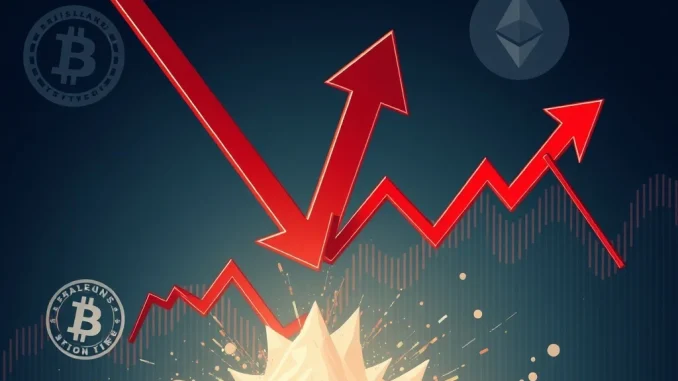
The cryptocurrency market recently experienced a significant event. Massive crypto futures liquidations occurred across major digital assets. This sudden market movement impacted many traders. Specifically, long positions bore the brunt of these forced sell-offs. Understanding these liquidations offers crucial insights into current market dynamics.
Crypto Futures Liquidations Surge Amidst Market Volatility
Recent data highlights substantial forced liquidation volumes. These events transpired across major cryptocurrency perpetual futures. Over the past 24 hours, the market saw considerable activity. This activity underscores the inherent market volatility in digital asset trading. Traders holding leveraged positions faced significant pressure.
The total value of liquidated positions reached hundreds of millions. Furthermore, long positions consistently accounted for the overwhelming majority. This trend indicates a swift downward price movement. Such movements trigger margin calls for traders betting on rising prices. Consequently, their positions close automatically to prevent further losses.
Understanding Long Liquidations: A Closer Look
What exactly are long liquidations? In futures trading, a long position means a trader expects the asset’s price to increase. They often use leverage, borrowing funds to amplify potential gains. However, leverage also magnifies losses. If the price moves against their prediction, their position value decreases. When losses reach a certain threshold, the exchange automatically liquidates their position. This action protects the exchange from credit risk.
The high percentage of long liquidations points to a bearish sentiment. It suggests that recent price declines caught many bullish traders off guard. Moreover, these forced closures can exacerbate price drops. This creates a cascade effect, triggering more liquidations. This cycle contributes to heightened market instability.
Bitcoin Liquidations and Ethereum Liquidations Lead the Way
Bitcoin (BTC) and Ethereum (ETH) saw the largest liquidation volumes. These assets typically lead market trends. Their significant figures reflect broad market sentiment shifts. Consequently, traders closely monitor these metrics for signs of market health.
- BTC: $232 million liquidated. Long positions accounted for 82.18%. This figure represents the largest single asset liquidation.
- ETH: $158 million liquidated. Long positions accounted for 79.81%. Ethereum also experienced substantial pressure.
- SOL: $33.17 million liquidated. Long positions accounted for 79.44%. Solana, a prominent altcoin, also saw considerable forced closures.
These numbers are striking. They underscore the risk associated with highly leveraged positions. Furthermore, they highlight the rapid nature of price swings in crypto markets. The dominance of long liquidations in both Bitcoin liquidations and Ethereum liquidations suggests a broad market correction or downturn.
The Immediate Impact on Traders and Market Sentiment
The immediate impact on individual traders is significant. Many face substantial financial losses. Furthermore, these events can erode confidence. This leads to a more cautious approach across the market. The fear of further liquidations can prompt other traders to close positions. This often happens even if they are not yet at risk. Consequently, this adds to selling pressure. Ultimately, it contributes to overall market instability.
Analyzing Market Volatility and Its Triggers
Understanding the triggers for such market volatility is essential. Several factors can contribute to sudden price movements. These include macroeconomic news, regulatory developments, and significant whale movements. Technical factors, like breaking key support levels, also play a role. When prices drop sharply, it can quickly trigger stop-loss orders. This then leads to further downward momentum.
The cascading effect of liquidations is a critical component of market volatility. When one large liquidation occurs, it adds selling pressure. This pushes prices lower. Consequently, more leveraged long positions fall below their margin requirements. This creates a chain reaction. Such events are not uncommon in crypto markets. However, their scale can vary dramatically.
Navigating Risk in a Volatile Landscape
For traders, managing risk is paramount. Employing strategies like setting stop-loss orders is crucial. Avoiding excessive leverage also helps mitigate potential losses. Diversifying portfolios can provide some protection against single-asset volatility. Ultimately, understanding market mechanics and potential triggers for liquidations is key. This knowledge empowers traders to make more informed decisions.
In conclusion, the recent surge in crypto futures liquidations serves as a stark reminder. The market remains highly dynamic and prone to rapid shifts. The overwhelming dominance of long liquidations across Bitcoin, Ethereum, and Solana signals a period of significant price adjustment. Traders must remain vigilant. They should also adapt their strategies to navigate these challenging conditions effectively.
Frequently Asked Questions (FAQs)
What are crypto futures liquidations?
Crypto futures liquidations occur when a trader’s leveraged position is automatically closed by an exchange. This happens because the market price moves against their bet, and their margin balance falls below the required maintenance level. It prevents further losses for both the trader and the exchange.
Why did long positions account for most liquidations?
Long positions accounted for the majority because prices fell significantly. Traders holding long positions expect prices to rise. When prices drop sharply, these leveraged long positions quickly become unprofitable, triggering forced closures.
How do Bitcoin liquidations impact the broader market?
Bitcoin liquidations, especially large ones, often signal broader market weakness. As BTC is the largest cryptocurrency, its price movements and associated liquidations can influence sentiment and prices across the entire crypto ecosystem, including altcoins like Ethereum and Solana.
What role does market volatility play in these events?
Market volatility is a primary driver of liquidations. Rapid and significant price swings, particularly downward movements, quickly push leveraged positions past their margin limits. This leads to mass liquidations and can further amplify price instability.
How can traders protect themselves from liquidations?
Traders can protect themselves by using less leverage, setting strict stop-loss orders, and maintaining sufficient margin in their accounts. Diversifying investments and thoroughly understanding market risks are also crucial strategies.
Are these liquidation events common in cryptocurrency markets?
Yes, liquidation events are a relatively common occurrence in highly leveraged cryptocurrency futures markets. However, the scale and dominance of long liquidations in a short period, as seen recently, can indicate a more significant market correction or a period of intense selling pressure.