The landscape of cryptocurrency investments constantly evolves. Recently, a significant shift occurred within the nascent US spot ETH ETFs sector. These exchange-traded funds, which directly hold Ethereum, experienced a notable net outflow, signaling a change in investor sentiment. This development warrants close examination for anyone interested in the broader Crypto ETF market.
US Spot ETH ETFs Witness Significant Net Outflow
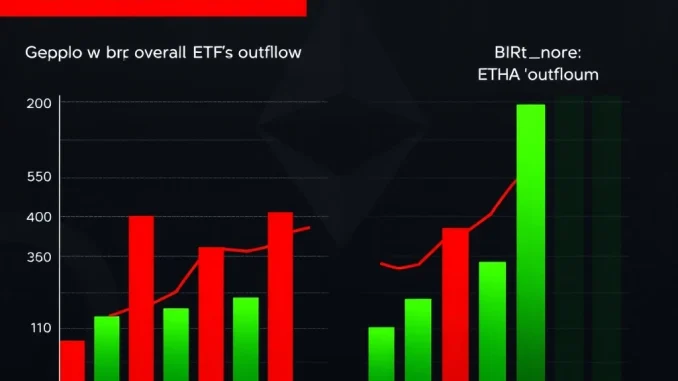
On a recent trading day, U.S. spot Ethereum ETFs collectively recorded a substantial net outflow. Data compiled by TraderT reveals this figure reached approximately $81.07 million. This reversal comes swiftly, following a period where the funds had just shifted into net inflows. Investors closely monitor these movements for insights into market direction.
Such an outflow suggests a collective decision by many investors to withdraw capital from these specific investment vehicles. Several factors can drive these decisions. These might include broader market corrections, profit-taking, or a re-evaluation of risk appetite. The speed of this shift highlights the volatile nature of digital asset markets, even for regulated products.
Fidelity and Grayscale Lead the ETH ETFs Outflow
A closer look at the individual fund performances reveals which entities primarily contributed to the negative trend. Fidelity’s FETH fund, for instance, bore the brunt of the withdrawals. It experienced a significant outflow of $69.49 million. This amount alone constitutes a large portion of the total net outflow observed across the sector.
Furthermore, Grayscale’s offerings also saw substantial withdrawals. Grayscale’s Mini ETH fund recorded an outflow of $16.18 million. Its larger counterpart, ETHE, followed with an outflow of $12.83 million. These figures underscore a widespread trend among investors to pull back from several prominent Ethereum ETFs. Understanding these individual fund performances helps investors gauge specific product appeal and market sentiment.
BlackRock ETHA Stands Out with Inflows
Amidst this wave of withdrawals, one fund defied the prevailing trend. BlackRock’s ETHA emerged as the sole fund to record a net inflow. It successfully attracted $21.74 million in new capital. This performance distinguishes BlackRock’s product from its competitors during a challenging period for the sector.
BlackRock’s ability to attract inflows while others faced outflows is noteworthy. It suggests potential investor confidence in BlackRock’s brand, its specific ETF structure, or perhaps its fee schedule. This positive movement for BlackRock ETHA provides an interesting counter-narrative to the overall market sentiment. It showcases the varied dynamics at play within the relatively new US spot ETH ETFs landscape.
Understanding the Ethereum ETFs Market Dynamics
The introduction of Ethereum ETFs marked a significant milestone for the crypto industry. These products offer traditional investors regulated access to Ethereum’s price movements without directly holding the asset. Their performance, therefore, reflects broader institutional and retail interest in the second-largest cryptocurrency.
Market dynamics for these ETFs are influenced by several key factors:
- Broader Crypto Market Sentiment: General optimism or pessimism in Bitcoin and Ethereum markets often translates to ETF flows.
- Macroeconomic Conditions: Interest rate changes, inflation data, and global economic stability can impact investor risk appetite for volatile assets.
- Regulatory Developments: New regulations or clarity around existing ones can significantly affect investor confidence in crypto products.
- Fund-Specific Factors: Management fees, liquidity, and the reputation of the issuing firm play crucial roles in attracting or deterring investment.
This recent outflow, despite BlackRock’s individual success, indicates a cautious approach from many participants. Investors are clearly evaluating their positions in this evolving asset class.
Implications for the Crypto ETF Market
The latest data offers important insights into the nascent Crypto ETF market. While a single day’s performance does not define a long-term trend, it provides a snapshot of current investor behavior. The substantial ETH ETFs outflow suggests that investor sentiment can shift rapidly. This volatility remains a characteristic feature of digital asset investments.
For the future of Ethereum ETFs, continued monitoring of these flows is essential. Sustained outflows could indicate a cooling of institutional interest. Conversely, a quick return to inflows would signal resilience. BlackRock’s unique position might also lead to a consolidation of market share. This could happen as investors gravitate towards funds perceived as more stable or reputable. The competitive landscape among ETF providers will undoubtedly intensify. They will strive to capture market share and investor confidence in this growing sector.
Ultimately, these movements reflect the ongoing process of price discovery and market maturation for digital assets. Investors, both retail and institutional, continue to navigate the complexities of cryptocurrency investments. The performance of US spot ETH ETFs offers a valuable barometer for this journey.
Frequently Asked Questions (FAQs)
What are US spot ETH ETFs?
US spot ETH ETFs are exchange-traded funds that directly hold Ethereum (ETH) as their underlying asset. They allow investors to gain exposure to Ethereum’s price movements through traditional brokerage accounts without needing to buy and store ETH themselves.
Why did US spot ETH ETFs experience a net outflow?
The net outflow can stem from various factors, including profit-taking by investors, a general downturn in the broader cryptocurrency market, shifts in investor risk appetite due to macroeconomic conditions, or rebalancing of portfolios.
Which funds saw the largest ETH ETFs outflow?
Fidelity’s FETH led the outflows with $69.49 million. Grayscale’s Mini ETH and ETHE also recorded significant withdrawals, totaling over $29 million combined.
Why was BlackRock ETHA the only fund with inflows?
BlackRock’s ETHA might have attracted inflows due to several reasons. These could include the strong brand reputation of BlackRock, specific advantages in its fund structure, lower fees, or a targeted marketing strategy that resonated with investors during this period.
How do these outflows impact the Ethereum price?
While direct impacts are complex, significant outflows from Ethereum ETFs can indicate decreased institutional demand, potentially contributing to downward pressure on the underlying Ethereum price. However, the overall market is influenced by many factors beyond just ETF flows.
What does this mean for the future of the Crypto ETF market?
These fluctuations are part of the normal market cycle for new financial products. They indicate that the Crypto ETF market is maturing but still subject to volatility. Continuous monitoring of these flows will be crucial for understanding long-term investor sentiment and adoption trends.