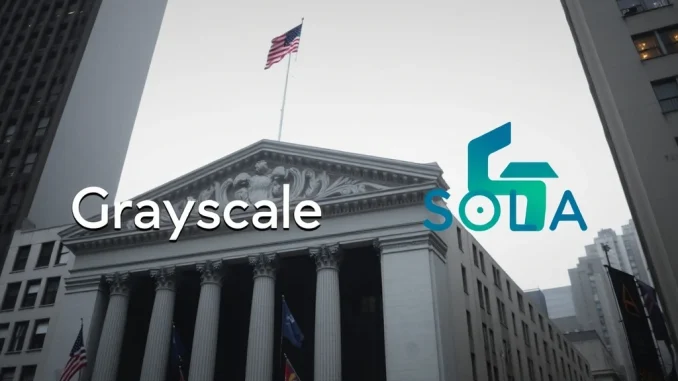
The cryptocurrency investment landscape is undergoing a significant transformation. Indeed, institutional access to digital assets continues to expand. A groundbreaking development recently emerged from Grayscale Investments. They announced the listing of their **Grayscale Solana ETF** (GSOL) on the New York Stock Exchange (NYSE). This move marks a pivotal moment for Solana and the broader crypto market. It offers investors a regulated pathway to gain exposure to Solana’s native token, SOL, and its staking rewards.
Grayscale Solana ETF Debuts on NYSE
Grayscale Investments, a leading digital asset manager, officially confirmed the listing. Their new product, the **Grayscale Solana ETF**, is now trading under the ticker symbol GSOL. This listing on the NYSE Arca is a major milestone. It signifies growing acceptance of digital assets within traditional financial systems. Previously, investors faced challenges accessing direct crypto investments. Now, a regulated exchange-traded fund provides a simpler option. Furthermore, this development follows a trend of increasing institutional interest in the crypto space.
The **GSOL ETF** is designed to track the performance of Solana (SOL). It also incorporates the staking rewards generated by holding SOL. Consequently, this structure offers a dual benefit to investors. They gain price exposure to SOL. Additionally, they participate in the yield potential from staking. This innovative approach distinguishes GSOL from simpler spot ETFs. It reflects Grayscale’s commitment to offering diverse and sophisticated crypto investment products.
Understanding the Solana Staking ETF Mechanism
A **Solana Staking ETF** operates by holding actual Solana tokens. These tokens are then staked on the Solana blockchain. Staking is a process where participants lock up their cryptocurrency. This action supports the network’s operations and security. In return, they earn rewards. The GSOL structure aims to pass these rewards onto the ETF holders. Therefore, investors can benefit from staking without directly managing the technical complexities. This includes setting up validators or choosing staking pools.
The mechanism involves several key steps:
- **Asset Acquisition:** The ETF acquires SOL tokens from the open market.
- **Staking:** These SOL tokens are then delegated to validators on the Solana network.
- **Reward Collection:** The validators earn staking rewards for their services.
- **Distribution:** These rewards are accrued within the ETF. They contribute to the fund’s overall performance.
Ultimately, this model provides a streamlined investment vehicle. It combines the potential for capital appreciation with passive income generation. This makes the **Solana Staking ETF** an attractive proposition for a wide range of investors.
The Impact of the NYSE Listing
The **NYSE listing** of the Grayscale Solana ETF carries immense significance. Firstly, it enhances accessibility. Investors can now buy and sell GSOL shares through traditional brokerage accounts. This eliminates the need for crypto wallets or exchanges. Secondly, it offers regulatory clarity. ETFs listed on major exchanges like the NYSE are subject to stringent regulatory oversight. This provides an added layer of investor protection. Moreover, it builds confidence in the digital asset market.
This development is expected to attract a new wave of institutional capital. Many traditional financial institutions have been hesitant to enter the crypto market directly. They often cite regulatory concerns and operational complexities. However, a regulated ETF provides a familiar and compliant investment wrapper. Consequently, we could see increased adoption of Solana. This might also lead to greater liquidity for the SOL token itself. The **NYSE listing** acts as a powerful signal. It indicates the maturation and legitimization of crypto assets within mainstream finance.
Benefits and Risks of the GSOL ETF
Investing in the **GSOL ETF** offers several distinct advantages. Primarily, it simplifies exposure to Solana. Investors avoid the technical hurdles of direct SOL ownership. They also benefit from the potential staking rewards. The regulated nature of an ETF provides peace of mind. It ensures compliance with established financial regulations. Furthermore, it offers liquidity. Investors can easily trade GSOL shares during market hours.
However, like all investments, the **GSOL ETF** carries risks. The value of SOL is highly volatile. This means the ETF’s price can fluctuate significantly. Staking rewards are not guaranteed. They can vary based on network conditions and validator performance. Additionally, investors will incur management fees. These fees could erode a portion of the staking yield. It is crucial for investors to understand these factors. They must assess their risk tolerance before investing.
Broader Implications for Crypto ETFs
The launch of the Grayscale Solana Staking ETF sets a precedent. It demonstrates a growing appetite for diverse **Crypto ETF** products. Following the success of Bitcoin spot ETFs, the market is seeking more specialized offerings. Staking ETFs represent the next frontier. They allow investors to participate in the income-generating aspects of proof-of-stake blockchains. This could pave the way for similar products. We might see staking ETFs for Ethereum, Cardano, or Polkadot in the future.
This expansion of **Crypto ETF** options signals a maturing market. It shows that innovators are responding to investor demand. They are creating more sophisticated ways to engage with digital assets. Such products can broaden the investor base. They make crypto more accessible to mainstream audiences. Ultimately, this trend could accelerate the integration of cryptocurrencies into global financial portfolios. It marks a significant step towards a more inclusive financial ecosystem.
Solana’s Growing Ecosystem and Staking Rewards
Solana has emerged as a prominent blockchain platform. It is known for its high transaction speeds and low costs. Its ecosystem supports numerous decentralized applications (dApps) and NFTs. The network utilizes a proof-of-stake consensus mechanism. This system allows SOL holders to stake their tokens. Staking helps secure the network. It also provides a consistent stream of rewards to participants. This inherent reward mechanism makes Solana an ideal candidate for a staking ETF.
The demand for SOL staking has been consistently strong. It reflects confidence in Solana’s long-term potential. The **Grayscale Solana ETF** leverages this fundamental aspect of the Solana network. It translates it into a traditional investment vehicle. This integration could further boost Solana’s visibility and adoption. It highlights the real-world utility and economic incentives within its blockchain architecture.
In conclusion, Grayscale’s **NYSE listing** of the Solana Staking ETF (GSOL) is a monumental event. It offers a regulated, accessible, and innovative way to invest in Solana. This development underscores the ongoing institutionalization of digital assets. It also paves the way for a new generation of **Crypto ETF** products. As the market evolves, investors gain more sophisticated tools. These tools allow them to participate in the burgeoning digital economy. This marks a significant step forward for both Grayscale and the entire cryptocurrency industry.
Frequently Asked Questions (FAQs)
What is the Grayscale Solana Staking ETF (GSOL)?
The Grayscale Solana Staking ETF (GSOL) is an exchange-traded fund listed on the NYSE Arca. It allows investors to gain exposure to Solana (SOL) and its associated staking rewards through a traditional brokerage account.
How does a Solana Staking ETF work?
A Solana Staking ETF holds SOL tokens and stakes them on the Solana blockchain. The rewards generated from this staking activity are then incorporated into the fund’s value, offering investors both price exposure and yield potential without direct management of the staking process.
What are the primary benefits of investing in GSOL?
Key benefits include simplified access to Solana and its staking rewards, regulatory oversight from its NYSE listing, and liquidity for easy trading. It removes the technical complexities of direct crypto ownership and staking.
What are the risks associated with the GSOL ETF?
Risks include the inherent price volatility of Solana (SOL), the variability of staking rewards, and the management fees associated with the ETF. Investors should consider these factors and their personal risk tolerance.
How does the NYSE listing impact the broader crypto market?
The NYSE listing of the Grayscale Solana ETF signifies increased institutional acceptance and regulatory confidence in digital assets. It could attract more traditional capital to the crypto space and pave the way for more diverse and sophisticated crypto ETF products.