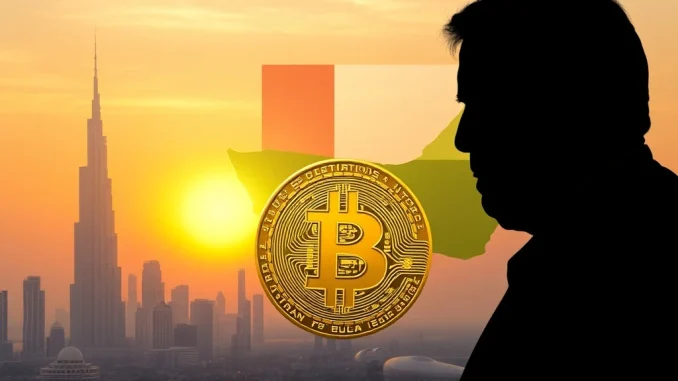
Eric Trump, the second son of former President Donald Trump, recently shared a compelling observation. He indicated that several countries, including the United Arab Emirates (UAE), are actively acquiring **Bitcoin**. This assertion, reported by Watcher.Guru, underscores a notable shift in the global financial landscape. It suggests a broader trend of national entities considering digital assets as strategic investments, contributing significantly to **global crypto adoption**.
Eric Trump Crypto Insights: A Glimpse into National Bitcoin Holdings
Eric Trump’s comments provide an intriguing perspective on the evolving role of cryptocurrencies. As a prominent figure with connections to political and business spheres, his statements often draw considerable attention. While the specifics of these national purchases remain undisclosed, his insight points to a growing recognition of **Bitcoin** as a valuable asset class among sovereign entities. This development marks a potential turning point, moving digital currencies further into mainstream financial strategies.
Furthermore, this isn’t the first time the Trump family has commented on cryptocurrencies. However, Eric Trump’s current remarks suggest a nuanced understanding of the asset’s increasing acceptance. Previously, opinions from the family have ranged from skepticism to cautious interest. His recent statement, therefore, signals a potential shift towards acknowledging the legitimate role of digital assets in national economies.
Unpacking UAE Bitcoin Adoption: A Regional Leader in Digital Assets
The United Arab Emirates stands out as a key player in the realm of **global crypto adoption**. Its proactive approach to digital innovation and financial technology has positioned it as a regional leader. The UAE has consistently worked to establish clear regulatory frameworks, aiming to attract crypto businesses and foster a thriving digital asset ecosystem. This strategic foresight has made **UAE Bitcoin adoption** a compelling case study for other nations.
Consider these significant steps taken by the UAE:
- Dubai’s Virtual Assets Regulatory Authority (VARA): Established in 2022, VARA provides a comprehensive regulatory framework for virtual asset services.
- Free Zones: Areas like the Dubai Multi Commodities Centre (DMCC) and Abu Dhabi Global Market (ADGM) actively support crypto-related businesses.
- Strategic Partnerships: The government fosters collaborations between traditional finance and blockchain innovators.
These initiatives demonstrate a clear commitment to integrating digital assets into the nation’s economic fabric. Consequently, the UAE is not merely observing the crypto space; it is actively shaping it. This commitment likely contributes to the ‘active buying’ mentioned by Eric Trump, as the nation seeks to bolster its position in the digital economy.
The Rise of Institutional Bitcoin Buying: A Market Maturation
Eric Trump’s statement about countries actively buying **Bitcoin** aligns with a broader trend of **institutional Bitcoin buying**. This signifies a maturing market where major players, beyond individual investors, are allocating significant capital to digital assets. Institutions, including sovereign wealth funds, corporations, and asset managers, increasingly view Bitcoin as a legitimate investment. They are attracted by its potential as an inflation hedge, a store of value, and a diversification tool within their portfolios.
Several factors drive this growing institutional interest:
- Inflationary Concerns: Global economic uncertainties and rising inflation rates push institutions toward alternative assets like Bitcoin.
- Digital Gold Narrative: Many see Bitcoin as a ‘digital gold,’ offering similar scarcity and store-of-value properties to precious metals.
- Regulatory Clarity: As more countries establish clear regulations, institutional comfort levels with crypto investments increase.
- Technological Advancements: Improved infrastructure and custody solutions make it easier for institutions to manage digital assets securely.
Ultimately, this influx of institutional capital provides greater liquidity and stability to the crypto market. It also lends significant credibility to Bitcoin as a long-term investment, further fueling its adoption globally.
Broader Global Crypto Adoption Trends Beyond the UAE
While the **UAE Bitcoin adoption** is noteworthy, it represents just one facet of a much larger global phenomenon. Numerous countries are exploring or implementing various forms of cryptocurrency integration. El Salvador, for instance, famously adopted Bitcoin as legal tender in 2021. Other nations are actively researching or piloting Central Bank Digital Currencies (CBDCs) to modernize their financial systems. These diverse approaches highlight the varied motivations behind **global crypto adoption**.
Moreover, several smaller nations and emerging economies are considering cryptocurrencies as a means to achieve financial inclusion. They aim to circumvent traditional banking limitations and offer their populations access to global financial markets. Larger economies, meanwhile, are focusing on robust regulatory frameworks to manage the risks associated with digital assets while harnessing their innovative potential. This global push indicates a fundamental shift in how nations perceive and utilize digital currencies.
Economic Drivers and Strategic Implications of National Crypto Holdings
The decision for nations to hold cryptocurrencies, especially **Bitcoin**, carries significant economic and strategic implications. Economically, it can be viewed as a hedge against currency devaluation or a way to diversify national reserves. Strategically, it positions a country at the forefront of digital finance, potentially attracting innovation and talent. However, such moves are not without challenges.
Nations must navigate:
- Market Volatility: Cryptocurrencies are known for price fluctuations, which can impact the value of national holdings.
- Regulatory Complexity: Establishing clear legal and tax frameworks for digital assets remains a complex task.
- Geopolitical Considerations: The use of cryptocurrencies in international finance could alter existing power dynamics.
Despite these complexities, the potential benefits, such as enhanced financial sovereignty and new avenues for economic growth, are driving many countries to explore this path. The statements from figures like Eric Trump serve as a reminder that this transformation is well underway.
The Future Landscape of National Bitcoin Reserves
The trend of nations actively acquiring **Bitcoin**, as highlighted by Eric Trump’s remarks, suggests a profound shift in global finance. This growing interest from sovereign entities could significantly impact Bitcoin’s long-term value and stability. Increased national reserves of Bitcoin might lead to greater market legitimacy and potentially reduce extreme price volatility over time. It could also accelerate the development of more sophisticated financial products and services built around digital assets.
Ultimately, the narrative around Bitcoin is evolving from a niche technological curiosity to a recognized global asset. As more nations engage with cryptocurrencies, whether through direct acquisition or robust regulatory frameworks, the integration of digital assets into the global economy will only deepen. This ongoing transformation promises a future where digital currencies play an increasingly vital role in national treasuries and international trade.
Frequently Asked Questions (FAQs)
Q1: What did Eric Trump say about Bitcoin?
Eric Trump stated that multiple countries, including the United Arab Emirates, are actively purchasing Bitcoin. This indicates a growing trend of national entities holding digital assets as part of their financial strategies.
Q2: Why is the UAE particularly interested in Bitcoin and cryptocurrencies?
The UAE has adopted a proactive stance on digital innovation. It has established clear regulatory frameworks, created free zones for crypto businesses, and actively fosters partnerships to become a global hub for virtual assets. This strategic approach drives **UAE Bitcoin adoption**.
Q3: What does “institutional Bitcoin buying” mean?
**Institutional Bitcoin buying** refers to large-scale investments in Bitcoin by entities like corporations, asset managers, and potentially sovereign wealth funds. This trend signifies market maturation, as these institutions view Bitcoin as a legitimate asset for diversification, inflation hedging, and long-term value storage.
Q4: Which other countries are notable for their **global crypto adoption** efforts?
Beyond the UAE, El Salvador is well-known for adopting Bitcoin as legal tender. Many other nations are exploring Central Bank Digital Currencies (CBDCs) or establishing regulatory frameworks to integrate cryptocurrencies into their economies, indicating widespread **global crypto adoption**.
Q5: What are the main drivers for nations to hold Bitcoin?
Nations may choose to hold Bitcoin for several reasons, including diversifying national reserves, hedging against inflation, attracting technological innovation, and positioning themselves as leaders in the digital economy. It also offers potential economic independence and new avenues for growth.
Q6: How might national Bitcoin holdings impact the cryptocurrency market?
Increased national Bitcoin holdings could significantly enhance the legitimacy and stability of the cryptocurrency market. It may lead to greater liquidity, reduce price volatility over time, and accelerate the development of more sophisticated financial products and services built around digital assets.