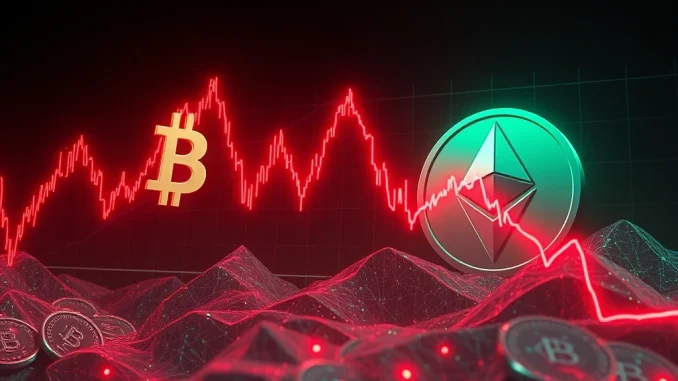
The cryptocurrency market recently witnessed a **massive** wave of forced liquidations. Over the last 24 hours, crypto perpetual futures experienced more than $100 million in forced liquidations. This significant event captured the attention of traders and analysts alike. It highlighted the inherent volatility and risk associated with leveraged trading in digital assets. Understanding these market movements is crucial for participants.
Unpacking Perpetual Futures and Market Dynamics
Perpetual futures contracts are a popular financial instrument in the cryptocurrency space. Essentially, they allow traders to speculate on the future price of an asset without an expiry date. This flexibility makes them highly attractive. However, they often involve significant leverage. Leverage enables traders to control large positions with a relatively small amount of capital. Consequently, it amplifies both potential gains and losses. A sudden price movement against a leveraged position can quickly lead to a margin call. If the trader cannot meet this call, the exchange automatically closes the position. This process is known as liquidation. Therefore, these events often contribute to crypto market volatility.
Many factors contribute to market dynamics. Geopolitical events, regulatory changes, and macroeconomic indicators all play a role. Furthermore, large institutional trades can also trigger significant price swings. These swings directly impact leveraged positions. The recent surge in liquidations underscores the sensitive nature of the market. Traders must remain vigilant.
Bitcoin Liquidations: The Dominant Force in Recent Events
Bitcoin, the largest cryptocurrency by market capitalization, was heavily impacted by the recent liquidations. Specifically, **$41.19 million** in BTC positions were liquidated. A substantial 60.99% of these were short positions. This means traders were betting on a price decrease. However, the market moved against their expectations. When a short position is liquidated, the trader’s collateral is insufficient to cover potential losses. The exchange then automatically buys back the asset to close the position. This action can put upward pressure on prices. Thus, it can trigger further short liquidations in a cascading effect. These significant Bitcoin liquidations reflect strong market forces at play. They also indicate a sudden shift in price direction.
Market analysts often scrutinize Bitcoin’s movements. Its performance frequently influences the broader crypto market. Therefore, substantial BTC liquidations can signal wider market sentiment changes. They can also indicate potential short-term price reversals. Traders watch these metrics closely for insights into market trends. This particular event suggests that many short-sellers were caught off guard. The market’s unpredictable nature continues to challenge even experienced traders.
Ethereum Liquidations Reflect Broader Market Pressures
Ethereum, the second-largest cryptocurrency, also experienced substantial liquidations. A total of **$49.23 million** in ETH positions were forcibly closed. Similar to Bitcoin, short positions dominated these liquidations, accounting for 61.77%. This pattern suggests a similar market dynamic affecting multiple major assets. Traders betting on a price decline faced significant losses. The forced closure of these positions added to the market’s turbulence. These Ethereum liquidations underscore the interconnectedness of the crypto ecosystem. What affects one major asset often affects another.
Ethereum’s ecosystem is vast and complex. It supports countless decentralized applications and NFTs. Therefore, its price movements are influenced by various factors. These include network upgrades, dApp usage, and general market sentiment. The high volume of ETH short liquidations indicates a collective misjudgment by a large segment of traders. They anticipated a downward trend that did not materialize as expected. This volatility is a constant feature of the crypto landscape. It requires careful risk management from all participants.
Altcoin Vulnerability: The Case of ‘H’
Beyond the major cryptocurrencies, certain altcoins also faced severe pressure. For instance, **$9.81 million** in ‘H’ positions were liquidated. Notably, an even higher percentage of these were short positions, reaching 72.64%. This figure highlights the amplified risk often associated with smaller-cap altcoins. These assets can experience more extreme price swings. Consequently, leveraged positions on altcoins are particularly vulnerable. A minor market correction can lead to rapid and extensive liquidations.
Altcoin markets typically exhibit higher crypto market volatility compared to Bitcoin or Ethereum. Lower liquidity and smaller market caps mean prices can move more drastically. This makes them attractive for high-risk, high-reward trading. However, it also significantly increases the risk of liquidation. The ‘H’ liquidations serve as a stark reminder of these inherent dangers. Traders must exercise extreme caution when using leverage on altcoins. Proper research and risk assessment are absolutely essential.
What Triggers Mass Crypto Liquidations?
Several key factors can trigger mass crypto liquidations. Firstly, sudden and sharp price movements are a primary cause. When the price of an asset moves significantly against a leveraged position, it quickly depletes the margin. This leads to a margin call. If the trader fails to add more funds, the position is automatically liquidated. Secondly, cascading liquidations can exacerbate the situation. As positions are closed, it can create further selling or buying pressure. This pushes prices even further, triggering more liquidations. It creates a domino effect.
Furthermore, broader market sentiment plays a crucial role. Negative news, regulatory concerns, or macroeconomic shifts can lead to widespread panic selling. This often results in rapid price declines. Similarly, unexpected positive news can cause rapid price increases. Both scenarios can trigger large-scale liquidations, depending on the prevailing leveraged positions. The nature of perpetual futures means these events can unfold very quickly. This leaves little time for traders to react. Understanding these triggers is vital for navigating volatile markets.
Navigating Volatility: Strategies for Traders
Successfully trading in the volatile perpetual futures market requires robust strategies. Risk management is paramount. Traders should always use appropriate position sizing. They must never risk more capital than they can afford to lose. Setting stop-loss orders is another critical practice. Stop-losses automatically close a position if the price reaches a predetermined level. This helps to limit potential losses. Furthermore, avoiding excessive leverage is wise. While leverage can magnify profits, it also magnifies losses. High leverage significantly increases the risk of liquidation.
Diversification can also mitigate risk. Spreading investments across different assets reduces exposure to any single asset’s volatility. Staying informed about market news and trends is also essential. This includes understanding the fundamental factors driving crypto market volatility. Experienced traders often develop a deep understanding of market cycles. They also learn to identify potential reversal points. Continuous education and disciplined execution are key to long-term success in this dynamic environment. Therefore, informed decision-making remains crucial.
The recent $100 million in crypto liquidations serves as a powerful reminder of the risks. It also highlights the opportunities present in the perpetual futures market. While significant, such events are not uncommon in the fast-paced world of digital assets. They reflect the continuous interplay of leverage, market sentiment, and price action. Traders must approach these markets with caution, knowledge, and a well-defined risk management plan. The crypto market will undoubtedly continue to evolve. Therefore, adapting strategies remains essential for all participants. Staying ahead of these trends is vital for navigating future market shifts.
Frequently Asked Questions (FAQs)
1. What are crypto perpetual futures?
Crypto perpetual futures are derivative contracts. They allow traders to speculate on the price of a cryptocurrency without owning the underlying asset. Unlike traditional futures, they do not have an expiry date. This means they can be held indefinitely. They typically involve leverage, amplifying potential gains and losses.
2. What does it mean for a position to be liquidated?
Liquidation occurs when a trader’s leveraged position is automatically closed by the exchange. This happens because the trader’s margin balance falls below a required maintenance level. The market has moved significantly against their position. This forces the closure to prevent further losses.
3. Why were most of the recent liquidations short positions?
Most liquidations were short positions because traders were betting on a price decrease. However, the market moved upwards or sideways unexpectedly. This caused their collateral to become insufficient. Consequently, their short positions were forcibly closed by the exchanges.
4. How do liquidations impact the broader crypto market?
Large-scale liquidations can create a cascading effect. Forced selling (for long liquidations) or forced buying (for short liquidations) can intensify price movements. This further exacerbates market volatility. It can lead to further liquidations, creating a cycle of rapid price changes.
5. How can traders avoid liquidation in perpetual futures?
Traders can avoid liquidation by using lower leverage, setting strict stop-loss orders, and maintaining sufficient margin. Diversifying portfolios and staying informed about market conditions are also crucial. Proper risk management is the best defense against forced liquidations.
6. Is the crypto market becoming more volatile?
The crypto market has always been characterized by significant volatility. Recent events, like these liquidations, demonstrate this ongoing characteristic. Factors like global economic shifts, regulatory news, and technological developments contribute to its dynamic nature. Traders should always expect high volatility.