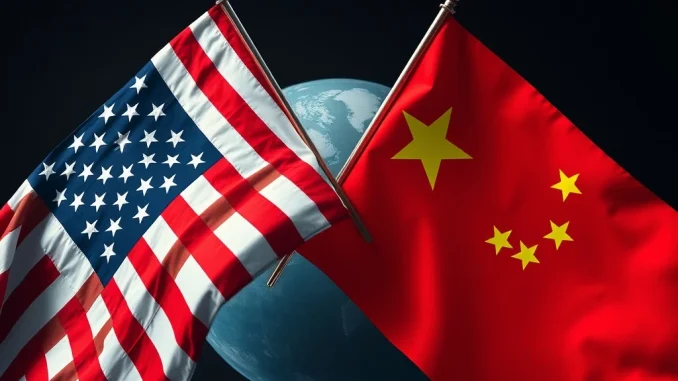
Even though this news is not directly about cryptocurrencies, global trade tensions significantly impact market stability. The potential for **US China tech restrictions** could ripple through global supply chains. This development directly affects tech stocks and investor sentiment worldwide. Ultimately, this indirectly influences the broader economic landscape, including digital asset markets and investor confidence.
Unveiling Potential US China Tech Restrictions
The Trump administration is reportedly considering a drastic expansion of its trade policies. Sources indicate the administration might restrict exports to China of any products worldwide. This restriction would apply if those products use or include **US software**. Walter Bloomberg first reported this development, citing multiple sources familiar with the discussions. This move represents a significant escalation in the ongoing technological and economic rivalry between the two global powers.
Previously, US export controls primarily targeted direct exports from the United States. They also focused on specific entities or technologies. However, this new proposed rule broadens the scope considerably. It aims to impact goods manufactured anywhere in the world. The crucial factor would be the incorporation of American-made software. Consequently, this policy could reshape international manufacturing and trade practices on an unprecedented scale.
The Trump Administration’s Strategic Maneuver
This potential action aligns with the broader strategic approach taken by the **Trump administration** towards China. Throughout its term, the administration prioritized national security and economic competition. Its policies frequently sought to curb China’s technological advancements and influence. Furthermore, these efforts often aimed to protect American intellectual property and industrial leadership.
The history of US-China trade relations during this period is marked by significant friction. For instance, the administration imposed tariffs on billions of dollars worth of Chinese goods. It also blacklisted prominent Chinese technology companies. Huawei, a leading telecommunications giant, faced severe restrictions. These past actions underscore a consistent strategy. The administration sought to exert pressure on Beijing across various fronts. This new consideration for **export controls** represents a continuation of that assertive stance.
The rationale behind such stringent measures is multifaceted. Policymakers argue these controls are essential for national security. They aim to prevent China from leveraging American technology for military or surveillance purposes. Moreover, the administration sought to address perceived unfair trade practices. It also wanted to reduce the US trade deficit with China. This latest proposal further highlights the strategic importance of technology in geopolitical competition.
Understanding the Impact of New Export Controls
Implementing such extensive **export controls** would have profound and far-reaching implications. Manufacturers globally would face immense challenges. They would need to meticulously audit their supply chains. Every product containing US software, regardless of its final assembly location, could fall under these new rules. This requirement would necessitate complex compliance frameworks for countless businesses.
The direct impact would be felt across numerous industries. Companies producing everything from consumer electronics to advanced machinery would be affected. These firms rely heavily on American software for design, operation, and manufacturing processes. For example, design software from US companies is standard in many global production lines. Similarly, embedded US software powers countless devices. This proposal could disrupt established production flows and international partnerships.
Furthermore, the policy could accelerate efforts towards technological decoupling. Countries and companies might seek alternatives to US software. They might invest more in domestic technological development. This shift could lead to a fragmented global technology ecosystem. Ultimately, it could increase costs and reduce innovation efficiency across sectors.
Reshaping Global Supply Chains
The proposed restrictions would fundamentally reshape **global supply chains**. Companies have spent decades optimizing these networks for efficiency and cost-effectiveness. They built these chains on assumptions of open international trade. A sudden change in rules regarding **US software** could force a rapid and costly re-evaluation. Businesses would need to identify and mitigate risks associated with their current dependencies.
Industries heavily reliant on American technology would be particularly vulnerable. The semiconductor sector, for example, uses US design tools and intellectual property extensively. Any product incorporating these components could face restrictions. This could lead to significant production delays or even halts. Consequently, companies might diversify their manufacturing bases. They could also invest in non-US software alternatives. This could lead to a more resilient, albeit potentially less efficient, global production system.
Diversification efforts would focus on building more robust and localized supply chains. Companies might shift production away from China. They could also explore manufacturing in countries less impacted by these specific US regulations. This strategic relocation would aim to reduce exposure to geopolitical risks. However, such large-scale shifts require substantial investment and time. They also introduce new logistical complexities.
The Role of US Software in Global Products
The pervasive nature of **US software** makes these proposed restrictions especially potent. American companies develop a vast array of critical software. This includes operating systems, design automation tools, and specialized industrial control systems. Many products globally, from smartphones to aerospace components, integrate these technologies. For instance, chips designed using US electronic design automation (EDA) software are found everywhere. Similarly, manufacturing equipment often runs on US-developed control software.
The challenge lies in the embedded nature of this technology. It is often not immediately visible to the end-user. However, it forms the backbone of modern product development and manufacturing. Tracking every instance of US software within a global product would be an enormous undertaking. Companies would need sophisticated auditing processes. They would also require clear guidance from regulators on compliance standards. The legal and technical complexities of enforcement would be considerable for the **Trump administration**.
This situation highlights the deep interconnectedness of the global technology landscape. No single nation produces all components or software independently. Therefore, any attempt to isolate one part of the ecosystem creates ripple effects. These effects extend far beyond the immediate targets. They impact partners, suppliers, and consumers worldwide. The implications for innovation and technological progress are also significant.
Navigating the Geopolitical Landscape
The potential for these expanded **export controls** would undoubtedly ignite strong reactions internationally. China would likely view this as an aggressive act. It might prompt retaliatory measures. These could include restrictions on American companies operating in China. Other nations, whose industries would also be impacted, might express concerns. They could fear disruptions to their own economies and supply chains.
The move also underscores a broader trend of technological nationalism. Nations are increasingly prioritizing domestic control over critical technologies. This trend can lead to fragmentation of global standards and systems. It could also hinder international scientific collaboration. Ultimately, the long-term implications for international relations are complex. They suggest a potential shift towards more protectionist technology policies globally.
Furthermore, this policy could force other countries to choose sides in the US-China tech rivalry. Companies operating in third-party nations would face difficult decisions. They might need to decide between accessing US technology or participating in Chinese markets. This pressure could further complicate international trade and diplomatic efforts. It highlights the growing importance of technology in shaping geopolitical alliances.
Economic Repercussions and Future Outlook
The economic repercussions of such **US China tech restrictions** could be substantial. Global markets might experience increased volatility. Investors would react to the uncertainty surrounding international trade and technology access. Companies facing compliance challenges or supply chain disruptions could see their revenues and profits impacted. This could lead to a slowdown in certain sectors. The tech industry, in particular, could face headwinds.
Investment trends might also shift. Companies could prioritize investments in regional supply chains. They might also fund research into alternative, non-US technologies. This strategic redirection would aim to mitigate future risks. However, it could also lead to inefficiencies and higher production costs. The overall impact on global economic growth remains a significant concern.
Ultimately, this proposal signals a continued emphasis on national security. It also highlights technological dominance as a key policy driver. The future of global tech collaboration hangs in the balance. The ongoing tech rivalry between the US and China will continue to shape international trade. It will also define technological development for years to come. These developments demand close monitoring by businesses and policymakers alike.
Frequently Asked Questions (FAQs)
What exactly are the proposed US China tech restrictions?
The Trump administration is reportedly considering restricting exports to China of any products worldwide that incorporate or use US software. This expands existing controls beyond direct US exports.
How would these export controls impact global manufacturers?
Global manufacturers would need to audit their supply chains extensively. They would have to ensure compliance for any product containing US software, regardless of its manufacturing location. This could lead to significant operational and logistical challenges.
Why is the Trump administration considering these restrictions?
These restrictions align with the administration’s broader strategy to counter China’s technological advancements. The aim is to protect national security, safeguard US intellectual property, and address perceived unfair trade practices.
What role does US software play in global products?
US software is pervasive in global manufacturing. It includes operating systems, design tools, and industrial control systems. Many products, from electronics to machinery, rely on these technologies for design, production, and operation.
How might these restrictions affect global supply chains?
The restrictions could force companies to re-evaluate and diversify their **global supply chains**. They might shift manufacturing locations or invest in non-US software alternatives. This aims to reduce dependency and mitigate geopolitical risks.
What are the potential economic consequences of these new export controls?
Potential economic consequences include increased market volatility, disrupted production, higher costs for businesses, and shifts in global investment trends. It could also lead to a more fragmented global technology ecosystem.