The ongoing saga surrounding **GOPAX compensation** has reached a critical juncture. A prominent South Korean lawmaker recently intensified calls for the nation’s top financial regulator to ensure full restitution for users affected by service disruptions at the **crypto exchange**. This developing situation underscores the urgent need for robust consumer protection within the rapidly evolving **South Korean crypto** market. Victims are awaiting resolution following a significant financial setback, highlighting the complexities of international crypto operations and regulatory oversight.
Lawmaker’s Urgent Call for GOPAX Compensation
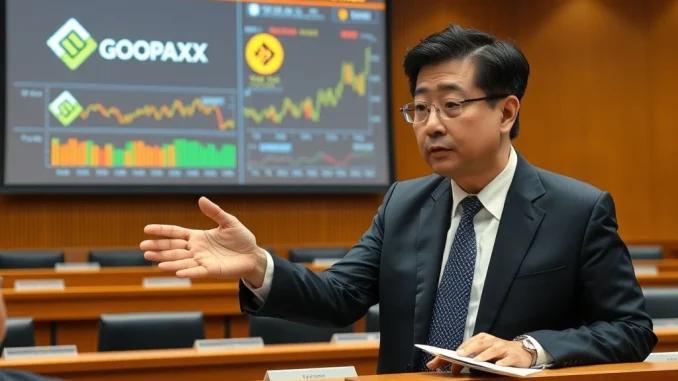
During a recent parliamentary audit, lawmaker Min Byeong-deok from South Korea’s ruling Democratic Party directly addressed Financial Services Commission (FSC) Chairman Lee Eog-weon. He pressed the **financial regulator** to expedite the finalization of **GOPAX compensation**. The lawmaker highlighted the severe impact on numerous South Korean users. These individuals suffered significant losses due to a service disruption stemming from the bankruptcy of a U.S. partner firm, Genesis Global Capital.
Min Byeong-deok clearly stated that outstanding damages currently range between **10 billion and 50 billion won**. This translates to approximately **$7.2 million to $36.2 million**. Such figures emphasize the substantial financial burden on affected users. Furthermore, he reminded the commission of the circumstances surrounding the **Binance acquisition** of GOPAX. This deal was reportedly contingent on Binance fully repaying the incurred losses. However, this crucial compensation remains incomplete, leaving many users in limbo.
Understanding the GOPAX Service Disruption and Genesis Bankruptcy
The core of the problem lies with GOPAX’s connection to Genesis Global Capital. Genesis, a major crypto lending firm based in the U.S., declared bankruptcy in early 2023. Consequently, GOPAX’s GoFi deposit service, which relied on Genesis, faced severe disruption. Many South Korean users had funds locked in GoFi, leading to substantial financial distress. This incident served as a stark reminder of the interconnectedness of the global crypto ecosystem. A failure in one part can have cascading effects across borders, impacting local **crypto exchange** operations and user funds.
The situation quickly drew the attention of South Korean authorities. They recognized the potential for widespread financial harm. Therefore, regulatory bodies began scrutinizing GOPAX’s operations and its plans for user restitution. The bankruptcy of Genesis underscored the inherent risks associated with third-party crypto lending platforms. It also highlighted the need for greater transparency and stricter oversight of such arrangements, particularly when retail investors’ funds are involved. This incident has undeniably shaped the discourse around **South Korean crypto** regulation.
The Binance Acquisition and Unfulfilled Promises
Binance, the world’s largest **crypto exchange**, stepped in to acquire a majority stake in GOPAX in February 2023. This move was widely seen as a lifeline for the struggling South Korean platform. A key condition of the **Binance acquisition** was a commitment to fully compensate affected GOPAX users. This promise offered a glimmer of hope to those who had lost funds. However, lawmaker Min Byeong-deok described the acquisition as a “typical no-money M&A.” This term suggests that Binance may not have injected significant direct capital into GOPAX for the purpose of immediate user compensation.
The lawmaker’s comments imply that the promised compensation has not materialized as quickly or as comprehensively as anticipated. This delay has prolonged the suffering of affected users. Consequently, the **financial regulator** is now under increased pressure to ensure Binance fulfills its commitment. The situation raises questions about the efficacy of such acquisition agreements in protecting consumer interests. It also highlights the challenges of enforcing cross-border commitments in the complex crypto landscape.
The Role of South Korea’s Financial Regulator (FSC)
The Financial Services Commission (FSC) serves as South Korea’s primary **financial regulator**. It plays a pivotal role in overseeing financial markets, including the burgeoning cryptocurrency sector. Lawmaker Min Byeong-deok’s direct appeal to FSC Chairman Lee Eog-weon underscores the commission’s responsibility. The FSC must ensure consumer protection and maintain market integrity. This incident presents a significant test for the regulator’s ability to effectively manage crises within the digital asset space.
The FSC is tasked with several crucial functions in this context:
- **Oversight:** Monitoring the operations of licensed **crypto exchange** platforms like GOPAX.
- **Enforcement:** Ensuring compliance with financial regulations and holding entities accountable.
- **Consumer Protection:** Safeguarding the interests of individual investors and facilitating redress mechanisms.
The lawmaker’s intervention emphasizes that the priority must be making South Korean users whole. He called on the FSC to properly conclude the matter, as reported by Kuki News. This demonstrates the growing political and public pressure on the **financial regulator** to deliver a tangible resolution for the **GOPAX compensation** issue.
Impact on South Korean Crypto Market and Future Regulations
The GOPAX compensation crisis has significant implications for the broader **South Korean crypto** market. It has brought renewed attention to the need for robust regulatory frameworks. Investors are becoming increasingly aware of the risks associated with unsecured deposits and third-party lending services. This incident could accelerate the development of stricter rules governing crypto exchanges and their partnerships. Ultimately, the goal is to prevent similar situations from occurring in the future.
Furthermore, the outcome of this case could set a precedent for how South Korea handles future crypto-related insolvencies or service disruptions. The regulatory response will likely shape investor confidence in the local market. It will also influence how international firms like Binance operate within South Korea. Ensuring a fair and timely resolution for **GOPAX compensation** is therefore crucial. It will help to rebuild trust and foster a more secure environment for digital asset trading in the nation.
Conclusion: Awaiting a Definitive Resolution
The call from lawmaker Min Byeong-deok represents a significant step towards securing a definitive resolution for the **GOPAX compensation** crisis. The eyes of the **South Korean crypto** community, and indeed the global crypto market, are now on the Financial Services Commission. They await concrete action. The full repayment of outstanding damages, estimated between $7.2 million and $36.2 million, is paramount. It is essential for restoring faith in the system and protecting vulnerable investors. The **Binance acquisition** of GOPAX promised a solution, and now the **financial regulator** must ensure that promise is fully honored. This situation serves as a powerful reminder of the importance of regulatory vigilance and consumer advocacy in the volatile world of digital assets.
Frequently Asked Questions (FAQs)
1. What is the main issue surrounding GOPAX compensation?
The main issue involves South Korean users of the **GOPAX crypto exchange** who lost funds due to a service disruption. This disruption was caused by the bankruptcy of GOPAX’s U.S. partner firm, Genesis Global Capital, which affected GOPAX’s GoFi deposit service.
2. How much compensation is owed to GOPAX users?
Lawmaker Min Byeong-deok stated that outstanding damages range from 10 billion to 50 billion won, which is approximately **$7.2 million to $36.2 million**. This significant sum needs to be repaid to affected users.
3. What role did Binance play in this situation?
Binance acquired a majority stake in GOPAX in February 2023. A key condition of this **Binance acquisition** was a commitment to fully compensate the users who incurred losses. However, this compensation has not yet been fully completed.
4. Who is the Financial Services Commission (FSC) and what is its role?
The Financial Services Commission (FSC) is South Korea’s top **financial regulator**. Its role in this situation is to oversee financial markets, ensure consumer protection, and press for the proper conclusion of the **GOPAX compensation** matter.
5. Why is this incident important for the South Korean crypto market?
This incident is crucial because it highlights the need for stronger regulatory frameworks and consumer protection in the **South Korean crypto** market. Its resolution will set a precedent for how future crypto-related insolvencies and disruptions are handled, impacting investor confidence and future regulations.